

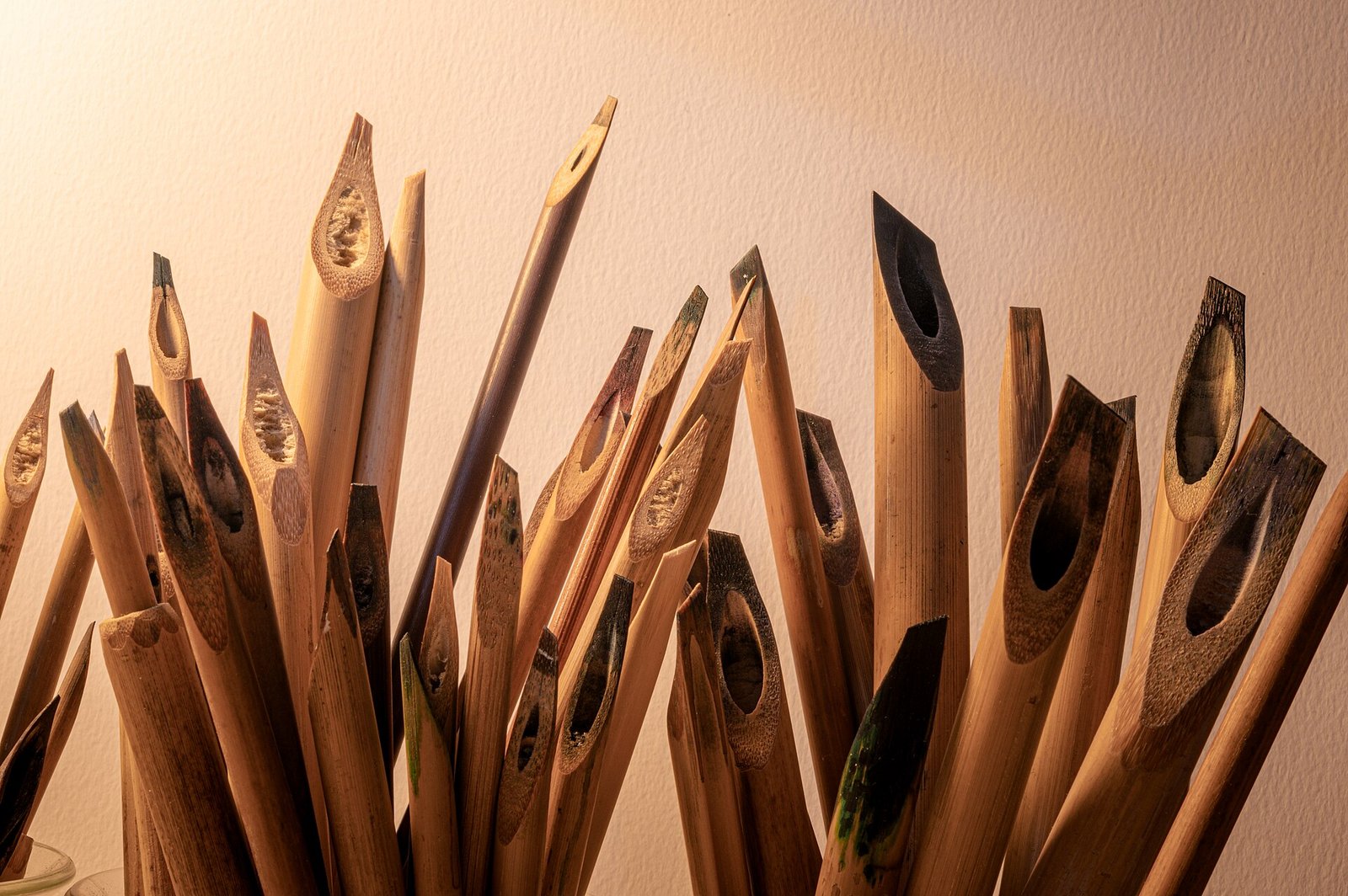
Pick up a pen and, before you write a single word, you have already formed an opinion. Its weight, its temperature in your hand, the texture of the grip, the click of the mechanism and the shine or matte of the finish all tell you something about quality. Those impressions come from materials. Whether a pen is made of ABS plastic, polycarbonate, brass, aluminium, stainless steel, wood, bamboo or recycled plastic decides how it looks, feels, lasts, carries a logo and affects the environment.
For individuals, materials decide whether a pen is a throwaway tool or a long-term companion. For businesses ordering branded pens, they decide the price, the branding options, the impression the pen makes on recipients and how long the brand stays in their hands. This guide explains the main pen materials in plain language: how each is made, its strengths and weaknesses, which finishes and branding methods suit it, how it performs in daily use, and how to choose the right material for each purpose and budget.
It comes from Dyna Writing Instruments, which has been making pens in Delhi since 1960. Our range covers moulded plastic pens, metal pens, eco pens and gift pens, so we work with these materials every day.
The short answer. Plastic pens (usually ABS, polystyrene or polycarbonate) are light, affordable, colourful and ideal for everyday and promotional use. Metal pens (brass, aluminium or stainless steel) feel substantial, last for years and suit gifts and executives; brass is heavy and premium, aluminium light and colourful when anodised, stainless steel tough and corrosion-resistant. Eco materials (recycled plastics, plant-based plastics, paper, bamboo and wood) reduce virgin plastic use and suit sustainability-focused brands. Choose by user, budget, required lifespan, branding method and message: plastic for reach, metal for impression, eco for values.
Pen materials at a glance
| Material | Weight | Feel | Durability | Typical use | Best branding |
|---|---|---|---|---|---|
| ABS plastic | Light | Smooth, warm | Good | Everyday and promotional pens | Pad printing, screen printing |
| Polystyrene | Very light | Basic | Fair | Low-cost and disposable pens | Pad printing |
| Polycarbonate | Light | Glassy, clear | Very good | Transparent barrels, tougher pens | Pad printing |
| Polypropylene | Light | Slightly waxy, flexible | Good | Flexible parts, some eco pens | Pad printing |
| Brass | Heavy | Solid, premium | Excellent | Premium and executive pens | Laser engraving |
| Aluminium | Light to medium | Cool, sleek | Very good | Slim metal pens, colourful metal promos | Laser engraving |
| Stainless steel | Medium to heavy | Cool, tough | Excellent | Durable and premium pens | Laser engraving |
| Recycled plastic | Light | Like standard plastic | Good | Eco promotional pens | Pad printing |
| Plant-based plastic | Light | Like standard plastic | Good | Eco pens | Pad printing |
| Recycled paper / cardboard | Very light | Natural, matte | Fair | Eco giveaways | Pad or screen printing |
| Bamboo / wood | Light | Natural, warm | Good | Eco and natural-themed gifts | Laser engraving |
For pen types by ink and mechanism, start with Types of Pens: The Complete Guide.

Why pen materials matter
Feel and perceived quality
People judge quality through touch. A cool, weighty metal pen feels valuable; a light plastic pen feels practical. Neither is better in absolute terms, but the impression needs to match the purpose.
Durability and lifespan
Materials decide how well a pen survives drops, pockets, bags and daily clicks. Longer-lasting pens keep working, and keep a brand visible, for longer.
Comfort
Weight, balance, diameter and grip surface all depend on materials. Rubberised grips, textured metal and warm wood all change how a pen feels over a long writing session.
Branding options
Plastics take printed logos in many colours; metals take precise, permanent laser engraving; wood and bamboo engrave beautifully. Material choice and branding method go together. See Pen Branding Methods Explained.
Cost
Material is one of the biggest drivers of pen price, alongside mechanism, refill and branding. Choosing the right material for each audience is the easiest way to get more impact from the same budget.
Sustainability
Materials determine how much virgin plastic or metal a pen uses, how long it lasts and what happens at the end of its life. For organisations with sustainability commitments, the material of a promotional pen is now often a question that clients and employees ask about directly.
Who this guide is for
- Marketing and brand teams choosing promotional and gift pens.
- HR and admin teams sourcing pens for staff, onboarding and awards.
- Procurement teams comparing quotes and specifications.
- Sustainability leads evaluating eco pens.
- Event organisers planning delegate kits and giveaways.
- Retailers and distributors explaining materials to customers.
- Pen lovers curious about what their pens are made of.
Ten things to remember
- Plastic is light, colourful and affordable; metal is heavy, durable and premium.
- ABS is the quality standard for plastic pens; polystyrene is cheaper and more brittle.
- Brass is the heaviest, most premium common metal; aluminium is light and colourful.
- Stainless steel is tough and corrosion-resistant.
- Laser engraving suits metal, wood and bamboo; pad printing suits plastic.
- Coated metals give the highest-contrast engraving.
- Eco claims should be specific and verifiable.
- Refillable, durable pens are often the most sustainable.
- The refill matters as much as the barrel.
- Match material to audience, budget and message.
Plastic pens explained
Plastic is by far the most common pen material in the world, and for good reason: it is light, affordable, can be moulded into almost any shape and coloured in any shade. But “plastic” covers several very different materials.
ABS (acrylonitrile butadiene styrene)
ABS is the workhorse of quality plastic pens. It is tough, rigid, resistant to impact and scratches, takes colour well and has a pleasant, solid feel. It can be moulded with fine detail and finished glossy or matte, and it takes printing well. Many promotional and everyday click pens use ABS barrels.
Polystyrene (PS)
Polystyrene is inexpensive and easy to mould, and clear grades are glass-like. It is more brittle than ABS, so it is typical in low-cost, disposable and stick pens. It cracks more easily if dropped or chewed.
Polycarbonate (PC)
Polycarbonate is very tough and impact-resistant, with excellent clarity. It is used for transparent barrels and pens that must survive rough handling. It costs more than ABS or polystyrene.
Polypropylene (PP)
Polypropylene is light, slightly flexible and chemically resistant. It is used for some caps, clips and flexible parts, and for some eco pens because it is widely recyclable.
Acrylic and resins
Acrylic (PMMA) and cast resins are used in premium pens and fountain pens for their depth of colour, polish and patterns. They can be turned on a lathe or moulded.
Rubber and soft-touch grips
Thermoplastic elastomers (TPE) and silicone are used for comfortable grips. Soft-touch coatings give a velvety feel to barrels. Both improve comfort but can attract dust and wear with heavy use.

How plastic pens are made
Most plastic pen parts are made by injection moulding: plastic granules are melted and injected under pressure into precision steel moulds, cooled and ejected. One mould can produce many parts per cycle with consistent quality. Some simple barrels are made by extrusion, pushing molten plastic through a die to form a continuous tube that is then cut to length. Parts are then assembled with clips, mechanisms and refills, and branded. See the benefits of extruded plastic pens and stylish moulded promotional pens.
Plastic finishes
- Solid colour: pigment mixed into the plastic; colour goes all the way through, so scratches do not show a different colour.
- Translucent and frosted: show the refill and give a modern look.
- Glossy: bright, shiny surface from polished moulds.
- Matte and textured: hide fingerprints and give grip.
- Metallic coating or chrome plating: gives plastic a metal look at plastic weight.
- Soft-touch / rubberised coating: velvety feel.
- Two-tone moulding: two colours or materials moulded together.
Strengths of plastic pens
- Affordable, especially in bulk.
- Light and comfortable for long writing.
- Any colour, including brand colours.
- Large, flat or curved print areas for logos.
- Huge variety of designs and mechanisms.
- Easy to ship in large quantities.
Limitations
Plastic pens have a few trade-offs to keep in mind when choosing them for a brand.
- Perceived as less premium than metal.
- Cheaper plastics can crack or feel flimsy.
- Printed logos can wear with heavy use.
- Made from fossil-based resin unless recycled or plant-based.
Best for
Everyday office and school use, large promotional campaigns, events, exhibitions, hotels, banks and anywhere reach matters more than luxury. Explore our plastic pens, including Elite and Aurora, and lightweight promotional pens.
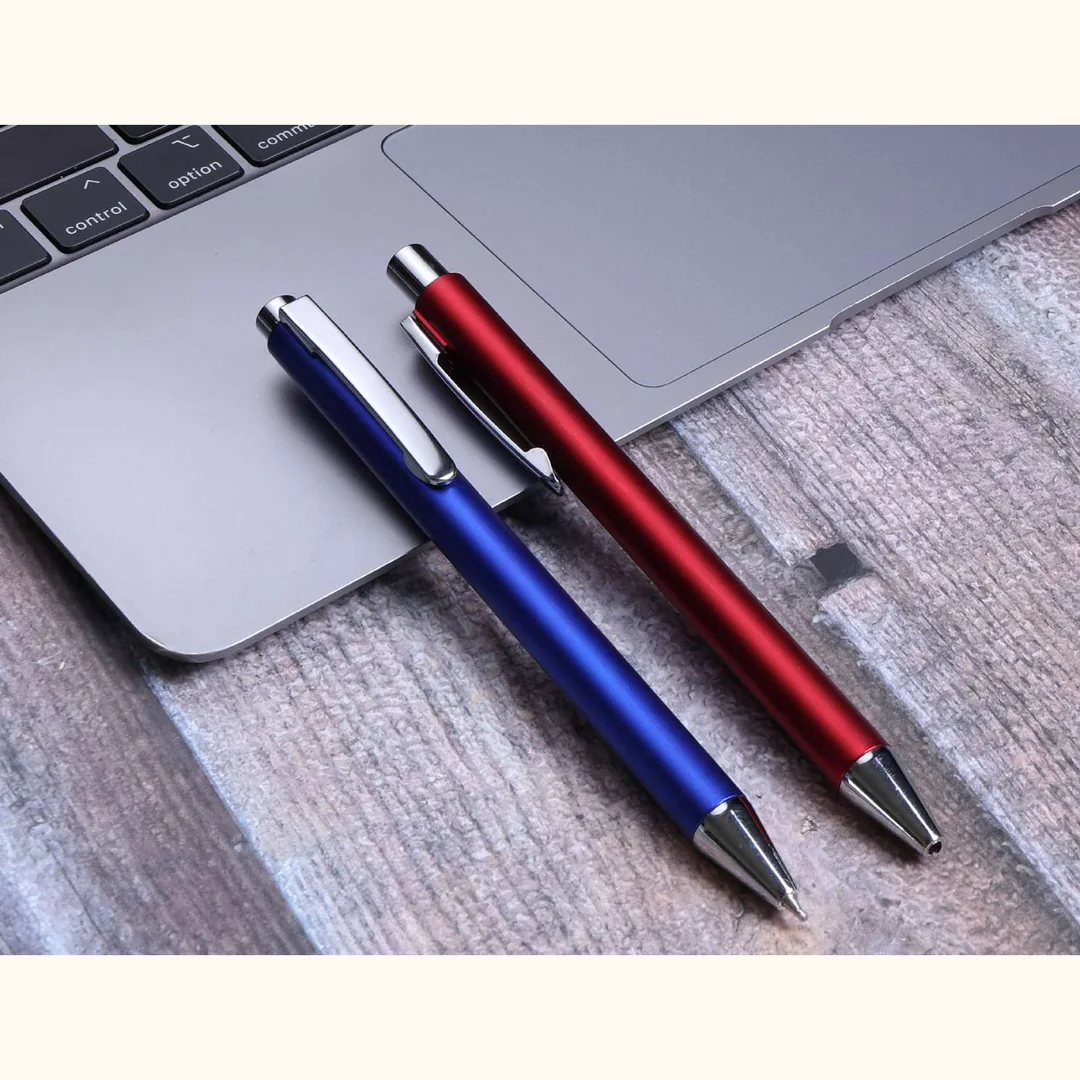
Beyond the barrel: materials in every part
A pen is an assembly of many small parts, and the materials of each part affect quality as much as the barrel.
Clips
Clips must flex and spring back thousands of times. Metal clips, stamped from spring steel or formed from brass, are strong and give a premium look. Plastic clips are moulded as part of the cap or barrel and offer a large flat surface for printing, but can snap if bent too far. A clip is often where a logo goes, so its material affects branding choices.
Mechanisms
Click mechanisms rely on small plastic or metal cams, plungers and springs. Precise moulding and durable plastics such as POM (acetal) give a crisp, reliable click. Twist mechanisms in metal pens use machined or moulded parts that must turn smoothly for years. See how a click pen mechanism works.
Springs
Stainless or plated steel springs return the refill in click pens. A weak or rusting spring makes a click pen feel cheap.
Grips
Grip sections may be moulded plastic, rubber (TPE or silicone), textured metal or knurled patterns. Rubber grips cushion fingers; textured metal gives control without softness. Grips should be comfortable but also durable, as they get the most wear.
Tips and cones
The front cone may be plastic or metal. Metal cones resist wear and look premium; plastic cones are lighter and cheaper.
Refill tubes
Refills use plastic or metal tubes. Metal refills protect ink and are common in metal pens; plastic refills are light and economical. Tips are brass, nickel silver or stainless steel, with tungsten carbide or steel balls.
Caps and inner seals
Caps for liquid-ink and fountain pens include inner seals that stop ink drying. Their material and fit decide whether a pen starts instantly after days of rest.
Trims and rings
Decorative rings and end caps in chrome, gold-tone or contrasting colours give a pen character and often mark where parts join.
When comparing two pens with similar barrels, look at these details. A strong clip, a crisp mechanism and a good refill often matter more than the barrel material itself.
Colour and finish in plastic pens
Colour matching
Plastic pens can be produced in almost any colour by blending pigments into the resin, a process called masterbatching. For large orders, brands often ask for a body colour matched to a Pantone reference. Exact matches depend on the plastic, its transparency and the surface finish, so approve a physical colour sample before production. Standard stock colours are faster and usually cheaper than custom colours.
Solid vs surface colour
When colour runs through the plastic, scratches do not reveal a different colour underneath. When colour is a surface coating, as with metallic or soft-touch finishes, wear can eventually show the base material.
Transparent and frosted pens
Transparent barrels show the refill and ink level, which is practical for students and offices. Frosted finishes soften the look and hide minor scratches. Transparent coloured plastics create a fresh, modern feel.
Gloss and matte
Gloss comes from polished moulds and looks bright and lively, but shows fingerprints. Matte and textured finishes come from textured mould surfaces, hide marks and give grip. Many designs combine both, for example a matte barrel with a gloss clip.
Metallic and chrome-look plastics
Metallised coatings and vacuum-plated finishes give plastic parts a metallic look. Chrome-look clips and trims on plastic bodies are a popular way to raise perceived value at low cost.
Two-colour and two-material moulding
Two-shot moulding combines two colours or two materials, such as a rigid barrel and a soft grip, in one part. It creates durable, seamless designs.
Choosing colours for branding
- Use brand colours for the barrel or clip to make pens instantly recognisable.
- Choose a body colour that gives strong contrast with the logo print.
- Dark colours hide wear; light colours show logos clearly but can show dirt.
- Consider ink colour too: a blue body with blue ink is intuitive for users.
See vibrant branding pens for colour ideas.
How to tell a good plastic pen from a poor one
Two plastic pens can look identical in a photograph and feel completely different in the hand. These checks reveal quality in seconds.
Flex test
Hold the barrel at both ends and apply gentle pressure. A quality ABS or polycarbonate barrel feels rigid; a thin polystyrene barrel flexes or creaks.
Seams and flash
Look along the barrel for mould lines and small ridges of excess plastic, called flash. Good moulds and process control leave clean, barely visible seams. Sharp flash suggests worn moulds or poor quality control.
Fit of parts
Caps should close with a firm, even click; threaded parts should screw together without gaps; clips should sit straight. Wobbly or misaligned parts are a warning sign.
Click feel
Click the pen ten times. A good mechanism is crisp and consistent, with the tip extending fully every time. Sticking, double-clicking or a gritty feel suggests poor parts.
Clip spring
Lift the clip gently and let it return. It should spring back firmly without whitening or cracking at the hinge.
Colour consistency
Compare several pens from the same batch. Colours should match, with no streaks or speckles unless intended.
Print quality
Logos should be sharp, correctly positioned and opaque. Rub the print firmly with a thumb; it should not smudge or lift.
Smell
New pens should not have a strong chemical smell, which can indicate low-grade materials.
Writing
Finally, write with it. The best barrel in the world cannot rescue a poor refill, and a good refill makes a modest pen feel special.
These same checks are worth doing on pre-production samples before any bulk order.
Grip materials and ergonomics
The grip is where your fingers spend all their time, so its material has an outsized effect on comfort.
- Plain moulded plastic: durable, easy to clean and cheap, but can feel slippery when hands are warm.
- Moulded texture: ribs, dots or knurl patterns in the plastic improve grip without extra parts.
- Rubber (TPE or silicone): cushions fingers and reduces fatigue over long writing sessions; can attract dust and wear with years of use.
- Soft-touch coating: velvety and comfortable; less durable than solid rubber.
- Knurled or textured metal: secure, precise grip that lasts; firmer feel.
- Polished metal: elegant but can be slippery; best on pens used for short writing such as signatures.
- Wood and bamboo: warm and naturally grippy; need protection from moisture.
For students, writers and anyone who writes for hours, a slightly wider barrel with a rubber or textured grip makes the biggest difference. For gift pens used mainly for signing, appearance can take priority.
Metal pens explained
Metal pens feel substantial, last for years and make a strong impression, which is why they dominate executive gifts and premium branding. The main metals behave quite differently.
Brass
Brass, an alloy of copper and zinc, is the classic material for premium pens. It is dense, so brass pens feel heavy and solid in the hand. It machines precisely, takes plating and lacquer beautifully, and engraves crisply. Most brass pens are finished with chrome plating, lacquer, powder coating or PVD coatings, because raw brass tarnishes. Brass is the heaviest common pen metal and usually the most expensive to produce.
Aluminium
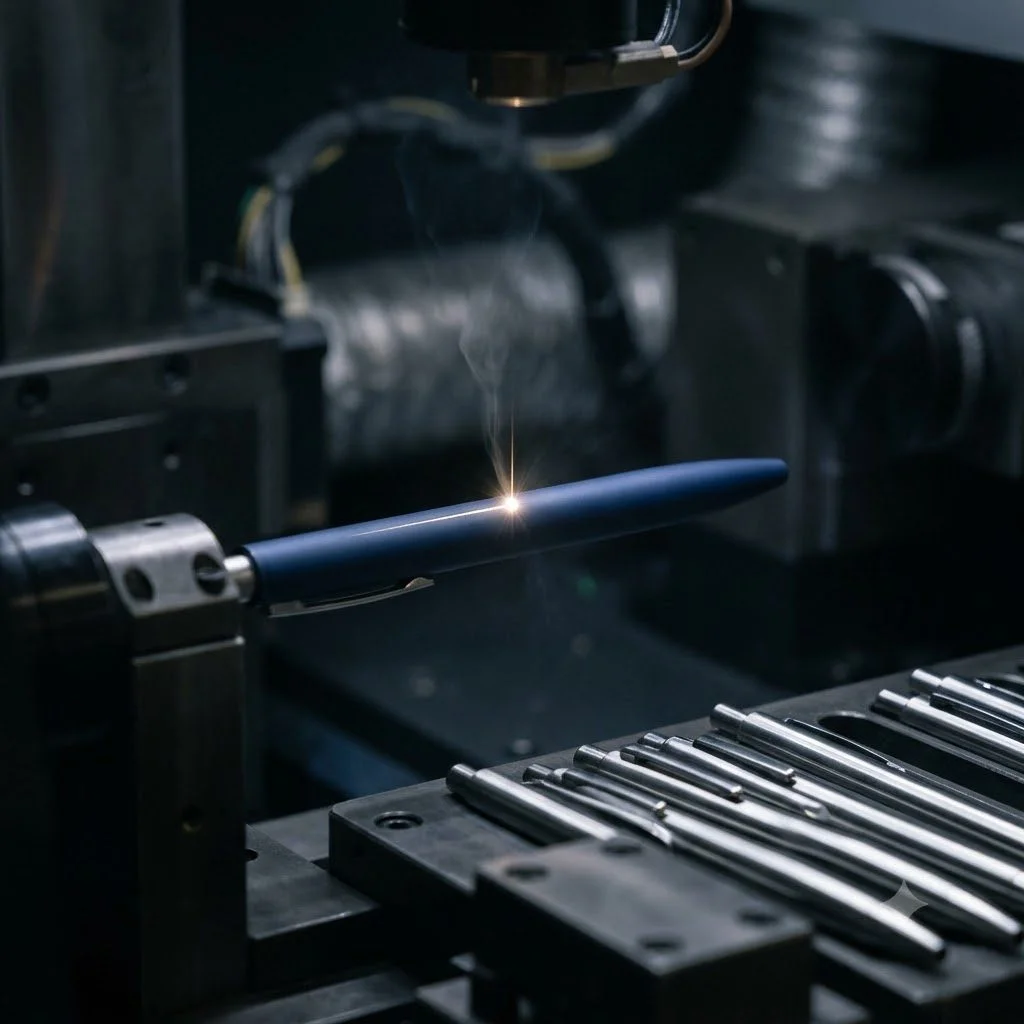
Aluminium is light, strong for its weight and naturally corrosion-resistant. It is ideal for slim metal pens and multi-function pens where a metal feel is wanted without heaviness. Aluminium takes anodising, an electrochemical process that thickens its natural oxide layer, which can then be dyed in vivid colours. Laser engraving on anodised aluminium removes the coloured layer to reveal bright metal, creating crisp, high-contrast logos.

Stainless steel
Stainless steel is tough, scratch-resistant and corrosion-resistant. It has a cool, clean, professional look, often brushed or polished. It is heavier than aluminium but usually lighter than solid brass for the same design. Stainless steel suits pens that face hard daily use and professional settings.
Copper and bronze
Copper and bronze are used occasionally for distinctive pens that develop a patina over time. They are heavy and need care to avoid tarnish.
Titanium
Titanium is exceptionally strong and light, and is used in some high-end and outdoor pens. It is harder to machine and therefore costly.
Zinc alloy
Zinc alloys are die-cast into detailed shapes for clips, caps and decorative parts. They feel heavy and take plating well, but are less strong than brass or steel.
How metal pens are made
Metal barrels are made by drawing or extruding tubes, then cutting, CNC machining or turning details, and in some cases die casting components. Parts are polished, then finished by plating, lacquering, anodising, powder coating or PVD coating. Clips are stamped or cast. Precise machining means threads and mechanisms fit smoothly, which is a big part of why good metal pens feel so solid.
Metal finishes
| Finish | Look | Notes |
|---|---|---|
| Chrome plating | Bright, mirror-like | Classic; shows fingerprints |
| Satin / brushed chrome | Soft sheen | Hides fingerprints and light scratches |
| Gold-tone plating | Warm, luxurious | Often used for trims |
| Gunmetal / black chrome | Dark, modern | Popular for executive pens |
| Lacquer | Deep glossy colour | Classic for gift pens; laser reveals metal beneath |
| Powder coat / matte paint | Soft, matte colour | Good grip; strong contrast when engraved |
| Anodised (aluminium) | Vivid metallic colours | Durable colour; bright engraving |
| PVD coating | Very hard metallic colours | Highly scratch-resistant |
| Rubberised / soft-touch | Velvety | Comfortable; may wear over time |
Strengths of metal pens
- Premium look, weight and feel.
- Long lifespan with refills.
- Permanent, precise laser engraving.
- Strong perceived value for gifts and awards.
- Metal can be recycled at the end of life.
Limitations
- Higher cost per pen.
- Heavier pens can tire some hands over long sessions.
- Polished finishes show fingerprints and scratches.
- Fewer colours than plastic, except anodised aluminium and coated finishes.
Best for
Executive and client gifts, awards, conferences, senior staff, signing pens and any brand that wants a lasting, premium impression. Explore our premium metal pens and regular metal pens, and read Metal Promotional Pens That Leave a Lasting Impression.
Weight, balance and comfort
How much does a pen weigh?
Typical plastic pens weigh only a few grams to around ten grams. Aluminium pens are usually a little heavier, and brass and steel pens can weigh several times as much as a plastic pen. Gift pens are often deliberately heavier because weight signals quality.
Light pens
Light pens are agile and reduce fatigue over long writing sessions. Students, writers and anyone writing for hours often prefer them. Plastic, aluminium, bamboo and paper pens are light.
Heavy pens
Heavy pens feel solid and their weight can help the tip glide, which some people find steadies their handwriting and makes signatures more confident. But a very heavy pen can tire the hand during long sessions.
Balance
Balance is where the weight sits. A pen balanced near the grip feels controlled; a pen heavy at the back can feel as if it is tipping out of your hand. Posting a cap on the back of a capped pen moves the balance backwards.
Diameter
Thicker pens need less pinching and can be more comfortable for long writing and for people with joint pain. Slim pens suit small hands, pockets and diaries.
Surface and texture
Glossy plastic and polished metal can become slippery with sweaty fingers, particularly in hot, humid weather. Matte finishes, rubber grips and textured metal give better control.
Temperature
Metal feels cool to the touch at first and warms quickly in the hand. Plastic, wood and bamboo feel warmer from the start.
Try before you choose
Comfort is personal. The best way to judge is to write a full paragraph with each candidate pen, at your normal speed, and notice whether your grip relaxes or tightens. Ask two or three colleagues with different hand sizes to do the same before choosing a pen for a whole team.
Choosing for comfort
- Long writing sessions: light to medium weight, medium-thick barrel, soft or textured grip.
- Signatures and short notes: heavier metal pens feel impressive.
- Pocket and diary use: slim, light pens with strong clips.
- Hand pain: wider, lighter pens with cushioned grips and smooth ink.
- Hot climates: matte or rubberised grips for control.
Metal pens: details that matter
Wall thickness
Thicker metal walls give a more solid feel and resist denting. Very thin-walled metal pens can feel hollow and dent easily. Weight is a useful clue.
Threads and joints
Well-machined threads turn smoothly and close without gaps. Poorly cut threads can bind, wobble or strip. Check that sections line up neatly when the pen is assembled.
Plating quality
Plating should be even, without bubbles or pits. Thin or poor plating can wear through at the clip and grip. Good metal pens often have multiple plating layers under the final finish.
Lacquer and coatings
Lacquer and powder coat should be smooth and uniform, with no drips or orange-peel texture. Ask about scratch resistance if pens will be carried with keys or coins.
Clip spring
A metal clip should hold firmly on a shirt pocket or diary cover and spring back without bending permanently.
Mechanism feel
Twist mechanisms should turn with even resistance and stop positively; click mechanisms should feel crisp and quiet. Rattles suggest loose tolerances.
Refill compatibility
Metal pens are designed to last, so check that their refills are easy to get, ideally a standard format. See Pen Refills Explained.
Skin sensitivity
A small number of people are sensitive to nickel, which can be present in some platings and alloys. For gifts to unknown recipients, grips in lacquer, powder coat or stainless steel are generally a comfortable choice. If a recipient has a known sensitivity, ask the supplier about materials.
Brass vs aluminium vs stainless steel
| Brass | Aluminium | Stainless steel | |
|---|---|---|---|
| Weight | Heaviest | Lightest | Medium to heavy |
| Feel | Solid, luxurious | Sleek, modern | Cool, professional |
| Colours | Via plating, lacquer, coatings | Vivid anodised colours | Natural steel, coatings |
| Scratch resistance | Depends on finish | Good when anodised | Very good |
| Corrosion | Needs finish to prevent tarnish | Naturally resistant | Highly resistant |
| Engraving | Excellent through coatings | Bright silver on colour | Precise, subtle |
| Cost | Higher | Moderate | Moderate to higher |
| Best for | Executive gifts, awards | Delegate kits, colourful metal promos | Durable daily pens, professional gifts |
Choose brass when the pen must feel unmistakably premium: board gifts, VIP clients, awards and retirements. Its weight and the depth of lacquered or plated finishes communicate value immediately.
Choose aluminium when you want the feel of metal in larger quantities, in brand colours, without heaviness. Anodised colours with bright engraved logos are striking, and aluminium is comfortable for long writing.
Choose stainless steel when durability and a clean, professional look matter most: pens for engineers, doctors, consultants and anyone who carries a pen every day in a pocket or bag.
Many ranges mix metals: a brass body with stainless or chrome trims, or an aluminium barrel with a zinc-alloy clip. Ask what each part is made of when comparing quotes.

Materials for high-hygiene environments
Since the pandemic, many hospitals, clinics, banks, hotels and offices wipe shared pens with alcohol-based sanitisers several times a day. This is hard on some materials and finishes.
- Printed logos can fade or rub off with repeated alcohol wiping. Ask for durable print inks, place logos away from the grip, or choose laser engraving on metal.
- Soft-touch coatings can become sticky or wear through with frequent sanitising; plain plastics and metals are more robust.
- Glossy plastics may dull or develop fine cracks with some solvents; ABS and polycarbonate generally cope well with occasional wiping, but test with your sanitiser.
- Stainless steel and anodised aluminium handle regular cleaning well.
- Wood, bamboo and paper are not suitable for frequent wet cleaning.
- Smooth, simple shapes with few crevices are quicker and more effective to clean.
Some suppliers offer pens with antimicrobial additives in the plastic. If this matters to you, ask for the specific additive and test data, and remember that additives do not replace regular cleaning.
Eco-friendly pen materials
As organisations commit to sustainability, eco materials have become one of the fastest-growing categories in branded pens. “Eco” covers several different approaches, each with its own strengths.
Recycled plastics
Recycled plastics are made from post-consumer waste (such as bottles and packaging) or post-industrial scrap. Recycled PET (rPET) from bottles and recycled ABS are common in pens. They look and perform much like virgin plastic, though colours may be slightly less bright. Their main benefit is reducing demand for new fossil-based plastic. Read From Waste to Write: How Recycled Pens Are Redefining Sustainability.
Plant-based plastics
Bio-based plastics such as PLA (polylactic acid) are made from renewable crops like corn or sugarcane. Their benefit is a renewable feedstock. Note that “biodegradable” claims depend on conditions: many bio-plastics break down only in industrial composting facilities, not in soil or the sea. Ask suppliers for specific, verifiable information.
Wheat straw and natural-fibre composites
Some pens blend plastic with natural fibres such as wheat straw, giving a speckled, natural look and reducing the plastic content.
Recycled paper and cardboard
Paper barrels made from rolled recycled paper or cardboard are very light and clearly communicate a “green” message. They are less durable than plastic or metal and suit short-term giveaways and events.
Bamboo
Bamboo grows fast and is a renewable resource. Bamboo pens are light, warm to the touch and engrave beautifully, giving a natural look that suits eco-themed brands.

Wood
Wooden pens offer warmth, grain and individuality; no two are exactly alike. They are popular for natural, craft and premium eco gifts. Wood needs protection from moisture and can crack if mistreated.
Recycled metal
Aluminium and steel are highly recyclable, and some pens use recycled metal content. A durable metal pen that is refilled for years can itself be a sustainable choice.
Refillable design
The single biggest sustainability factor is often not the material but whether the pen is refillable and durable. A long-lasting refillable pen can produce less waste over its life than several disposable “eco” pens. See Pen Refills Explained.
Avoiding greenwashing
When buying eco pens, ask:
- What percentage of the material is recycled or bio-based?
- Is the recycled content post-consumer or post-industrial?
- Are there certificates or documentation?
- Is the pen refillable?
- Is the packaging also low-impact?
- Are “biodegradable” or “compostable” claims specific about conditions?
Honest, specific claims protect your brand’s credibility and make your sustainability story easier to tell. Explore our eco-friendly pens, Eco Klick vs Eco Polo and how eco pens are made.
Plastic vs metal vs eco: side by side
| Plastic | Metal | Eco | |
|---|---|---|---|
| Cost per pen | Lowest | Highest | Low to medium |
| Perceived value | Practical | Premium | Values-driven |
| Weight | Light | Medium to heavy | Light |
| Lifespan | Moderate to long (refillable) | Very long | Varies by material |
| Colours | Unlimited | Limited (wider with anodising and coatings) | Natural tones, some colours |
| Best branding | Pad / screen printing | Laser engraving | Printing or laser (bamboo, wood) |
| Ideal quantity | Hundreds to tens of thousands | Tens to thousands | Hundreds to thousands |
| Ideal use | Mass reach, daily use | Gifts, awards, executives | Sustainability campaigns |
Materials and branding methods
The material of a pen decides which branding methods work best. Getting this pairing right is the key to a logo that looks sharp and lasts.
| Material | Best methods | Notes |
|---|---|---|
| Plastic (ABS, PS, PC) | Pad printing, screen printing, digital printing | Many colours; curved surfaces suit pad printing |
| Soft-touch coated plastic | Pad printing, laser on some coatings | Test durability on coating |
| Chrome-plated metal | Laser engraving | Subtle, tone-on-tone mark |
| Lacquered or powder-coated metal | Laser engraving | High contrast: coating removed to reveal metal |
| Anodised aluminium | Laser engraving | Bright silver mark on colour |
| Stainless steel | Laser engraving / marking | Permanent, precise |
| Bamboo and wood | Laser engraving | Warm, natural burnt-brown mark |
| Recycled paper | Pad or screen printing | Simple one or two-colour logos work best |
| Recycled and bio plastics | Pad printing | Test colour contrast on natural tones |
Pad printing on plastic
Pad printing transfers ink from an etched plate to the pen via a soft silicone pad, which wraps around curved surfaces. It is the most common method for plastic pens and allows brand colours.
Laser engraving on metal, wood and bamboo
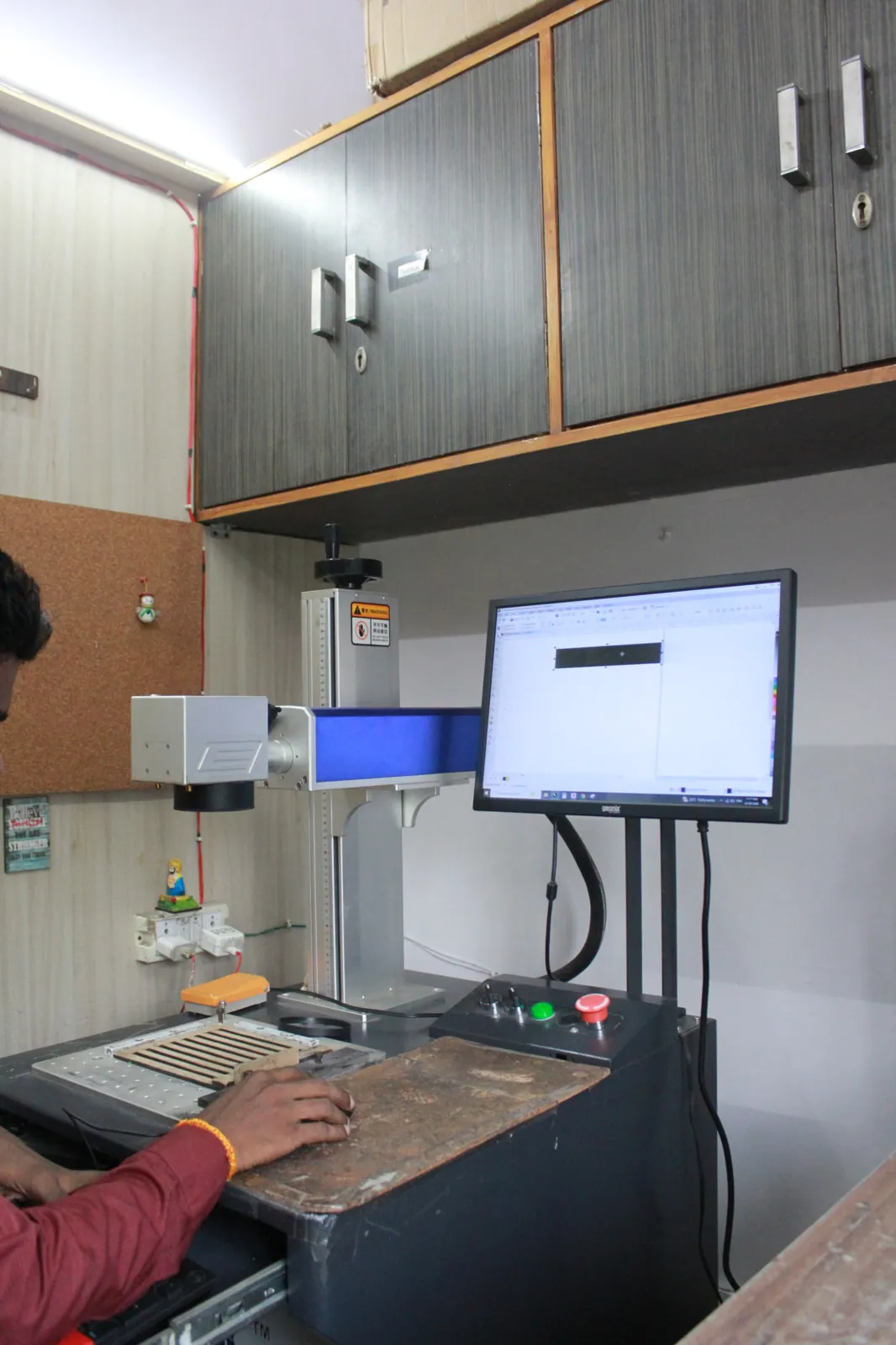
Laser engraving uses a focused beam to remove coating or mark the surface. It is permanent, precise and cannot rub off, making it ideal for gift pens. On wood and bamboo, it creates a natural burnt effect.
Choosing colours for contrast
- White or light logos on dark plastic; dark logos on light plastic.
- Dark coatings on metal engrave to bright silver or brass for maximum contrast.
- Chrome engraves to a frosted, subtle mark: elegant but less visible.
- On natural materials, keep logos simple and bold.
Print area
Materials and shapes determine the available print area. Plastic pens often offer large barrel and clip areas; slim metal pens have smaller spaces suited to engraved names or compact logos.
For a full guide to methods, costs and artwork, read Pen Branding Methods Explained and see our customisation options.
Eco materials: evidence and certification
Because eco claims influence buying decisions, it is worth knowing what evidence to look for.
Recycled content documentation
Suppliers of recycled plastics may be able to provide documentation of recycled content from their resin suppliers. Independent schemes such as the Global Recycled Standard (GRS) certify recycled content and chain of custody for some materials. Ask whether the pens you are buying are covered, not just the raw material.
Wood and paper sourcing
For wooden and paper pens, certification schemes such as FSC (Forest Stewardship Council) indicate responsibly managed forest sources. Again, check whether the finished product carries the certification.
Bio-based content
For plant-based plastics, ask what percentage of the material is bio-based and whether any additives or blends are used.
Compostability claims
Claims that a pen is compostable should specify the conditions and standards. Many bio-plastics require industrial composting and will not break down in a home compost heap or in the environment. A pen also contains a refill, ink, spring and clip, which may not be compostable.
Be precise in your own messaging
When you hand out eco pens, describe them accurately: “made with recycled plastic” or “bamboo barrel” is clearer and safer than vague phrases like “100% green”. Accurate claims build trust; exaggerated ones can damage your brand.
Packaging
Choose packaging that matches the eco message: minimal, recyclable, paper-based where possible, and no unnecessary plastic sleeves.
For more context, read our eco-friendly pen supplier guide and eco-conscious pen design.
Natural materials: wood and bamboo up close
Character
Natural materials are valued precisely because each piece is unique. Grain, colour and small variations make every wooden or bamboo pen slightly different, which recipients often appreciate as a mark of authenticity.
Common woods
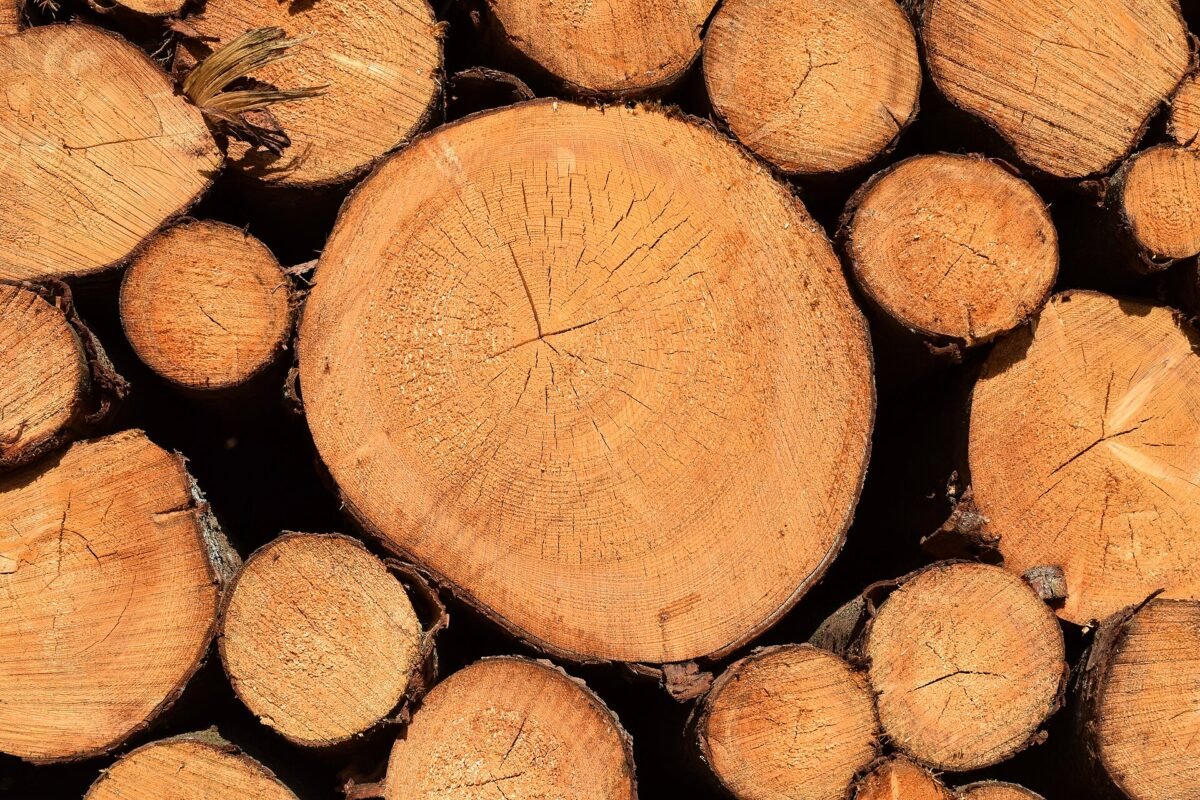
Pen makers use a range of hardwoods, chosen for strength, grain and colour, from pale woods such as maple to rich, dark woods such as walnut and rosewood. In India, sheesham (Indian rosewood) is a traditional favourite for crafts and gifts. Ask suppliers which species they use and where it comes from.
Finishes
Wood is usually sealed with oil, wax or lacquer to protect it from moisture and handling. Oiled finishes feel natural but need occasional care; lacquered finishes are more protective but feel less woody.
Bamboo specifics
Bamboo is technically a grass and grows quickly, which is one reason it is seen as a renewable choice. It is light and strong along its length, and engraves to a warm brown.
Care
- Keep away from water and humidity where possible.
- Avoid direct sun and heat, which can dry and crack wood.
- Wipe with a dry cloth; occasionally apply a little wax or oil if recommended.
- Do not soak or put in dishwashers.
Branding
Laser engraving is the natural choice, giving a permanent, toned mark that suits the material. Simple, bold logos work best because grain can interrupt fine detail.
Best for
Eco-themed events, CSR programmes, natural and organic brands, craft and heritage brands, and premium gifts for recipients who appreciate natural materials.
Durability: how materials stand up to daily life
Drops and impacts
Polycarbonate and ABS absorb impacts well; polystyrene is more likely to crack. Metal barrels rarely break but can dent or scratch. Wood and bamboo can split if dropped on hard floors, especially when dry.
Scratches
Polished chrome and glossy lacquer show scratches; brushed steel, matte coatings and textured plastics hide them. PVD and anodised finishes are particularly scratch-resistant.
Heat and sunlight
Some plastics soften or warp in very high heat, such as on a car dashboard in summer, and colours can fade in strong sunlight. Metal handles heat better but gets hot to touch. Wood can dry and crack in heat.
Moisture and humidity
Plastic and stainless steel are unaffected by humidity. Untreated wood and paper can swell or soften. Plated metals can corrode if the plating is damaged.
Chemicals and cleaning
Hand sanitiser, alcohol wipes and solvents can dull some plastics and coatings or remove printed logos. In hospitals and public counters, where pens are cleaned often, laser-engraved metal or robust printed plastic pens with durable inks last best.
Wear on printed logos
Printed logos on frequently handled areas can wear over months of use. Placing logos where fingers do not rub, choosing durable inks or using laser engraving prevents this.
Mechanism life
Click mechanisms are tested for thousands of clicks. Good materials and precise moulding prevent the mechanism from wearing loose or sticking.
How pen materials are tested
Responsible manufacturers check materials and finished pens for:
- Dimensional accuracy: parts fit and threads turn smoothly.
- Drop resistance: pens survive typical falls.
- Clip strength: clips spring back without breaking.
- Click life: mechanisms survive repeated use.
- Finish adhesion: coatings and prints resist rubbing and peeling.
- Colour consistency: batches match approved samples.
- Heat stability: pens and refills perform after storage in warm conditions.
When ordering in bulk, ask your supplier how they check these points and request pre-production samples. See Buying Pens in Bulk.
Caring for pens by material
| Material | Clean with | Avoid |
|---|---|---|
| Plastic | Soft damp cloth, mild soap | Strong solvents, heat |
| Chrome / polished metal | Soft dry microfibre cloth | Abrasive cleaners, metal polish on plating |
| Lacquer / powder coat | Soft cloth | Solvents, abrasive pads |
| Anodised aluminium | Soft cloth, mild soap | Strong alkaline cleaners |
| Stainless steel | Soft cloth; mild soap | Bleach, steel wool |
| Wood / bamboo | Dry cloth; occasional wax or oil | Soaking, dishwashers, direct sun |
| Rubber grips | Damp cloth | Alcohol, oils |
For a complete care routine, see Pen Care and Maintenance.
Choosing the right material for the job
Mass promotions and events
When the goal is to put a brand into as many hands as possible, at trade shows, exhibitions, roadshows, product launches and public events, plastic pens are the natural choice. They are affordable at large quantities, come in brand colours, offer generous print areas and are light to ship and carry. A good-quality ABS click pen with a smooth refill makes a far better impression than the cheapest disposable stick pen, at a modest difference in cost. Pair a well-chosen colour with a clear one- or two-colour logo and a website or phone number. See branded pens for events and colourful promotional pens.
Everyday office use
For pens used every day by staff, durability and comfort matter more than first impressions. Refillable ABS or polycarbonate pens with comfortable grips and strong clips are a sensible default. For managers and staff who sign frequently, consider aluminium or stainless steel pens that last for years.
Schools and colleges
Students need light, comfortable and affordable pens that survive bags and drops. ABS and polycarbonate are ideal. For prize days, graduations and teacher gifts, metal pens or gift sets make the occasion special.
Banks, hospitals and public counters
Counter pens are handled by many people and cleaned frequently. Choose tough plastics or metal with durable branding, and consider tethered designs. Avoid finishes that are damaged by alcohol-based sanitisers.
Executive and client gifts
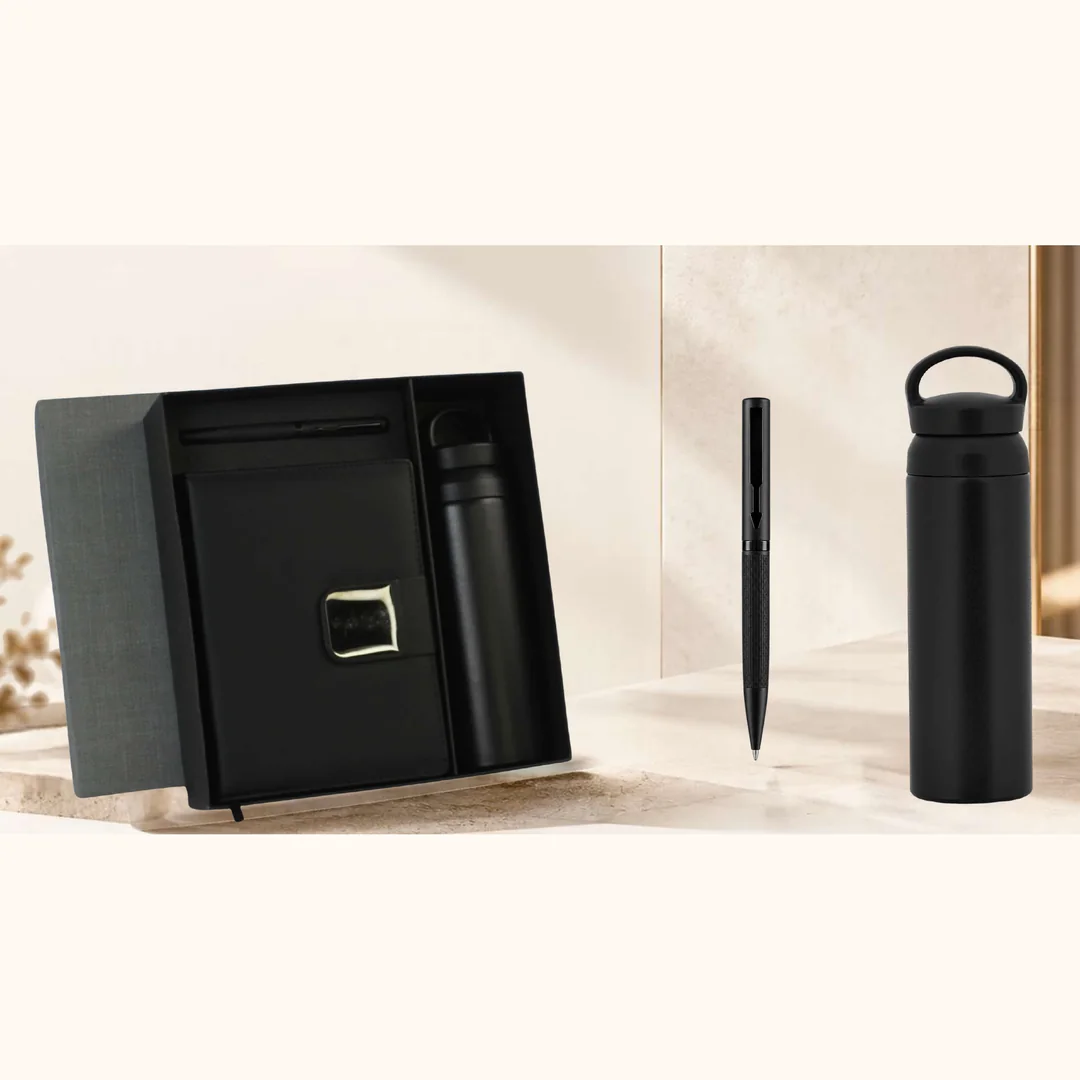
For senior leaders, VIP clients, board members and long-service awards, metal is the expected standard. Brass gives the most substantial feel; lacquered or coated finishes allow elegant colour and high-contrast engraving. Present the pen in a gift box, ideally with the recipient’s name engraved. See Choosing the Right Pen for Executive Gifting and premium custom pens for corporate gifts.
Conferences and seminars
Delegate kits benefit from a mid-range pen: a slim aluminium or metal-look plastic pen that feels a step above a giveaway without a premium price. Coordinate pen colour with conference branding.
Hotels and hospitality
Guest pens should feel welcoming and reflect the property’s positioning: smart plastic for business hotels, metal or wood for luxury and boutique properties.
Sustainability campaigns
For brands with environmental messages, eco materials reinforce the story. Recycled plastic pens suit broad distribution; bamboo and wood suit premium eco gifts; paper pens suit short events. Make sure claims are accurate.
Field and industrial use
Engineers, technicians and field staff need tough pens: stainless steel or rugged polycarbonate, with secure clips and reliable refills, possibly pressurised.
Personal use
For your own pen, choose the material that feels best in your hand and suits your style. Many people keep a light plastic pen for daily notes and a metal or wooden pen for signing and special occasions.
Mixed audiences
When one order must serve very different recipients, such as a company anniversary where staff, partners and senior clients all receive pens, consider one design produced in two materials: a quality plastic version for broad distribution and a metal version, in a gift box with engraving, for key relationships. Keeping the same colour palette and logo placement ties the two together visually while matching the material to the relationship. This approach is often more effective, and more economical, than choosing a single compromise material for everyone.
Pen material myths
“Metal pens always write better.”
Writing quality comes from the refill and tip, not the barrel. A good plastic pen with a smooth refill can write better than a metal pen with a poor one.
“Plastic pens are always cheap and flimsy.”
Quality ABS and polycarbonate pens, precisely moulded with good clips and mechanisms, are durable and comfortable. The cheapest polystyrene stick pens are a different category.
“Heavier means higher quality.”
Weight signals quality to many people, but a well-balanced light pen can be better made and more comfortable than a heavy, poorly balanced one.
“Eco pens don’t write as well.”
Eco pens use the same types of refills as conventional pens. Writing quality depends on the refill, not the barrel material.
“All eco pens are biodegradable.”
Most eco pens are recycled or renewable, not biodegradable, and even bio-based plastics usually need industrial composting. Refills and springs are not biodegradable.
“Chrome is always metal.”
Chrome-look finishes are often applied to plastic parts. Weight and temperature are good clues.
“Wooden pens can’t be branded neatly.”
Laser engraving on wood and bamboo produces crisp, attractive logos, often more distinctive than prints.
“Laser engraving works on everything.”
Laser engraving suits metal, coated metal, wood and bamboo. On many plastics it gives poor contrast or melts the surface, so printing is usually better.
Writing a material specification
When ordering, include materials in the specification to avoid surprises.
- Barrel material: for example ABS, polycarbonate, aluminium, brass, stainless steel, recycled plastic, bamboo.
- Finish: gloss, matte, soft-touch, chrome, lacquer, anodised, powder coat.
- Colour: stock colour name or Pantone reference.
- Clip and trims: metal or plastic; chrome, gold-tone, black.
- Grip: moulded, rubber or textured.
- Mechanism: click, twist or cap.
- Refill: ink type, colour and tip size.
- Branding: method, colours, position, size.
- Eco claims: recycled or bio-based percentage and documentation.
- Packaging: bulk, individual sleeves or gift boxes.
- Samples: approval of material, colour and branding before production.
For the full ordering process, see Buying Pens in Bulk.
Matching material to mechanism and pen type
Click pens
Click pens are the most popular format for everyday and promotional use. In plastic, they are light and affordable with large print areas; in metal, they feel solid and quick to use. The mechanism itself is usually plastic or a mix of plastic and metal parts, so quality moulding matters in both cases. Read why click pens are a corporate favourite and click vs cap pens for branding.
Twist pens
Twist mechanisms suit metal pens, where precise machining gives a smooth, satisfying action and a seamless look. They are common in executive and gift pens.
Capped pens
Capped pens are essential for liquid-ink rollerballs and fountain pens, which must be sealed to prevent drying. Plastic caps are light and colourful; metal caps add weight and elegance. A well-fitting cap is a mark of quality.
Stick pens
Simple stick pens with caps are usually polystyrene or polypropylene and are the most economical option for very large distributions.
Multi-function pens
Pens that combine a stylus, highlighter or multiple ink colours often use aluminium or plastic to keep weight manageable.
Fountain pens
Fountain pens use resins, plastics, metals and traditional materials such as ebonite. The feed is usually plastic or ebonite; the nib steel or gold. See Fountain Pens for Beginners.
Questions to ask your supplier about materials
- What exactly is the barrel made of, and what are the clip, grip and trims made of?
- Is the finish plated, lacquered, anodised, powder-coated or printed?
- How does the finish hold up to sanitisers and daily handling?
- What branding methods do you recommend for this material, and why?
- Can we see and approve physical samples in our colour?
- What is the refill, and are replacements easy to get?
- For eco pens, what percentage is recycled or bio-based, and what documentation is available?
- How are pens packed, and can packaging be reduced or made recyclable?
- How do you check quality during production?
- What are the lead times for stock colours versus custom colours?
A good supplier will answer these clearly and send samples. Our team is happy to do both.
Materials and budget
Material is one of the biggest factors in pen price, but not the only one. Here is how budget and material interact.
What drives pen cost
- Material: plastic is cheapest per pen; brass and stainless steel the most expensive; eco materials vary.
- Manufacturing process: injection moulding is efficient at volume; machining metal takes more time.
- Finish: plating, lacquer, anodising and soft-touch coatings add cost.
- Mechanism: twist and premium click mechanisms cost more than simple caps.
- Refill: smooth, long-life and metal refills cost more than basic ones.
- Branding: number of colours, positions and method.
- Packaging: bulk packs cost least; individual gift boxes add cost.
- Quantity: per-pen prices fall as quantities rise, especially for moulded plastic pens.
Spending wisely
- Match material to recipient value. Spend more per pen on fewer, high-value recipients; spend less per pen for mass reach.
- Don’t skimp on the refill. A good refill in a modest plastic body leaves a better impression than a poor refill in a metal body.
- Consider metal-look plastic for a premium appearance at a lower cost and weight.
- Use tiered gifting: plastic for general attendees, aluminium for delegates, brass for speakers and VIPs, all with consistent branding.
- Think lifetime value: a refillable metal pen used for years may cost less per day of brand exposure than many disposable pens.
For full pricing guidance, including GST and freight, see Buying Pens in Bulk.
A tiered material strategy
Many organisations use different materials for different audiences while keeping one visual identity.
| Tier | Audience | Material | Branding |
|---|---|---|---|
| 1. Reach | Public, event visitors, customers | ABS or recycled plastic | Pad print in brand colour |
| 2. Engagement | Delegates, partners, staff | Aluminium or metal-look plastic | Laser engraving or print |
| 3. Relationship | VIP clients, senior staff, awards | Brass or stainless steel in gift box | Laser engraving, names |
| 4. Values | Sustainability events, CSR | Bamboo, wood or recycled | Laser engraving or print |
This approach spreads the budget sensibly and makes recipients at every level feel valued, while a consistent logo, colour and style keep the brand instantly recognisable across all tiers.
Materials and sustainability in depth
Think about the whole life cycle
A pen’s environmental impact comes from raw materials, manufacturing, transport, use and end of life. A material that looks green at one stage may not be at another. For example, a heavy metal pen uses more energy to make than a plastic pen, but if it is refilled for ten years, its impact per year of use can be lower than repeatedly buying disposable pens.
Durability is sustainability
The longer a pen is used, the lower its impact per page. Choosing pens that people keep, because they write well and feel good, is one of the most effective sustainability decisions.
Refillability
Refillable pens let the body, clip and mechanism stay in use. Offering refills alongside branded pens extends their life and keeps the brand in hand.
Recycled content
Recycled plastics and metals reduce demand for virgin materials. Look for specific percentages and documentation.
End of life
Mixed-material pens are hard to recycle because metal, plastic, ink and springs are combined. Single-material bodies and easily separated parts help. Metal parts are widely recyclable where collection exists.
Packaging
Packaging can outweigh the pen. Bulk packing for internal use and recyclable paper-based boxes for gifts reduce waste.
Read more in Dyna Eco Series, How Our Eco Pens Help Reduce Your Brand’s Carbon Footprint and sustainable corporate gifts.

A short history of pen materials
Natural materials
For thousands of years, pens were made from natural materials: reeds and bamboo cut to a point, bird feathers shaped into quills, and wooden holders for metal nibs. In India, reed and bamboo pens (kalam) were used for manuscripts and calligraphy, and are still made by hand for traditional calligraphy today.

Steel nibs and wooden holders
In the nineteenth century, mass-produced steel nibs replaced quills, fitted into simple wooden or bone holders. Writing desks gained brass inkwells and pen stands.
Hard rubber and celluloid
Early fountain pens were made from vulcanised hard rubber, known as ebonite, which was strong, warm to the touch and resistant to ink. In the early twentieth century, celluloid, one of the first plastics, allowed colourful, patterned pens that became icons of their era.
Ebonite in India
Indian pen makers adopted ebonite for hand-turned eyedropper fountain pens, a tradition that some workshops continue. Fountain pens were the everyday pen of Indian schools and offices for decades, and DYNA itself began making fountain pens in Delhi in 1960.
Injection-moulded plastics
After the Second World War, injection moulding of new thermoplastics transformed pen making. Polystyrene, ABS and later polycarbonate made it possible to produce millions of identical, colourful, affordable pen bodies. This, together with the ballpoint, made pens available to everyone.
Metal pens
Through the twentieth century, brass, steel and later aluminium became the materials of premium pens, with chrome, gold-tone and lacquer finishes. Precision machining and plating allowed durable, elegant pens for business and gifts.
The eco era
In recent decades, recycled plastics, plant-based plastics, paper, bamboo and wood have returned natural and responsible materials to the market, driven by concern for plastic waste and corporate sustainability goals.
For the Indian manufacturing story, read The Evolution of Pen Manufacturing in India and Our Journey.
Pen materials in Indian conditions
Heat
In much of India, summer temperatures are high, and pens left in cars, near windows or in hot storerooms can be exposed to far more heat. Good-quality ABS and polycarbonate tolerate everyday heat well; cheaper plastics may soften or warp in extreme conditions. Metal pens become hot to touch in direct sun. Store stock indoors and away from sunlight.
Humidity and monsoon
Humidity does not affect plastic or stainless steel, but it can make untreated wood and paper pens swell or soften. Wooden and bamboo pens should be sealed or finished and stored in dry places.
Sweat and grip
In hot, humid weather, glossy plastic and polished metal can feel slippery. Matte, textured and rubberised grips give better control.
Dust
Dusty environments can affect click mechanisms and grips. Well-sealed designs and regular wiping keep pens working.
Buying preferences
Indian buyers increasingly expect smooth writing at every price point. Plastic pens dominate everyday and promotional use; metal pens dominate gifting, especially during festive seasons such as Diwali; and eco pens are growing quickly among companies with sustainability goals. See Corporate Gifting Pens.
Material choices by industry
| Industry | Typical choice | Why |
|---|---|---|
| Banking and finance | Metal for clients; durable plastic for counters | Trust, longevity, frequent use |
| Healthcare and pharma | Tough plastic with durable print; metal for doctors’ gifts | Cleaning, reliability, professional image |
| Education | ABS and polycarbonate; metal for prizes | Budget, durability, occasions |
| Technology | Aluminium, matte black metal, recycled plastic | Modern look, sustainability |
| Hospitality | Smart plastic; metal or wood for luxury | Guest experience, positioning |
| Real estate | Metal pens for buyers and partners | Premium, memorable handovers |
| Automotive | Metal and metal-look pens | Premium dealership image |
| FMCG and retail | Colourful plastic in brand colours | Mass reach, brand recognition |
| Government and PSUs | Reliable plastic; metal for dignitaries | Value, durability, protocol |
| NGOs and CSR | Recycled, paper, bamboo | Values alignment |
| Manufacturing and engineering | Stainless steel and rugged plastic | Tough environments |
How DYNA works with materials
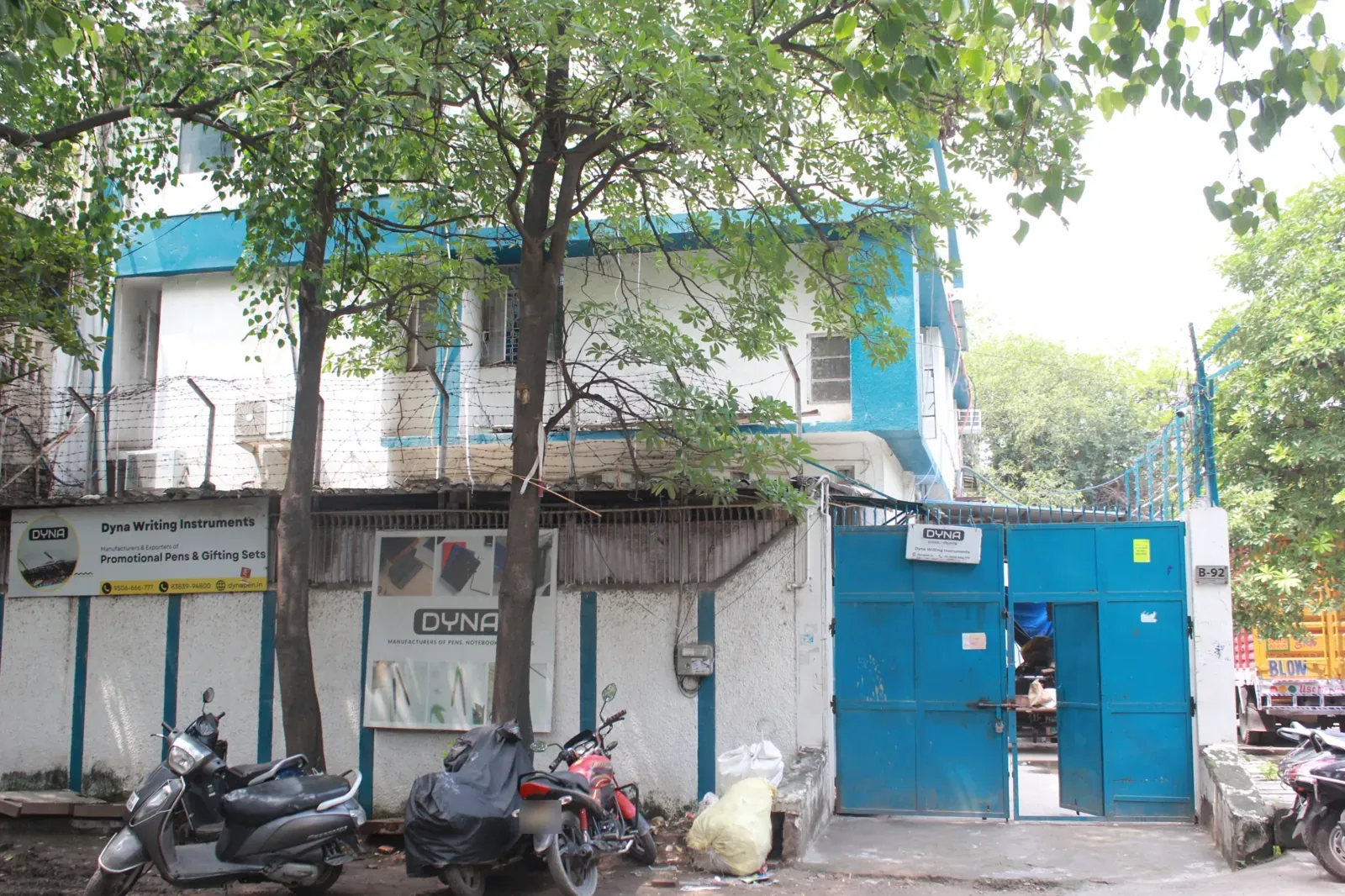
At our facility in Delhi, we have worked with pen materials for more than six decades, starting with fountain pens in 1960 and building ballpoint and refill manufacturing in the late 1970s.
- Moulded plastic pens: injection-moulded bodies in a wide range of colours and finishes, designed for smooth everyday writing and clear branding. See plastic pens.
- Metal pens: regular and premium metal pens with finishes suited to laser engraving. See metal pens.
- Eco pens: options for brands focused on sustainability. See eco-friendly pens.
- Gift pens and sets: fountain, rollerball and ballpoint gift pens such as Black Tie, and gift sets combining pens with diaries and accessories.
- In-house branding: printing and laser engraving matched to each material. See customisation.
Learn more in Company Overview and Our Story & Legacy.
Materials for gifting occasions in India
Diwali and festive gifting
Festive corporate gifting is one of the biggest occasions for premium pens in India. Metal pens with gold-tone or rich lacquered finishes, presented in gift boxes or combined with diaries in gift sets, are popular choices. Order early, as festive demand is high.
New Year and financial year starts
New diaries and planners with matching pens make practical gifts for clients and staff at the start of the calendar or financial year. See our diaries and planners.
Employee onboarding
Welcome kits often include a quality plastic or aluminium pen in brand colours with a notebook. A good pen on day one sets the tone. See personalised employee gifts.
Long-service awards and retirements
Heavier brass or stainless steel pens, engraved with the recipient’s name and years of service, mark milestones with dignity.
Conferences and AGMs
Delegate pens in aluminium or premium plastic, and engraved metal pens for speakers and board members.
Weddings and personal occasions
Engraved pens are thoughtful return gifts and keepsakes; wood and metal suit these occasions.
Teacher’s Day and academic events
Fountain or metal pens are classic gifts for teachers and graduates. See pen gifts for teachers.
The future of pen materials
Pen materials continue to evolve. Expect to see more recycled content in both plastic and metal pens, better documentation of eco claims, wider use of mono-material designs that are easier to recycle, durable coatings that resist frequent sanitising, and a continued appetite for natural materials in premium gifts. At the same time, the fundamentals will remain: people want pens that feel good, write smoothly, last and reflect well on the brand that gave them. Read The Future of Pens in the Digital Age.
Choosing a material: a quick decision path
- Who is the recipient? Mass audience → plastic. Delegates and staff → aluminium or premium plastic. VIPs and senior leaders → brass or stainless steel. Sustainability-minded audiences → recycled, bamboo or wood.
- How long should it last? Months → plastic or paper. Years → metal or quality refillable plastic.
- What should it say about your brand? Friendly and accessible → colourful plastic. Established and premium → metal. Responsible → eco.
- How will you brand it? Multi-colour logo → plastic with printing. Elegant permanent mark → metal, wood or bamboo with laser engraving.
- What is the budget per pen? Set it by audience value, then choose the best material within it.
- Where will it be used? Hospitals and counters → durable, sanitiser-resistant finishes. Outdoors → stainless steel or rugged plastic. Hot storage → quality plastics and metals.
- What about comfort? Long writing → lighter pens with good grips. Signing → heavier pens are fine.
Materials and first impressions
Touch strongly influences how people judge products, and pens are no exception. When a recipient picks up a branded pen, the weight, temperature and surface tell them, in an instant, whether the giver cared. A smooth matte plastic with a crisp click says “practical and thoughtful”. A cool, weighty metal pen with a sharp engraved logo says “valued”. A bamboo pen says “we care about the planet”. None of these messages is better than the others; what matters is that the material matches the message you want to send and the relationship you have with the recipient. That is why material choice deserves as much attention as the logo itself.
For more on how pens shape brand perception, see pens in your branding strategy and the psychology of gift-giving with pens.
How long pens last by material
Lifespan depends on use, care and the refill as much as on the barrel, but materials set realistic expectations.
- Polystyrene stick pens: designed for one refill’s worth of use; they can crack if dropped or chewed.
- Quality ABS and polycarbonate click pens: can last for years if refillable; the clip and mechanism usually decide their life.
- Recycled and bio-based plastic pens: similar to standard plastics of the same type, depending on design.
- Paper and cardboard pens: best for short-term use; moisture and bending shorten their life.
- Bamboo and wood pens: many years with care; avoid moisture and heat.
- Aluminium pens: many years; anodised finishes stay colourful, although dents are possible.
- Brass and stainless steel pens: potentially decades, especially when refilled; finishes may show honest wear over time.
For organisations, this has a practical implication: the longer a branded pen lasts, the longer your logo stays in use and the lower its cost per day of exposure. A refillable metal pen kept on a client’s desk for five years can outperform hundreds of disposable pens handed out at a single event. For individuals, it means that a well-chosen pen can become a long-term companion rather than another item in the drawer. Read How Long Does a Dyna Pen Last?
Pen materials glossary
- ABS
- Acrylonitrile butadiene styrene, a tough, rigid plastic widely used for quality pens.
- Acetal (POM)
- A strong, low-friction plastic used in mechanisms.
- Acrylic (PMMA)
- A glossy plastic used for premium and decorative pens.
- Aluminium
- A light, corrosion-resistant metal that can be anodised in colours.
- Anodising
- An electrochemical process that thickens aluminium’s oxide layer, allowing durable colour.
- Bio-based plastic
- Plastic made from renewable plant sources, such as PLA.
- Brass
- A dense copper-zinc alloy used for premium, heavy pens.
- Celluloid
- An early plastic used for patterned vintage pens.
- Chrome plating
- A thin bright chromium layer over metal or plastic.
- CNC machining
- Computer-controlled cutting of metal parts to precise shapes.
- Die casting
- Forcing molten metal into moulds to make detailed parts.
- Ebonite
- Hard vulcanised rubber used for traditional fountain pens.
- Extrusion
- Pushing molten plastic or metal through a die to form tubes.
- Injection moulding
- Injecting molten plastic into steel moulds to form parts.
- Lacquer
- A glossy coloured coating on metal pens.
- Pad printing
- Printing method that transfers ink via a silicone pad onto curved surfaces.
- PLA
- Polylactic acid, a plant-based plastic.
- Polycarbonate
- A very tough, clear plastic.
- Polypropylene
- A light, flexible, widely recyclable plastic.
- Polystyrene
- An inexpensive plastic used in low-cost pens.
- Post-consumer recycled (PCR)
- Material recycled from products used by consumers.
- Powder coating
- A durable, often matte, coloured finish applied as powder and cured.
- PVD coating
- Physical vapour deposition, a very hard thin metallic coating.
- rPET
- Recycled PET, usually from plastic bottles.
- Soft-touch coating
- A velvety rubber-like coating for grip and feel.
- Stainless steel
- A tough, corrosion-resistant steel alloy.
- TPE
- Thermoplastic elastomer, a rubbery material used for grips.
Frequently asked questions
What are pens made of?
Most pens are made of plastic (ABS, polystyrene, polycarbonate or polypropylene), metal (brass, aluminium or stainless steel) or eco materials (recycled plastic, plant-based plastic, paper, bamboo or wood), with metal or plastic clips, springs and refills.
Which is better, a plastic or metal pen?
Neither is better for everything. Plastic is light, affordable and colourful, ideal for everyday use and promotions. Metal is durable and premium, ideal for gifts and executives.
What is the best plastic for pens?
ABS is a strong all-rounder for quality pens; polycarbonate is tougher and clearer; polystyrene is cheapest but more brittle.
Is brass or aluminium better for pens?
Brass is heavier and feels more premium; aluminium is lighter, comfortable for long writing and takes bright anodised colours. Both engrave well.
Why are some metal pens so heavy?
They are usually made of brass, a dense alloy, sometimes with additional weight in the cap or clip.
Do metal pens last longer?
Generally yes. Metal bodies resist breakage and, with refills, can be used for many years.
Are eco pens really better for the environment?
They can be, if materials are genuinely recycled or renewable, claims are verified and pens are used for a long time. Durability and refillability matter as much as material.
Are bamboo pens durable?
Bamboo pens are reasonably durable for everyday use but should be kept dry and out of direct heat.
What is the best material for laser engraving?
Coated or anodised metals give the highest contrast. Wood and bamboo give a natural engraved look. Chrome gives a subtle mark.
What is the best material for printed logos?
Plastic, especially ABS, with pad or screen printing in brand colours.
Do metal pens get hot in the sun?
Yes, metal conducts heat and can become hot in direct sunlight. Store pens out of the sun.
Can hand sanitiser damage pens?
Frequent alcohol-based cleaning can dull some plastics and coatings and wear printed logos. Laser engraving and durable finishes resist it better.
What is metal-look plastic?
Plastic finished with metallic coating or plating to look like metal, at lower weight and cost.
Which material is best for corporate gifts?
Metal for senior and VIP recipients; quality plastic or eco materials for larger groups.
What materials does DYNA use?
DYNA makes moulded plastic pens, metal pens, eco pens and gift pens. Tell us your audience and budget on WhatsApp and we will recommend the right material and branding.
The DYNA Complete Pen Guide series — ten in-depth guides to choosing, branding, buying and caring for pens:
Related guides and pages
Conclusion
Pen materials shape the first impression, the daily experience and the long-term value of every pen. Plastic delivers reach, colour and comfort at an accessible price; metal delivers weight, durability and prestige; eco materials deliver a story about responsibility. Choose the material that fits the user and the message, pair it with the right branding method and a good refill, and the pen will be used, and remembered, for a long time. When in doubt, hold samples of two or three materials side by side, write with each, and imagine handing them to your recipients: the right choice usually becomes obvious within a minute.
DYNA has worked with plastics and metals since 1960 and offers eco options for sustainability-minded brands. Tell us your audience, quantity and budget on WhatsApp, and we will recommend the right material, finish and branding, with samples before you order.