

A branded pen is one of the few promotional products people actually keep. It sits on a desk, travels in a bag, gets lent to a colleague and signs a hundred documents. Every one of those moments shows your logo, but only if the logo is still there. A print that rubs off in two weeks, a colour that looks muddy on a dark barrel or an engraving that is too small to read wastes the opportunity entirely.
The difference almost always comes down to the branding method. Pad printing, screen printing, laser engraving, UV digital printing, hot foil stamping and embossing each suit different pen materials, logo styles, quantities and budgets. Choose well and your logo looks crisp for years; choose badly and even an expensive pen looks cheap.
This guide explains every common way to brand a pen in plain language: how each method works, which pen bodies it suits, how durable it is, what it costs to set up, and how to prepare your artwork so the result looks the way you imagined. It is written by Dyna Writing Instruments, a Delhi pen manufacturer since 1960 that brands pens, diaries, gift sets and keychains in-house for corporate clients, so it also covers the practical questions buyers ask us every week.
The short answer. For plastic pens in large quantities, pad printing or screen printing gives sharp, economical one- or two-colour logos. For metal pens, laser engraving is the gold standard: permanent, elegant and ideal for names. For full-colour logos and photographs, UV digital printing is the best choice. Hot foil stamping and embossing suit leather, diaries and gift boxes that accompany the pen. When in doubt, choose the method that matches the pen’s surface first and the logo second.
Pen branding methods at a glance
The table below compares the main methods on the points buyers care about most. “Durability” assumes normal daily use; any printed mark will eventually wear if a pen is used heavily for years, while an engraved mark lasts as long as the pen.
| Method | How it works | Best surfaces | Colours | Durability | Best for |
|---|---|---|---|---|---|
| Pad printing | Silicone pad transfers ink from an etched plate onto a curved surface | Plastic barrels and clips, some coated metals | Usually 1–2 spot colours, more with extra passes | Good | Large plastic pen orders, small logos, clips |
| Screen printing | Ink is pushed through a fine mesh stencil | Plastic barrels with a smooth, regular curve | 1–2 spot colours per side | Good to very good | Bold logos and wide print areas on plastic pens |
| Laser engraving | A laser beam removes coating or marks the surface | Coated metal pens, anodised aluminium, wood, bamboo, some plastics | One tone, set by the material | Excellent (permanent) | Executive gifts, names, awards, premium metal pens |
| UV digital printing | Inkjet head prints full colour, cured instantly by UV light | Plastic, coated metal, boxes, flat or gently curved areas | Full colour, gradients, photos | Good | Multi-colour logos, small runs, personalisation |
| Hot foil stamping | Heated die presses metallic foil onto the surface | Leather, PU, paper, card, some plastics | Gold, silver and coloured foils | Good | Diaries, notebooks, pen boxes, pouches |
| Embossing / debossing | A die presses a raised or recessed design | Leather, PU, paper and board | None (blind) or combined with foil | Excellent | Diary covers, premium packaging |
| Doming | A printed sticker is coated with clear resin to form a lens | Flat areas, clip tops, keychains | Full colour | Good | Pen tops, keychains, accessories |
Most corporate orders use more than one method. A typical executive gift set might have a laser-engraved metal pen, a foil-stamped diary and a UV-printed box sleeve, each branded in the way that suits its material.
Why the branding method matters
It is tempting to think of branding as the last, small step after choosing the pen. In practice it shapes how the whole product is perceived. Three things depend on it.
First impressions
People judge a promotional product in the first few seconds. A crisp, well-placed logo on a pen with a matching finish says “this company pays attention to detail”. A blurred print, a logo that wraps awkwardly around the barrel or a colour that clashes with the pen body says the opposite, even if the pen itself is excellent.
Longevity of your message
Pens are valuable as marketing because they last. A good pen can stay in use for many months or years; if its branding fades in weeks, you lose most of that value. Permanent methods such as laser engraving and well-cured prints on the right surface keep the logo visible for the life of the pen.
Cost and timeline
Each method has its own set-up work: plates for pad printing, screens for screen printing, dies for foil and embossing, programming for laser and digital files for UV. Some methods are economical only at volume; others are perfect for small batches or individual names. Choosing the right one keeps both the budget and the delivery date under control.
If you are still deciding which pen to brand, our hub guide Types of Pens: The Complete Guide explains the differences between ballpoint, gel, rollerball and fountain pens, and Corporate Gifting Pens covers how to match the pen to the occasion.
Where a logo can go on a pen
Before choosing a method, it helps to know where branding can physically sit. Every pen has a few natural “print areas”, and each suits different methods.
- Barrel (lower body): the largest area and the most common position for a logo or website. It is curved, so the method must cope with curvature. Pad printing, screen printing, laser engraving and UV printing all work here, depending on the material.
- Cap or upper barrel: on capped pens and twist pens, the cap or upper section is often more visible when the pen sits in a pocket or pen stand.
- Clip: a small, flat or gently curved area that is very visible when the pen is clipped to a pocket, diary or folder. Pad printing and laser engraving are usual here.
- Top button or end cap: a tiny circular area, suitable for a simple symbol, a domed sticker or a small engraving.
- Grip section: rubber grips usually cannot be printed reliably; most logos avoid them.
- Packaging: the pen box, sleeve, pouch or gift set lid can carry larger, more detailed branding than the pen itself.
Many clients use two positions: the logo on the barrel and a website, tagline or name on the opposite side or the clip. A second position adds visibility but also adds a set-up and handling step, so it is worth deciding early.
Print area size and curvature
A pen barrel is narrow and curved. A logo that looks perfect on a business card may become cramped, distorted or simply too small once it is wrapped around a cylinder of roughly a centimetre in diameter. Long, horizontal logos usually work best along the length of the barrel. Square or stacked logos often need to be simplified or placed on the clip or packaging instead. Your supplier should give you the exact print area for the specific pen model before you finalise artwork.
For a step-by-step look at designing a pen around your brand, see How to Design Your Own Branded Pen.
How branded pens deliver value
It is worth pausing on why so many companies continue to invest in branded pens when digital advertising is everywhere. The reasons are practical rather than nostalgic, and they explain why the branding method deserves attention.
Repeated, voluntary exposure
A digital advert is seen for a second and scrolled past. A pen is picked up many times a day, by choice, because the person needs to write. Each time, the logo is seen by the user and often by the people around them in a meeting, at a counter or across a desk.
Low cost per impression
Because a good pen lasts for months and is used daily, the cost per view of the logo becomes very small over its life. This is only true if the branding survives, which is why durable methods matter so much.
Goodwill
A useful gift creates a small sense of reciprocity. People tend to remember who gave them a pen that writes well. A pen that skips or a logo that peels creates the opposite feeling.
Credibility in professional settings
A well-made, well-branded pen on a client’s desk quietly signals quality and attention to detail. This is why many companies choose metal pens with discreet laser engraving for client-facing teams.
Tracking impact
Pens are not usually tracked like digital campaigns, but you can still measure their contribution. Put a dedicated short web address, a WhatsApp number or a QR code on the packaging card; note enquiries that mention an event where pens were distributed; or survey customers and employees about which branded items they still use. For more, read Why Promotional Pens Are Still the Most Effective Corporate Gifts and How Custom Pens Can Strengthen Your Brand Identity.
Pens compared with other promotional items
Mugs stay in kitchens, T-shirts are worn occasionally and bags are used for specific trips. Pens move: from desk to meeting room, from home to office, from one person to another. They are also small and light, which keeps shipping and storage costs low, and they suit almost every audience regardless of age, role or industry. A pen is also one of the few promotional items that people use at the exact moment they are making decisions, signing forms, approving orders and noting phone numbers, which is a valuable moment for a brand to be present. That is why pens remain a core item in nearly every corporate gifting catalogue, often combined with diaries, notebooks and keychains to build fuller kits.
Pad printing
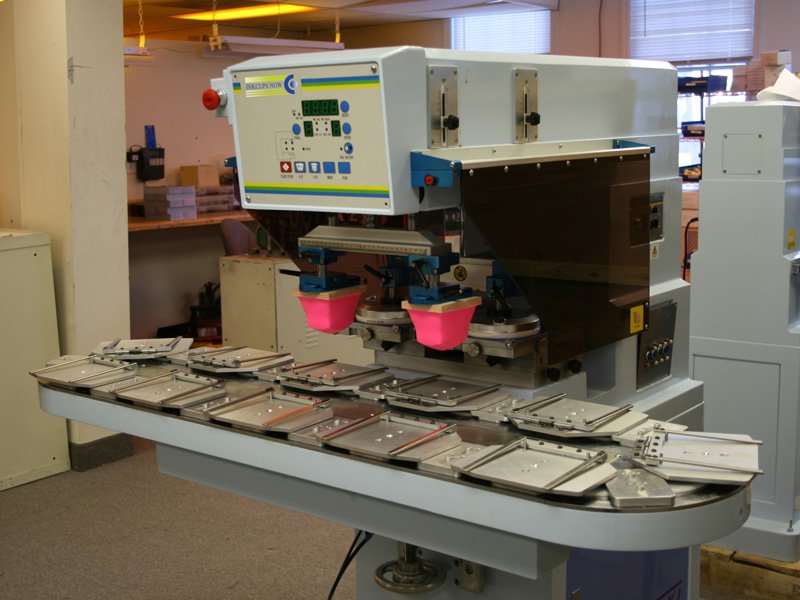
Pad printing (also called tampo printing) is the workhorse of promotional pen branding. If you have ever received a plastic pen with a neat one-colour logo printed on the barrel or clip, it was very probably pad printed.
How pad printing works
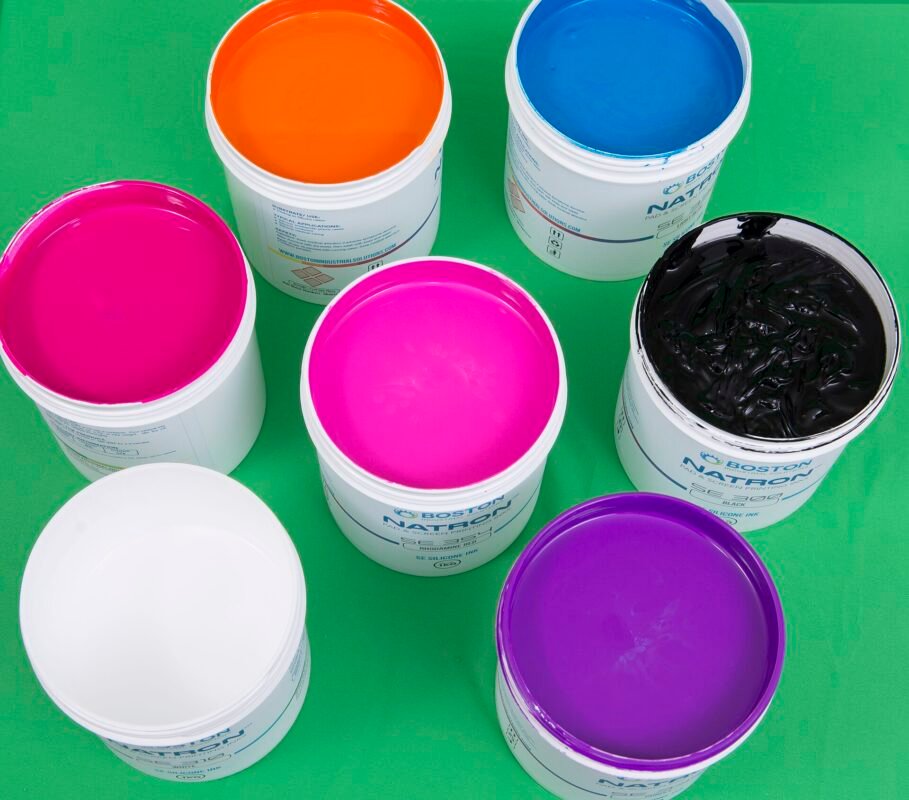
The process uses three main parts: a flat metal or polymer plate (often called a cliché) with your logo etched into it, a soft silicone pad, and a cup of ink.
- Ink is spread across the plate and the excess is scraped away, leaving ink only in the etched logo.
- The silicone pad presses onto the plate and picks up the ink in the shape of the logo.
- The pad lifts, moves over the pen, and presses onto the barrel or clip. Because the pad is soft, it wraps around the curve and transfers the image cleanly.
- The pen moves on and the ink dries or is cured.
Each colour needs its own plate and its own pass. Multi-colour pad printing is possible, but every additional colour adds set-up time and requires accurate registration so the colours line up.
What pad printing does well
- Curved and uneven surfaces. The flexible pad reaches into curves, ridges and recesses that a screen cannot.
- Small, fine detail. Thin lines and small text reproduce well, which suits clips and narrow barrels.
- Speed at volume. Once set up, pad printing is fast and consistent across thousands of pens.
- Economical for one or two colours. The plate is relatively inexpensive, so cost per pen drops quickly with quantity.
Limitations
- Limited print area. The pad can only wrap so far around a barrel; very long or very tall logos may not fit in one pass.
- Spot colours, not photographs. Pad printing works with solid colours. Gradients and photos need digital printing instead.
- Surface preparation matters. Some plastics and coatings need treatment or the correct ink system for the print to bond well. A reputable printer tests adhesion before production.
- Colour on dark barrels. Light colours printed on dark plastic can look weak unless printed with an opaque ink or a second pass.
Durability
Properly cured pad printing on a compatible plastic lasts well through normal use. The parts of a pen that rub most, such as the area where fingers rest or the clip against a pocket, will eventually show wear after long, heavy use, so it is worth placing the logo where hands do not grip constantly. Ask your supplier whether they perform simple adhesion checks such as a tape test or a rub test on samples.
Best for
Large orders of plastic pens for events, conferences, hotels, banks, schools and giveaways; logos with one or two solid colours; small print areas such as clips.
Screen printing
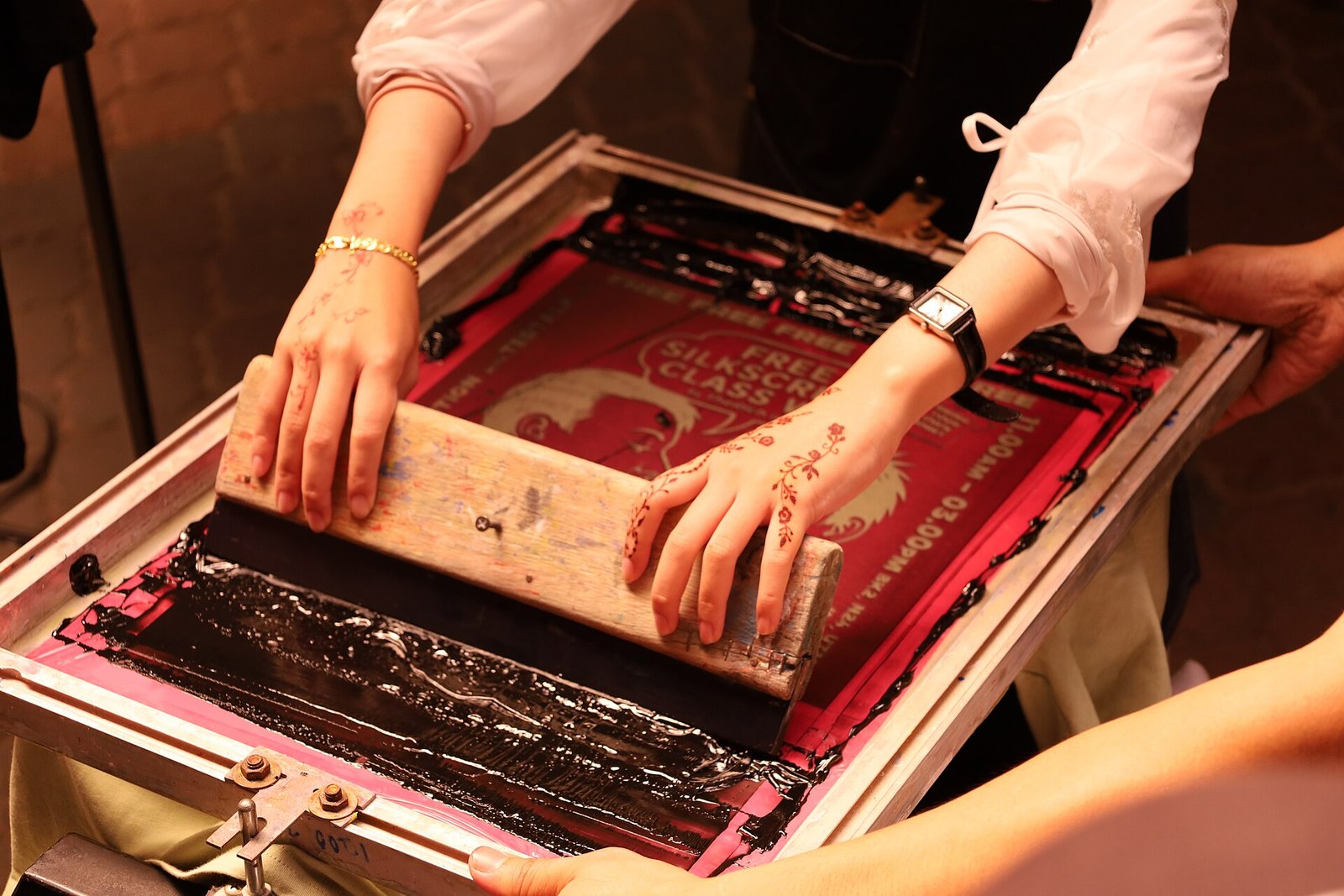
Screen printing (silk screen) is one of the oldest and most versatile printing methods, used on everything from T-shirts to posters. On pens, it is used to print bold, opaque logos on plastic barrels.

How screen printing works
A fine mesh is stretched on a frame and coated with a light-sensitive emulsion. The logo is exposed onto it so that the mesh stays open only where ink should pass. During printing, ink is placed on the screen and a rubber blade called a squeegee drags it across, pushing ink through the open mesh onto the pen. For cylindrical items like pens, a rotary fixture turns the pen in step with the squeegee so the logo wraps around the curve.
What screen printing does well
- Thick, opaque ink layer. Screen printing deposits more ink than pad printing, so colours look vivid and solid, even white on a dark barrel.
- Wider print areas. With rotary fixtures, logos can wrap further around the barrel.
- Bold logos and text. Strong shapes and large lettering reproduce cleanly.
- Durable. The thicker ink film generally stands up well to handling once properly cured.
Limitations
- Needs a regular surface. Screens work best on smooth, evenly curved barrels. Tapered shapes, ridges, clips and recessed areas are harder.
- Fine detail. Very small text and hairlines can fill in because of the mesh.
- One screen per colour. Like pad printing, every colour needs its own screen and pass.
Pad printing or screen printing?
Both are excellent for plastic pens. Choose pad printing for small logos, fine detail, clips and uneven shapes. Choose screen printing for larger, bolder logos on smooth cylindrical barrels, and when you need a strong opaque colour on a dark pen. Your pen maker will usually recommend the right one for the specific pen model.
Best for
Bold one- or two-colour logos on smooth plastic barrels, colourful campaign pens and bright promotional pens where the logo needs to stand out.
Laser engraving
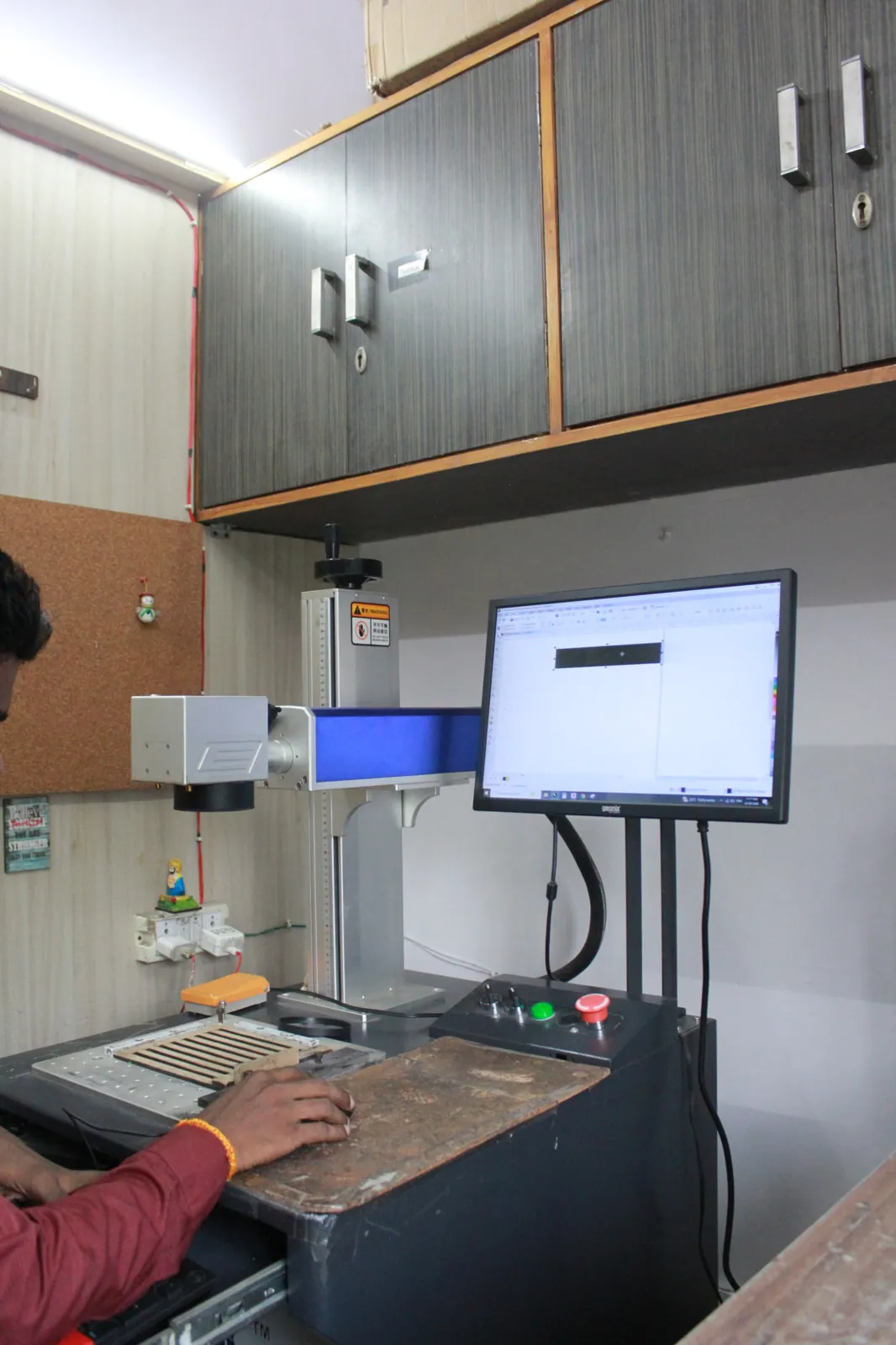
Laser engraving is the preferred way to brand metal pens and the method most people associate with premium corporate gifts. Instead of adding ink, it uses a focused beam of light to change the surface of the pen itself, so the mark cannot rub off.
How laser engraving works on pens
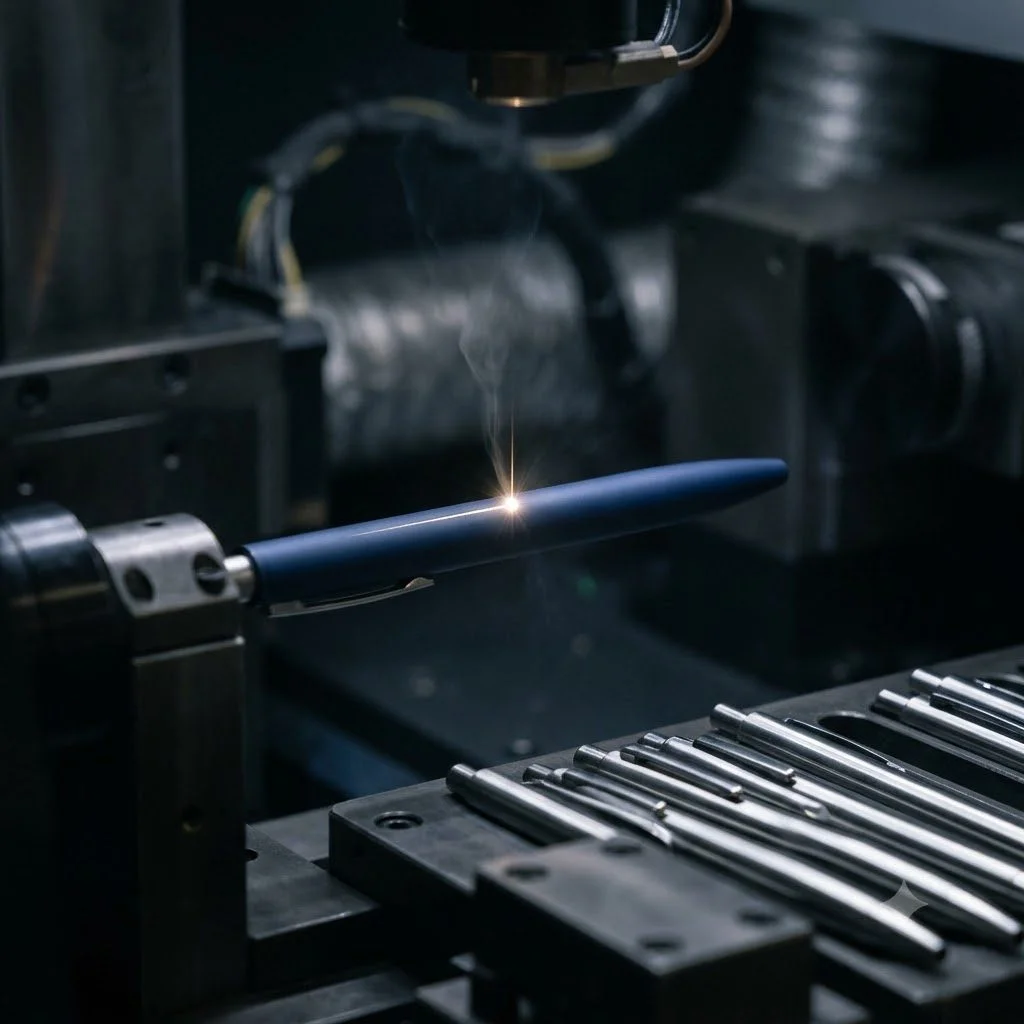
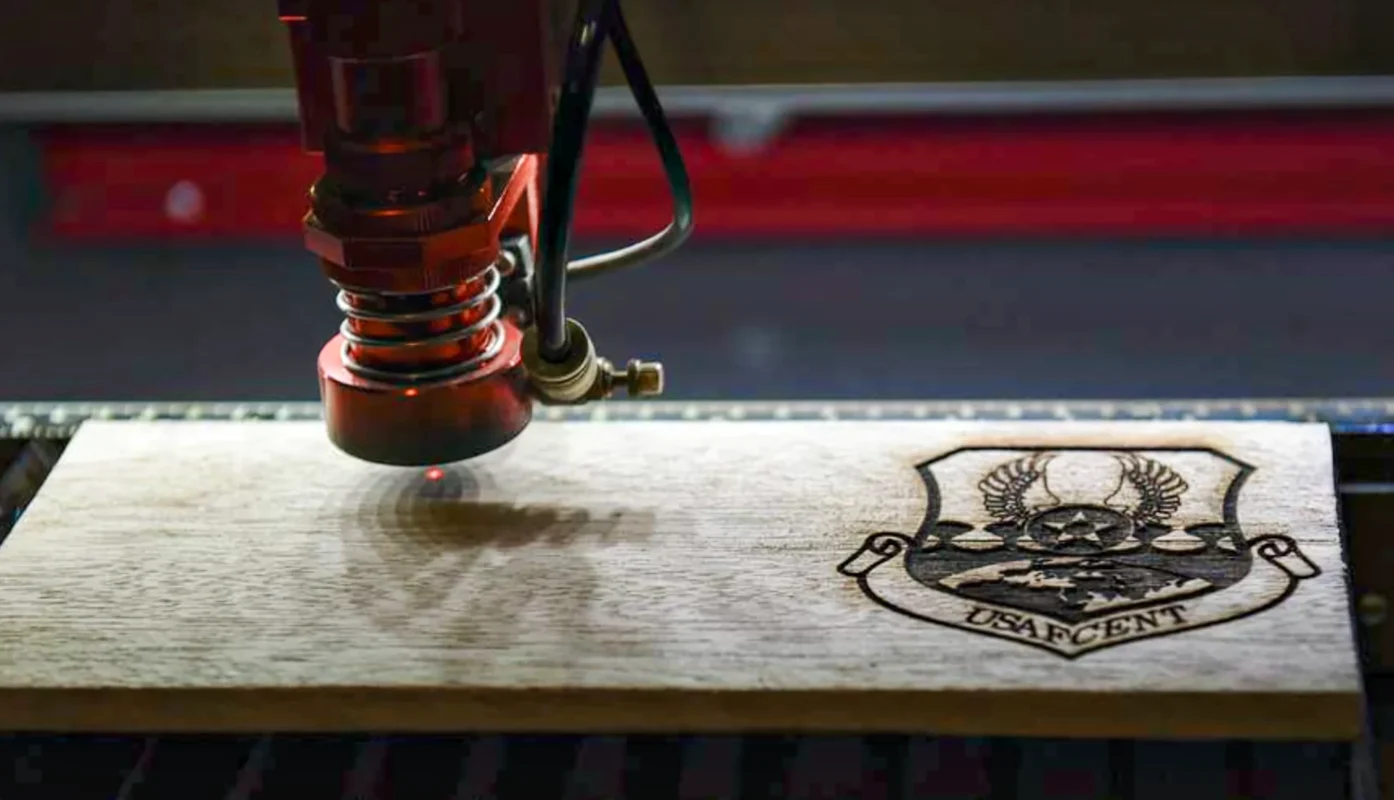
A computer-controlled laser traces the logo onto the pen, usually while a rotary attachment turns the barrel so the mark follows its curve. What the beam does depends on the material:
- Lacquered or painted metal: the laser removes the coloured coating to reveal the metal underneath. On a black lacquered brass pen, the logo appears in a bright brass or silver tone; on a chrome-plated pen it shows the base metal. This contrast is what makes engraved metal pens look so smart.
- Anodised aluminium: the laser lightens or removes the anodised colour layer, usually leaving a clean white or silver-grey mark.
- Bare stainless steel or chrome: the laser creates a darker mark or a subtle frosted texture rather than a bright contrast.
- Wood and bamboo: the laser darkens or burns the surface, giving a warm brown engraving.
- Some plastics: laser-reactive plastics change colour where the beam hits; others melt or foam slightly. Results vary by material, so testing is essential.
Different lasers suit different materials. Fibre lasers are widely used for marking metals, while CO2 lasers are often used for wood, leather, paper and some plastics. A branding unit with the right laser for the material produces cleaner, more consistent results.
What laser engraving does well
- Permanent. The mark is part of the pen’s surface; it does not peel, fade or rub off.
- Premium look. The tone-on-tone or metal-reveal effect looks refined and understated.
- Precise detail. Fine lines and small text engrave sharply.
- Easy personalisation. Because there is no plate or screen, each pen can carry a different name, number or message without extra set-up, which is ideal for awards, events and employee gifts.
- No inks or drying. Pens can be packed immediately after engraving.
Limitations
- One colour only. The colour of the engraving is set by the material underneath. You cannot engrave a logo in your brand’s red or blue.
- Not every surface engraves well. Some plastics and rubberised coatings give poor results.
- Cost per piece at high volumes. For very large orders of simple plastic pens, printing is usually more economical.
Best for
Premium metal pens, regular metal pens, executive and client gifts, awards, long-service gifts, names on individual pens, and any order where the logo must last as long as the pen. See also why premium clients prefer metal pens for brand promotions.
UV digital printing
UV digital printing has changed what is possible on promotional products. Instead of plates or screens, an inkjet print head sprays tiny droplets of ink directly onto the pen, and ultraviolet lamps cure (harden) the ink almost instantly.
How UV printing works
The pen is held in a jig, either flat for a single print area or on a rotary attachment that turns the barrel. The print head lays down cyan, magenta, yellow and black ink, often with white ink as a base layer on coloured or dark surfaces, and sometimes a clear varnish on top. UV lamps follow the print head and cure each layer as it goes, so the print is dry the moment it comes off the machine.
What UV printing does well
- Full colour. Gradients, photographs, multi-colour logos and fine colour detail are all possible in one pass.
- No plates or screens. Set-up is mostly digital, which makes UV printing efficient for smaller quantities and frequent design changes.
- Personalisation. Different names or designs can be printed on each item.
- Prints on many materials. Plastics, coated metals, wood, boxes and other flat or gently curved items.
- White underbase. A layer of white ink lets bright colours show properly on dark pens.
Limitations
- Curvature. Strongly curved or uneven areas are harder to print sharply than with pad printing.
- Surface feel. UV ink sits slightly raised on the surface, which some people notice by touch.
- Abrasion. On heavily handled areas, UV prints can wear over time, so placement and surface preparation matter.
- Colour matching. Digital colour is built from process inks; very specific brand colours may be approximated rather than matched exactly. Ask for a printed proof.
Best for
Multi-colour and gradient logos, short runs, event-specific designs, personalised names, gift boxes and pen packaging. UV printing is also a good choice when a brand colour is critical to the design and laser engraving’s single tone is not enough.
Hot foil stamping
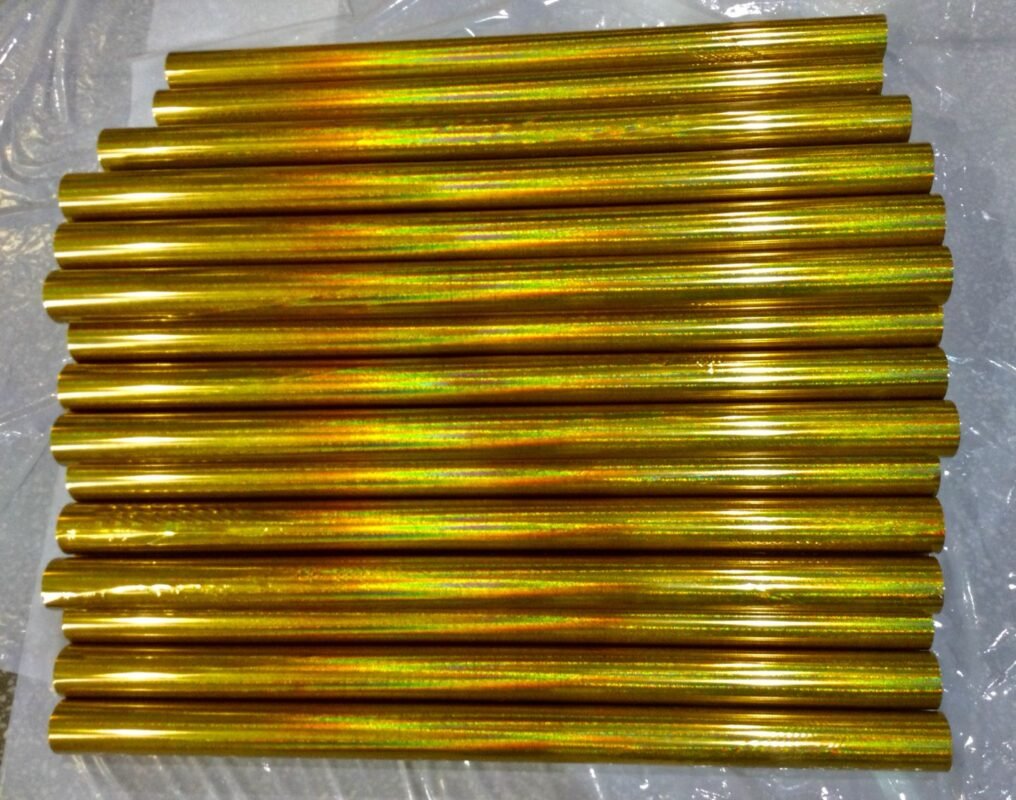
Hot foil stamping gives a shiny metallic finish, usually gold or silver, that instantly looks premium. It is rarely used on pen barrels themselves but is very common on the products that accompany pens: diary covers, notebook covers, leather pouches, pen boxes and gift set lids.
How hot foil stamping works
A metal die carrying your logo is heated in a press. A roll of thin foil is placed between the die and the item. When the press closes, heat and pressure release the foil’s coloured layer onto the surface in the exact shape of the die. The rest of the foil stays on its carrier film and is wound away.
What foil stamping does well
- Metallic finishes that ink cannot match: gold, silver, rose gold, copper and coloured or holographic foils.
- Premium look on leather, PU leather, paper and board.
- Crisp edges on bold logos and lettering.
- Combines with embossing for a raised metallic logo.
Limitations
- Needs a die for each design, so it is best for repeated logos rather than individual names (though separate name dies or letter sets can be used for personalisation).
- Not ideal for very fine detail. Tiny text and hairlines may not release cleanly.
- Surface-dependent. Works best on flat, heat-tolerant materials.
Best for
Dated diaries, notebooks, planners, pen boxes and gift set packaging. A gold-foiled diary paired with a laser-engraved metal pen is a classic corporate combination.
Embossing and debossing
Embossing raises a design above the surface; debossing presses it below. Both use a pair of matched dies and pressure, sometimes with heat. When no ink or foil is added, the result is called “blind” embossing or debossing: a subtle, tactile logo that relies on light and shadow.

Where embossing is used
Embossing and debossing are used on leather and PU diary covers, card sleeves, gift boxes, pen pouches and paper packaging. They are not used on pen barrels, but they are a big part of how a pen gift is presented.
What embossing does well
- Understated luxury. A blind debossed logo on a leather diary looks discreet and expensive.
- Permanent. The impression is part of the material.
- Combines with foil for a raised or recessed metallic logo.
Limitations
It needs a custom die, works best with bold shapes rather than fine text, and depends on the thickness and type of material.
Doming and resin badges
Doming applies a clear, glossy polyurethane resin over a printed sticker or label, creating a smooth, lens-like raised badge. On pens, domed badges are sometimes used on the top of the clip, the end cap or the top button. They are more common on keychains, card holders and accessories.
- Strengths: full colour, glossy finish, slightly three-dimensional look, protects the print beneath.
- Limitations: needs a flat area; small sizes limit detail; adhesive quality matters for long-term durability.
Doming is a good way to add a small, full-colour brand mark to a metal pen that is otherwise laser engraved, or to accessories such as metal keychains that accompany the pen in a kit.
Other branding options
Full-wrap digital printing and sublimation
Some pens with special coated barrels can be printed all the way around with a full-colour design. Sublimation, in particular, uses heat to transfer dye into a polymer coating on the barrel. These methods suit eye-catching campaign pens with patterns or photographs, but they require specific pen models designed for them.
Metal plates and medallions
Premium pens sometimes carry a small metal plate or medallion on the cap or clip with an engraved or printed logo. The same idea is used on gift box lids. It is an elegant way to add a logo without marking the pen body itself.
Coloured components
Branding does not always mean a logo. Many companies choose pens with clips, caps or barrels in their brand colour. Colour-matched components are a subtle form of branding that works well alongside a printed or engraved logo. Ask about minimum quantities for custom colours.
Packaging branding
The box, sleeve or pouch is often the first thing a recipient sees. Printed sleeves, foil-stamped lids, debossed leatherette boxes, custom inserts and printed cards give much more space for a message than the pen itself. For premium gifts, it is worth giving the packaging as much attention as the pen.
Personalisation with names
Engraving or printing individual names turns a corporate pen into a personal gift. Laser engraving and UV printing are the usual methods because they need no new plate or die for each name. Personalised pens are popular for long-service awards, onboarding kits, conference speakers and VIP guests. See why personalised pens make the best gifts.
Choosing a method by pen type and material
The single most important rule is to match the method to the surface. Here is how the common pen bodies pair with branding methods.
| Pen body | First choice | Also works | Avoid |
|---|---|---|---|
| Glossy or matte plastic barrel | Pad printing | Screen printing, UV printing | Laser on non-laser-reactive plastics |
| Transparent or frosted plastic | Pad or screen printing with opaque ink | UV with white underbase | Light inks without an opaque base |
| Rubberised or soft-touch coating | Laser (test first) or pad printing with suitable ink | UV on a flat area | Printing over textured grips |
| Lacquered brass or painted metal | Laser engraving | UV printing, pad printing | Screen printing on tapered shapes |
| Anodised aluminium | Laser engraving | Pad printing, UV printing | — |
| Chrome or polished steel | Laser engraving (subtle mark) | Pad printing, UV printing | Expecting a high-contrast laser mark |
| Wood or bamboo | Laser engraving | Pad printing | Fine colour detail |
| Recycled paper or card barrel | Pad or screen printing | Laser on suitable card | Heavy ink coverage that cracks |
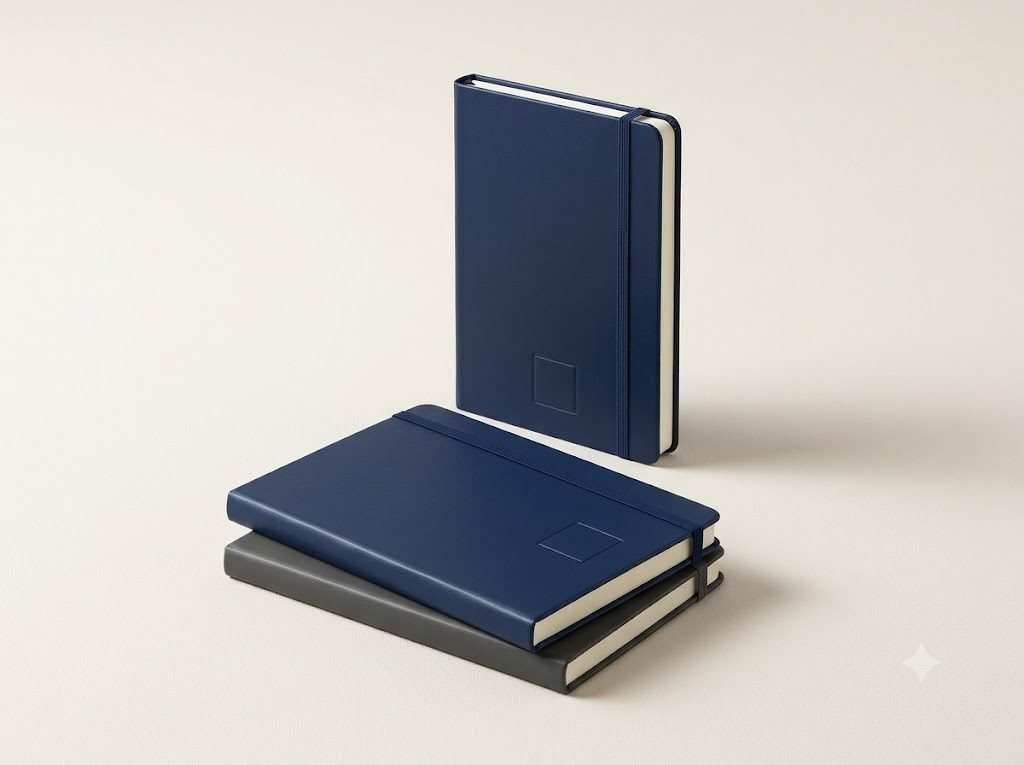
| Leather or PU (pouches, diaries) | Debossing or hot foil | Laser, UV printing | Pad printing on textured grain |
Plastic pens
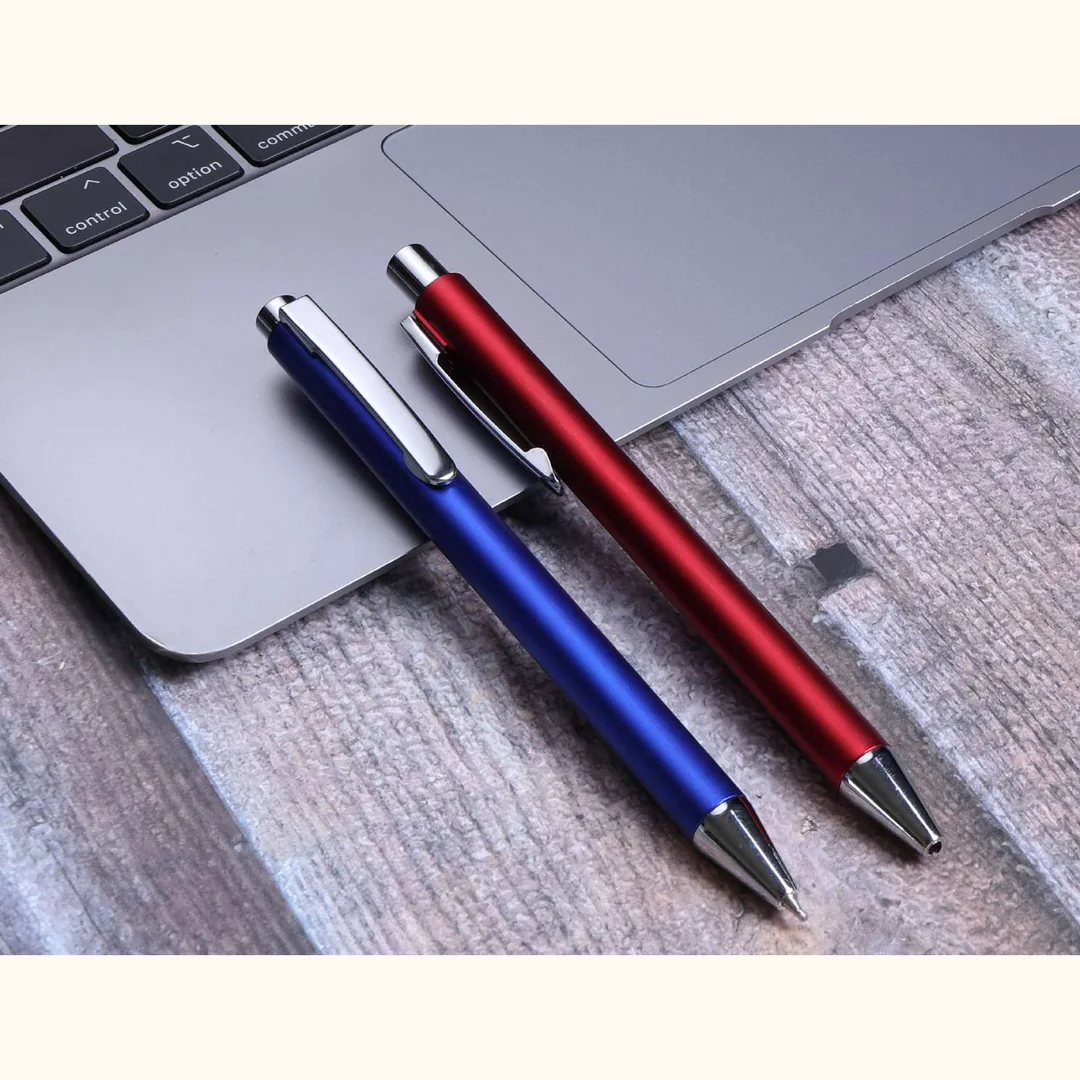
For most plastic pens, pad printing is the standard because it handles curves and small print areas economically. Screen printing is chosen for bigger, bolder logos on smooth barrels. UV printing comes in when the logo has many colours or a photograph. Our Elite plastic pens and Aurora plastic pens are designed with clear print areas for this reason.
Metal pens
For metal pens, laser engraving is almost always the first recommendation. It looks premium, lasts forever and allows names. If your logo absolutely must appear in its brand colours, UV printing or pad printing are alternatives, but many brands find that a clean tone-on-tone engraving actually looks more upmarket than a coloured print. See why premium clients love metal pens for branding.

Eco-friendly pens
For pens with recycled plastic, paper, card or bamboo barrels, the method depends on the material. Bamboo and wood engrave beautifully. Paper and recycled plastics usually take pad or screen printing. Keep ink coverage modest on eco pens: a small, simple logo suits the natural look and uses less ink. See our eco-friendly pens.
Gift sets and accessories
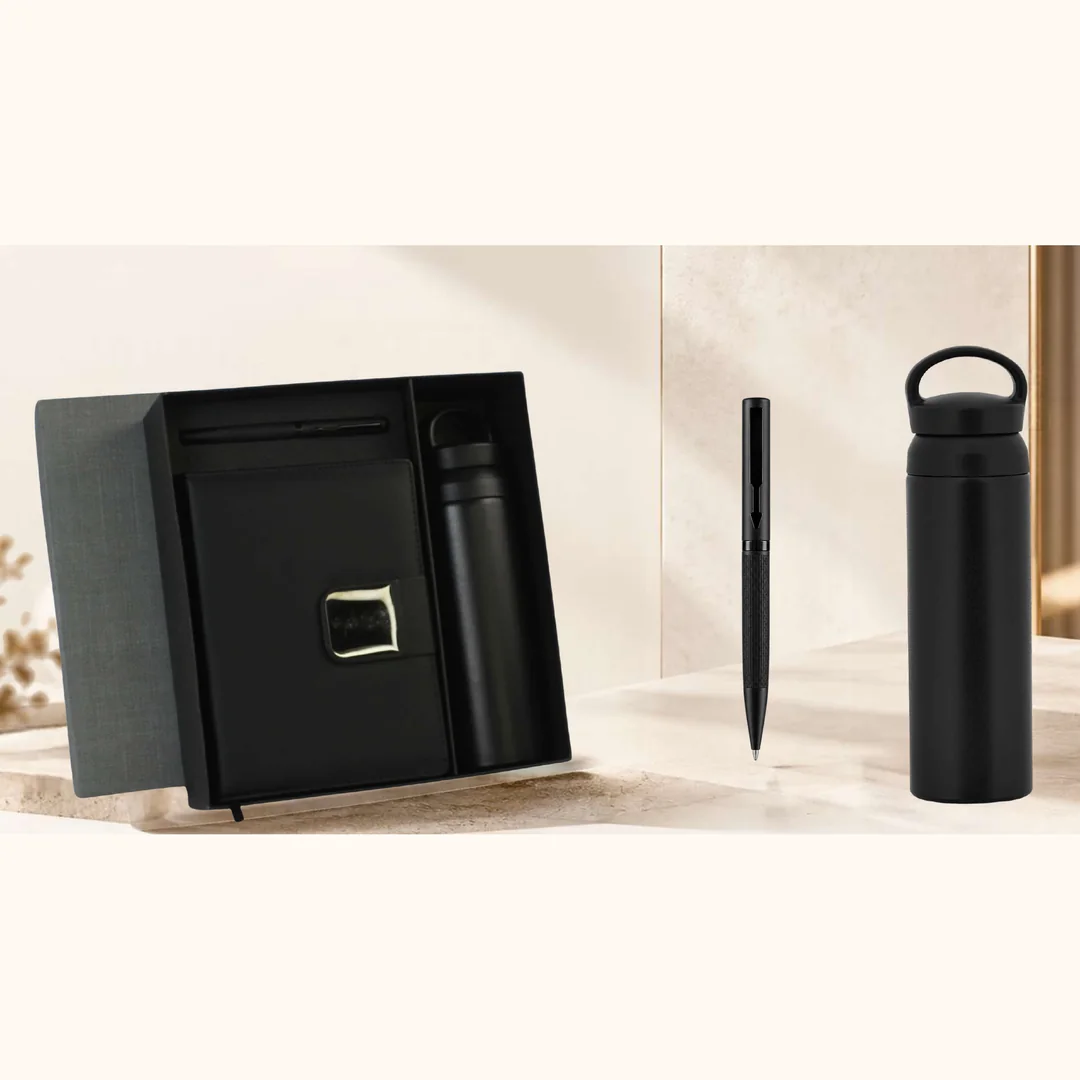
A gift set brings several materials together: a metal pen, a diary or notebook, a bottle, a keychain and a box. Each item should be branded in the way that suits it, with a consistent logo size and colour logic across the set. Our 3-in-1 gift sets and 2-in-1 gift sets are often branded with a combination of laser engraving, UV printing and foil.
Choosing a method by goal, quantity and budget
By occasion
- Conference or exhibition giveaway (large quantity): plastic pens with pad or screen printing.
- Client gift or executive gift: metal pen with laser engraving, presented in a branded box.
- Long-service award or recognition: metal or fountain pen with the person’s name and year engraved.
- Onboarding or welcome kit: pen, diary and accessories, each branded to match, with the employee’s name if possible.
- Product launch or campaign: full-colour UV printing to reproduce campaign graphics.
- Sustainability campaign: eco pen with a simple one-colour print or laser engraving on bamboo.
By quantity
Methods that need plates, screens or dies spread their set-up cost across the order, so they become more economical as quantity rises. Digital methods such as laser engraving and UV printing have little or no physical set-up, so they suit smaller quantities and personalisation. For mid-size orders, the best value depends on the pen and the logo; ask your supplier to quote two methods side by side.
By logo
- Single colour, bold shapes: any method works; choose by material.
- Two or three solid colours: pad or screen printing with one pass per colour, or UV printing.
- Gradients, shadows, photos: UV printing.
- Very fine text: laser engraving or pad printing.
- Logo that must be in exact brand colour: pad or screen printing with matched ink, or UV with a proof.
What drives the cost of branding
Branding cost is shaped by a handful of factors rather than one fixed price:
- the number of colours (each colour usually means another plate, screen and pass);
- the number of print positions (barrel, clip, cap, box);
- the size and complexity of the logo;
- whether each pen is personalised with a different name;
- the quantity, which spreads set-up costs;
- special requirements such as exact colour matching or premium packaging.
The simplest way to control cost is to keep the logo to one colour, one position on the pen, and to put longer messages or full-colour graphics on the packaging instead.
How to prepare artwork for pen branding
Good artwork is the difference between a crisp logo and a disappointing one. Pens are small, curved objects, so artwork that works on a website or banner often needs adjustment. These are the guidelines we share with clients.
Send vector files
Supply your logo as a vector file: AI, EPS, PDF or SVG. Vectors are built from mathematical shapes, so they scale cleanly to any size. JPGs and PNGs are made of pixels; when they are reduced to a few centimetres on a pen, edges blur and small text breaks up. If you only have a pixel image, ask your designer for the original vector or let your supplier redraw it.
Convert text to outlines
Fonts on your computer may not exist on the printer’s computer. Converting text to outlines (or curves) locks the shape of each letter so it prints exactly as designed.
Simplify for small sizes
Most pen print areas are only a few centimetres long and well under a centimetre high. Thin strokes, tiny taglines, fine textures and very small text may not reproduce. Consider a simplified version of your logo for small items: the main symbol or wordmark without the tagline, or the wordmark alone.
Specify colours precisely
For printed methods, give your brand colours as Pantone (PMS) references if you have them, not just “blue” or an RGB screen colour. Screens show colour differently from ink on plastic, and the pen’s own colour affects how ink looks. A blue logo on a white pen, a silver pen and a black pen will look three different ways.
Think about the pen colour
Choose logo colours that contrast with the barrel. White or light logos need an opaque ink or an underbase to show properly on dark pens. On metal pens that will be laser engraved, remember that the engraving colour comes from the material, not from your artwork.
Check orientation and position
Decide whether the logo should read with the pen tip pointing left or right, whether it should be on the same side as the clip or opposite it, and how far from the tip it should sit. Most people hold a pen in the right hand, so a logo that is readable when the pen lies on a desk with the tip to the left is a common choice. Your supplier can show you a mock-up.
Approve a proof and a sample
Always approve a digital proof showing the logo on the pen, with size and position. For larger orders, approve a physical pre-production sample. A sample is the only way to see the true colour on the real material, check legibility and test the feel of the print.
Artwork checklist: vector file (AI, EPS, PDF or SVG) · text converted to outlines · Pantone colours listed · simplified version for small areas · pen model and colour confirmed · print position and orientation agreed · proof approved · sample approved for large orders.
Colour and contrast: making your logo readable
A logo is only effective if people can read it at a glance. On a pen, that means strong contrast between the logo and the barrel. This quick reference shows combinations that usually work and those that usually disappoint.
| Pen colour | Strong logo choices | Weak logo choices | Notes |
|---|---|---|---|
| White or light grey | Black, navy, red, dark green, brand colours | Yellow, light grey, pastel shades | The easiest base for printed colour logos |
| Black or dark navy | White, silver, gold, bright yellow | Dark blue, red, brown | Use opaque or double-printed inks; laser engraving gives a bright metal reveal on lacquered metal |
| Red | White, black, silver | Orange, pink, dark red | Red barrels are vivid; keep the logo simple |
| Blue | White, silver, yellow | Black, dark green, purple | Popular for banks, insurance and IT brands |
| Silver or chrome metal | Black, navy, dark brand colours | White, light grey | Laser on bare chrome gives a subtle mark; print for stronger contrast |
| Gold-tone metal | Black, deep red, navy | Yellow, white | Engraving shows a contrasting tone on coated gold finishes |
| Transparent or frosted | White, black, strong brand colours with opaque ink | Light or transparent inks | The refill and ink inside show through, which affects contrast |
| Bamboo or wood | Laser engraving (dark brown) | Light printed colours | Grain varies; engraving looks natural |
When in doubt, ask for two or three colour mock-ups and view them at arm’s length on a phone screen and then on a physical sample. What looks bold on a large monitor can look faint on a pen.
Designing a logo that works at pen size
Your designer can make a big difference by preparing a “small-use” version of your logo. Here are the principles that work best on pens.
Lead with the strongest element
Most logos have a symbol and a wordmark. On a narrow barrel, use whichever is most recognisable. Long wordmarks usually run well along the barrel; compact symbols suit clips and end caps.
Thicken thin strokes
Hairlines and very thin serifs may disappear or break at small sizes. A slightly bolder version of the logo, approved by your brand team, reproduces more reliably.
Open up tight spaces
Letters that nearly touch, or small enclosed shapes such as the inside of an “e” or “a”, can fill in with ink. Slightly more spacing keeps the logo crisp.
Drop the tagline
Taglines and small descriptors under logos are often unreadable on pens. Move them to the packaging, the diary cover or the other side of the barrel in a larger size.
Choose one colour version
A single-colour version of your logo, in black, white or your main brand colour, is the most versatile for pens. It also keeps costs down because each extra colour adds a printing pass.
Consider the website or phone number
A short website address or a phone number on the opposite side of the barrel can be useful for promotional pens, especially for local businesses. Keep it short, in a clear sans-serif font, and check that it reads correctly on the proof.
Branding approaches by industry
Different sectors tend to favour different pens and methods. These are common patterns we see among Indian businesses.
- Banking, finance and insurance: reliable click ballpoints in brand colours with pad-printed logos for branches and counters, and laser-engraved metal pens for relationship managers and premium customers.
- Pharmaceuticals and healthcare: pens are a key tool for engagement with doctors. Smooth-writing pens with durable branding, often paired with prescription pads or notebooks. Durability against hand sanitiser is worth discussing.
- IT, consulting and corporate offices: metal pens with laser-engraved logos for onboarding kits, client meetings and events; gift sets for leadership and clients.
- Education: schools, colleges and coaching institutes use printed plastic pens for admissions, exams and events, and engraved pens for toppers, faculty and alumni.
- Hospitality: hotels use printed pens in rooms and at reception, and engraved pens for suites and meeting rooms.
- Real estate and automobiles: branded pens are often part of possession kits, delivery kits and customer welcome packs, typically engraved metal pens in a box.
- Government and public sector: printed pens for events and training, engraved pens for ceremonies and dignitaries.
- Manufacturing and industry: durable pens for shop floors and dealer meets, with clear printed logos.
- NGOs and social campaigns: eco pens with simple printed messages that reinforce the campaign theme.
For more on how pens support marketing, read Why Promotional Pens Are Still the Most Effective Corporate Gifts and 7 Reasons Every Company Should Invest in Branded Stationery.
Packaging: the branding people see first
For gifts, the box or sleeve is often opened in front of the recipient and sometimes in front of colleagues. It sets expectations before the pen is even touched. Consider these options:
- Printed card sleeves over a plain box: economical, full colour, recyclable.
- Foil-stamped lids on rigid boxes: classic and premium.
- Debossed leatherette boxes: understated and tactile.
- Custom inserts that hold a pen with a diary, card holder or keychain.
- Printed message cards with a personal note, event name or QR code linking to a welcome video or website.
Our gift sets show how pens can be presented with other everyday essentials. For inspiration on presentation, see Gifting Pens: The Perfect Blend of Utility and Elegance and The Psychology Behind Giving a Pen as a Gift.
How a branded pen order is produced, step by step
Knowing what happens between “please quote” and “delivered” helps you plan realistic deadlines and avoid surprises. A typical branded pen order follows these stages.
1. Brief
You share the occasion, quantity, budget, delivery date and city, preferred pen style and your logo. The more detail you give at this stage, the more accurate the recommendation and quote. A quick WhatsApp message with your logo and quantity is often enough to start.
2. Recommendation and quotation
The supplier recommends suitable pens and branding methods, often with two or three options at different price points, and quotes for each. Check whether the quote includes branding set-up, the number of colours and positions, packaging, taxes and delivery.
3. Artwork and digital proof
Your logo is placed on a template of the pen at the correct size and position. You review the proof for spelling, size, colour references and orientation. This is the cheapest moment to make changes.
4. Pre-production sample
For larger or high-value orders, a physical sample is branded and shared, either in person, by courier or as photographs and video. You check colour on the real material, legibility, placement and overall look.
5. Set-up
Plates, screens or dies are made, or laser and UV files are prepared and tested. Ink colours are mixed and matched. Fixtures are set to hold the pen precisely.
6. Production
Pens are branded in batches. With multi-colour printing, each colour is printed and cured in turn. Laser engraving and UV printing run pen by pen, especially when names are personalised.
7. Quality checks
Batches are inspected for position, alignment, colour, completeness of the print, smudges and adhesion. Pens that do not pass are removed.

8. Packing and dispatch
Pens are packed as agreed: bulk boxes, individual sleeves, gift boxes or complete kits with diaries and accessories. Then they are dispatched to one or several delivery addresses.
Planning your timeline
The time required depends on quantity, method, the number of colours and positions, whether personalisation is needed, sampling, and stock of the chosen pen. Seasonal peaks such as festival gifting, year-end and conference season also affect timelines. For important dates, start the conversation several weeks ahead and confirm the production schedule in writing. Our article Logistics and Lead Times explains the factors that shape delivery schedules.
How to judge the quality of a branded pen
When your sample or delivery arrives, check these points. They take a few minutes and tell you most of what you need to know.
- Sharpness: are edges clean, with no blurring, doubled lines or broken letters? Read the smallest text with your naked eye.
- Position: is the logo straight, centred in its area and the same distance from the tip on every pen?
- Colour: does the colour match the approved sample in daylight? Is coverage even, with no thin or patchy areas?
- Registration: on multi-colour prints, do the colours line up?
- Adhesion: press a strip of clear tape firmly over the print and pull it off quickly. Good prints stay put.
- Rub resistance: rub the print firmly with your thumb a few dozen times, as a hand would in daily use. The logo should not smear or fade.
- Engraving depth and contrast: on laser-engraved pens, is the mark even and fully readable from a normal distance?
- Consistency: pick several pens at random from different boxes and compare them side by side.
Professional printers may also test resistance to hand sanitiser, alcohol and sweat, because branded pens are handled constantly and offices use sanitiser heavily. If your pens will be used in hospitals, laboratories or factories, mention it so the supplier can choose suitable inks and methods.
Common pen branding mistakes and how to avoid them
- Using a website logo as is. Detailed logos with taglines shrink into illegible smudges. Use a simplified version.
- Sending a low-resolution image. Blurry artwork produces blurry branding. Send vectors.
- Ignoring the pen colour. Dark ink on a dark barrel disappears. Plan contrast.
- Expecting colour from a laser. Laser engraving cannot produce your brand colour; choose printing if colour is essential.
- Printing where fingers grip. Logos near the grip wear fastest. Place them higher on the barrel or on the clip.
- Too many colours and positions. Each adds cost and time. One strong colour on one position often looks better.
- Skipping the sample. A photograph of a proof is not the same as seeing ink on plastic.
- Leaving it late. Rushed orders limit pen choice and branding options. Plan ahead for festivals and events.
- Branding a poor pen. A beautiful logo on a pen that skips or leaks damages the brand. Test the writing quality too. See What to Look for in a Bulk Pen Supplier.
- Forgetting the packaging. For gifts, the box is part of the impression; brand it as carefully as the pen.
How long does pen branding last?
Durability depends on the method, the material, the placement and how the pen is used.
- Laser engraving is permanent; it lasts as long as the pen’s surface.
- Embossing and debossing on leather or board are effectively permanent.
- Pad and screen printing on a compatible, well-prepared plastic last through normal use for a long time, with gradual wear in areas of heavy friction.
- UV printing lasts well in normal use; very heavily handled areas may show wear over time.
- Hot foil on diaries and boxes lasts well but can scuff at edges and corners that rub against bags.
To extend the life of any printed logo, place it away from the grip, choose a matte or smooth surface that suits the ink, and avoid harsh solvents when cleaning. For more on how long a well-made pen lasts overall, see How Long Does a Dyna Pen Last?
Branding and sustainability
Branding choices also affect a product’s environmental footprint. A few practical points:
- Laser engraving uses no inks and produces no ink waste, which makes it a clean choice for metal and bamboo pens.
- Smaller logos use less ink. A neat one-colour logo is both more elegant and lower impact than full coverage.
- Durable branding extends product life. A pen whose logo lasts stays in use and keeps carrying your message instead of being thrown away.
- Refillable pens multiply the value of branding because the same branded body can be used for years.
- Packaging matters. Recyclable card boxes with printed or foil branding can replace plastic packaging for many gifts.
For more on sustainable choices, read Sustainable Corporate Gifts and How Our Eco Pens Help Reduce Your Brand’s Carbon Footprint.
Using logos correctly
Only order branded products with logos you have the right to use: your own company’s logo, or a client’s or partner’s logo with their written permission. Suppliers may ask for confirmation, especially for well-known marks. If you are an agency or reseller ordering on behalf of a client, keep the client’s approval of the artwork and the final proof on record. This protects you, your client and the manufacturer.
Head-to-head comparisons
Laser engraving vs UV printing on metal pens
This is the choice most corporate buyers face when ordering metal pens.
| Factor | Laser engraving | UV printing |
|---|---|---|
| Look | Subtle, premium, tone-on-tone or metal reveal | Colourful, matches brand palette |
| Durability | Permanent | Good; can wear on heavily handled areas |
| Colours | One, set by the material | Full colour, gradients |
| Personalised names | Excellent | Excellent |
| Feel | Flush or very slightly etched | Slightly raised ink layer |
| Best for | Executive gifts, awards, long-term use | Campaigns, colourful logos, event themes |
Many brands choose laser engraving for the pen and use colour on the box sleeve or card, getting the best of both.
Pad printing vs UV printing on plastic pens
| Factor | Pad printing | UV printing |
|---|---|---|
| Colours | Spot colours, one plate per colour | Full colour in one pass |
| Curved and uneven areas | Excellent | Good on gentle curves |
| Fine detail | Very good | Very good on flat areas |
| Set-up | Plate per colour | Digital file |
| Economics | Very economical at volume for 1–2 colours | Good for short runs and multi-colour designs |
| Best for | Large giveaway orders | Colourful logos, personalisation, smaller batches |
Foil stamping vs printing on diaries and boxes
Foil gives a metallic shine that printing cannot match and looks distinctly premium on leather and dark covers. Printing gives full colour and fine detail. Many diaries combine a foiled logo on the cover with printed inner pages and a printed box sleeve.
Example scenarios
These illustrative scenarios show how the decision usually plays out. Every order is different, but the reasoning is the same.
A bank branch network needs counter pens
Thousands of pens are used daily by customers at counters and often walk away. The priority is a reliable writer at a low unit cost with a clear logo. Recommendation: plastic click ballpoints in the bank’s colour with a one-colour pad-printed logo on the barrel. Packaging is simple bulk packing.
A technology company is welcoming new employees
The goal is a memorable first day and pride in the brand. Recommendation: a metal pen with the company logo laser engraved and the employee’s name on the opposite side, a foil-stamped or debossed notebook, and a printed box. See personalised gifts for employees.
A pharmaceutical company is running a doctor-engagement campaign
The pen will be used daily in clinics and needs to look professional and keep the brand name visible for months. Recommendation: a smooth-writing pen with a durable print or engraving positioned away from the grip, possibly paired with a branded notebook.
An event organiser needs colourful giveaways for a festival
The brand uses bright gradients and a mascot. Recommendation: plastic pens in campaign colours with UV-printed full-colour artwork, or a simple one-colour pad print on coloured barrels if the budget is tight. See branded pens for events.
A law firm marks partners’ anniversaries
The gift must feel personal, last a lifetime and look restrained. Recommendation: a premium metal fountain pen or rollerball with discreet laser engraving of the person’s name and the firm’s mark, presented in a quality box. Our Black Tie fountain pen is a typical choice. See also Choosing the Right Pen for Executive Gifting.
A sustainability-focused brand plans a campaign
The message is about reducing waste. Recommendation: refillable eco pens with a small one-colour print, or bamboo pens with laser engraving, in recyclable card packaging.
Branding complete kits: pens with diaries, notebooks and accessories
Pens are often part of a bigger set. When several products travel together, consistency matters more than any single item.
- Use the same logo version across all items, scaled to suit each surface.
- Keep colour logic consistent: for example, all metallic (laser on the pen, silver foil on the diary, silver print on the box) or all in brand colour.
- Choose one “hero” item to carry the most prominent branding, usually the diary cover or box lid, and keep the pen’s logo smaller and more refined.
- Add personalisation to one item only, typically the pen or diary, to keep costs reasonable.
DYNA supplies dated diaries, notebooks, planners, organisers, visiting card holders, keychains and gift sets alongside pens, so the whole kit can be branded together. Explore our corporate gifting range.
Branding pens for export and international clients
Branded pens travel well, which makes them popular with international distributors and companies running events abroad. A few extra points apply:
- Language and script: confirm spelling, accents and right-to-left scripts carefully on the proof.
- Local colour meanings: some colours carry particular meanings in different markets.
- Importer requirements: some countries have specific labelling or packaging requirements for imported goods. Ask your importer what is needed.
- Samples by courier: allow time for international sample shipping before bulk production.
DYNA exports pens and stationery to many markets. Our export page and country-by-country import guides explain how international orders work, and Why Dyna Pens Are Trusted in Export Markets gives the background.
For resellers, agencies and distributors
If you supply branded pens to your own clients, the branding method is part of your margin and your reputation.
- Keep a small set of reliable pen models with known print areas and methods so you can quote quickly.
- Offer clients a “good, better, best” choice: printed plastic, printed or engraved metal, and engraved premium metal in a box.
- Always send clients a proof for written approval and keep it on file.
- Ask your manufacturer for blank or neutral packaging if you deliver under your own name.
Read Growing a Gifting Business with Custom Pens for Resellers and How to Become a Dyna Pen Distributor or Dealer, or apply to become a partner.
How DYNA brands pens
DYNA Writing Instruments has made pens in Delhi since 1960 and handles branding in-house. That means the same team that makes or sources the pen also recommends the method, prepares the artwork, brands the pens and checks the result. Typical methods for our range include laser engraving on metal pens, UV printing for full-colour logos on suitable surfaces, and printing on plastic barrels. Our team recommends the right method for the pen and your artwork and confirms branding options in your quote.
Learn more about DYNA, read our story, or browse metal pens, plastic pens and eco pens.
Personalisation in depth
Adding a person’s name transforms a branded pen from a promotional item into a personal gift. People rarely throw away a pen with their own name on it, and many keep it for years. Personalisation is now practical even for mid-size orders because laser engraving and UV printing need no new tooling for each name.
What can be personalised
- Full names or first names
- Initials or monograms
- Designations, departments or team names
- Dates, years of service or milestones
- Event names, batch years or certificate numbers
- Short messages such as “Welcome to the team” or “Thank you”
How to supply names
Send names in a spreadsheet with one row per pen and one column per line of text. Check spelling carefully; the most common problem in personalised orders is a misspelled name, and it is very hard to fix once engraved. If names use non-English scripts, confirm the font and get a proof of a few sample names before the full run.
Fonts and layout
Simple, clean fonts engrave and print best at small sizes. Script fonts look elegant but can become hard to read if the name is long. Keep names on one line where possible, and agree a maximum number of characters so long names do not shrink too small.
Where to place names
A common layout is the company logo on one side of the barrel and the person’s name on the other, or the logo on the barrel and the name on the cap. On gift sets, the name can go on the pen while the logo goes on the box, keeping the pen itself elegant.
Timeline and packing
Personalised pens take a little longer than identical pens because each item is set up individually and must be checked against the name list. If the pens will be handed out at an event, ask for them to be packed in alphabetical order or by department to save time on the day.
Questions to ask your branding supplier
Whether you are buying 200 executive pens or 20,000 giveaway pens, these questions help you compare suppliers fairly.
- Which branding method do you recommend for this pen and logo, and why?
- What is the exact print area and position for this model?
- How many colours and positions does the quote include?
- Are set-up costs (plates, screens, dies) included or separate?
- Will I receive a digital proof, and can I approve a physical sample?
- How do you check adhesion and colour consistency?
- Is the branding done in-house or outsourced?
- What is the production timeline after approval?
- How will the pens be packed, and can you deliver to multiple addresses?
- Will you keep my artwork and settings on file for reorders?
A supplier who answers these clearly and puts the details in writing is usually a supplier who will deliver consistently. For a broader checklist, see What to Look for in a Bulk Pen Supplier and Common Myths About Bulk Pen Orders.
Reorders and brand consistency
Many companies order branded pens every year, for new joiners, annual conferences or festive gifting. Keeping the branding consistent across orders protects your brand image.
- Keep the approved proof and sample from your first order as a reference.
- Reuse the same pen model and colour where possible, or confirm that a replacement model has the same print area.
- Record Pantone references and the branding method so the next order matches.
- Ask the supplier to keep your artwork on file; it shortens the next order.
- Review the logo before each reorder in case your brand guidelines have changed.
Pen branding glossary
- Artwork
- The final logo file used to make plates, screens, dies or digital print files.
- Vector file
- An image made of scalable shapes (AI, EPS, PDF, SVG), essential for sharp branding.
- Outlined text
- Text converted into shapes so the font cannot change when the file is opened elsewhere.
- Pantone (PMS)
- A standard colour-matching system used to specify exact ink colours.
- Spot colour
- A single, pre-mixed ink colour printed in one pass, used in pad and screen printing.
- CMYK
- Cyan, magenta, yellow and black: the process colours combined to make full-colour digital prints.
- White underbase
- A layer of white ink printed first so colours show brightly on dark surfaces.
- Cliché
- The etched plate used in pad printing.
- Squeegee
- The rubber blade that pushes ink through the mesh in screen printing.
- Registration
- How accurately different colours line up with each other in multi-colour printing.
- Curing
- Drying or hardening ink, by heat, air or UV light, so it bonds to the surface.
- Fibre laser
- A type of laser commonly used to mark and engrave metals.
- CO2 laser
- A type of laser commonly used on wood, leather, paper and some plastics.
- Anodising
- An electrochemical finish on aluminium that adds colour and protection; laser engraving lightens it.
- Hot foil stamping
- Using a heated die to transfer metallic foil onto a surface.
- Blind emboss / deboss
- A raised or pressed design with no ink or foil.
- Doming
- Covering a printed badge with clear resin to create a glossy, raised finish.
- Print area
- The maximum size and position available for branding on a specific product.
- Proof
- A digital mock-up of the branded product for approval before production.
- Pre-production sample
- A physical branded sample approved before the full order is made.
- Tape test
- A quick adhesion check: press tape on the print and pull it off to see whether ink lifts.
Frequently asked questions
What is the best way to put a logo on a pen?
It depends on the pen. For plastic pens, pad printing or screen printing is usually best. For metal pens, laser engraving is the most durable and premium option. For full-colour logos, UV digital printing is the right choice.
Is laser engraving better than printing?
Laser engraving is more durable because the mark is part of the surface and cannot rub off. Printing is better when you need your exact brand colours or a multi-colour logo. Many brands choose engraving for metal pens and printing for plastic pens.
Can laser engraving be done in colour?
No. The colour of a laser engraving comes from the material underneath the coating, such as brass, silver, white or a darker tone. If your logo must appear in colour, choose pad, screen or UV printing.
How long does a printed logo on a pen last?
A properly cured print on a compatible surface lasts through normal use for a long time. Areas that are rubbed constantly, such as the grip, wear first, so place logos away from where fingers hold the pen.
Can each pen have a different name on it?
Yes. Laser engraving and UV printing allow individual names, numbers or messages on every pen without making new plates or screens, which makes them ideal for awards and employee gifts.
What file format should I send for my logo?
Send a vector file such as AI, EPS, PDF or SVG, with text converted to outlines and Pantone colours listed if you have them. Avoid small JPG or PNG files.
Can you print a full-colour logo or photo on a pen?
Yes, with UV digital printing, which prints full colour and gradients on suitable plastic and coated metal surfaces. Pad and screen printing are better for one or two solid colours.
Why does my logo colour look different on the pen?
Ink colour is affected by the colour of the pen underneath, the surface finish and the printing method, and screens display colour differently from ink. Specify Pantone colours and approve a physical sample to be sure.
Where is the best place to put a logo on a pen?
The barrel, above the grip, is the most visible and common position. The clip is also very visible when the pen is in a pocket or diary. Avoid the grip area, where logos wear fastest.
Can you brand both sides of a pen?
Yes. Many orders have the logo on one side and a website, tagline or name on the other. Each additional position adds set-up and handling, so it slightly increases cost.
Which branding method is the most economical?
For large quantities of plastic pens with a one-colour logo, pad printing is usually the most economical. For small quantities or personalised pens, laser engraving or UV printing avoids plate and screen costs.
Can eco-friendly pens be branded?
Yes. Bamboo and wooden pens laser engrave beautifully, and recycled plastic and paper barrels usually take pad or screen printing. A small, simple logo suits most eco pens.
What is the difference between embossing and debossing?
Embossing raises a design above the surface; debossing presses it into the surface. Both are used on leather, PU and paper items such as diary covers and gift boxes, and can be combined with metallic foil.
Do I need to approve a sample before production?
For larger or high-value orders, yes. A digital proof confirms size and position, but only a physical sample shows the true colour and finish on the real pen.
Can DYNA brand pens with my company logo?
Yes. DYNA brands pens, diaries, notebooks, keychains and gift sets in-house in Delhi and recommends the most suitable method for your pen and artwork. Share your logo and quantity on WhatsApp or request a quote.
The DYNA Complete Pen Guide series — ten in-depth guides to choosing, branding, buying and caring for pens:
Related guides
Choosing your branding method
The best branding method is the one that suits the pen’s surface, your logo and the way the pen will be used. Pad and screen printing deliver sharp, economical logos on plastic pens. Laser engraving gives metal pens a permanent, premium mark and makes personalisation easy. UV printing brings full colour to promotional products. Foil stamping and embossing make diaries and packaging feel special. Prepare clean vector artwork, approve a proof and a sample, and your logo will look as good on the last day of the pen’s life as on the first.
If you would like help choosing, send your logo, quantity and occasion to DYNA on WhatsApp. We will suggest suitable pens and branding methods and share a quote. You can also request a quote online or explore our corporate gifting range.