


There is a moment most people remember from their first good fountain pen: the nib touches the paper, the ink flows without any pressure at all, and handwriting suddenly feels less like a chore and more like a pleasure. Fountain pens are the oldest of the modern pens, yet they are enjoying a revival among students, professionals, artists and gift-givers who want something more personal than a disposable ballpoint.
They can also seem intimidating. Nib sizes, filling systems, cartridges, converters, bottled inks, cleaning, paper that “feathers”: there is a lot of new vocabulary, and a poor first experience can put people off for good. This beginner’s guide explains everything you need to choose, fill, use and look after your first fountain pen, in plain language and with practical steps.
It comes from Dyna Writing Instruments, which began making fountain pens in Delhi in 1960. Our founder, the late Mansukh Lal Mehta, started the company with fountain pens at a time when they were the everyday pen of India’s schools and offices, and fountain pens remain part of our range today.
The short answer. A fountain pen writes with liquid ink that flows from a reservoir through a feed to a split metal nib by capillary action, so it needs almost no pressure. For a first pen, choose an affordable, reliable cartridge/converter pen with a fine or medium steel nib, start with cartridges or a converter and a bottle of standard fountain pen ink, write on smooth paper of reasonable weight, hold the pen at a comfortable low angle with the nib’s top facing up, and flush it with water every few weeks. Never use India ink, drawing ink or other pigment inks not made for fountain pens.
Fountain pens at a glance
| Topic | Beginner recommendation | Why |
|---|---|---|
| Nib material | Stainless steel | Durable, affordable, writes very well |
| Nib size | Fine or medium | Suits everyday handwriting and most paper |
| Filling system | Cartridge/converter | Clean cartridges now, bottled ink later |
| Ink | Standard water-based fountain pen ink in blue or black | Safe, easy to clean, widely available |
| Paper | Smooth paper around 80–100 gsm | Less feathering and bleed-through |
| Budget | A modest, well-reviewed starter pen | Learn what you like before spending more |
| Cleaning | Flush with water every few weeks and when changing ink | Keeps ink flowing and prevents clogs |
| Storage | Capped; upright or flat | Prevents drying and leaks |
For how fountain pens compare with ballpoint, gel, rollerball and other pens, see our hub guide Types of Pens: The Complete Guide.

Why use a fountain pen?
Comfort
Because ink flows by capillary action, a fountain pen needs almost no pressure. Many people who write for long periods, such as students in exams, writers and professionals, find this reduces hand fatigue. The pen’s own weight is often enough.
Better-looking handwriting
A fountain pen encourages a slower, more controlled hand. Nibs also produce subtle variation in line width depending on direction and speed, which gives handwriting more character. Many people find their writing becomes neater simply because they enjoy forming the letters.
Endless ink choices
Bottled fountain pen inks come in hundreds of colours and properties, from classic blue-black to shimmering and shading inks. Changing ink changes the character of the same pen.
Lower long-term cost and less waste
A good fountain pen can last for decades. Filling it from a bottle costs very little per page and produces far less plastic waste than disposable pens. See Benefits of Using Recyclable Pens in the Workplace.
A sense of occasion
Signing a contract, writing a letter or filling a journal with a fountain pen feels deliberate. That is why fountain pens remain classic gifts for graduations, promotions and retirements.
A link to history
For generations, fountain pens were the standard pen in Indian schools and offices. Using one connects you to that tradition. Read our story in Our Story & Legacy.
How a fountain pen works
Understanding the basic mechanism makes everything else, from choosing a pen to fixing problems, much easier.
The reservoir
Ink is held in a cartridge, a converter or a built-in reservoir inside the barrel.
The feed
Under the nib sits the feed, usually made of plastic or ebonite. It has a thin channel that carries ink from the reservoir to the nib and fins or grooves that act as a small buffer. As ink flows out, air travels back up the feed into the reservoir to replace it. This balance of ink out and air in is what keeps a fountain pen writing evenly.
The nib
The nib is a shaped piece of metal, usually stainless steel or gold alloy, with a slit running from a small breather hole to the tip. Capillary action draws ink along the slit to the paper. The tip is usually fitted with a small bead of very hard alloy, often called “tipping”, which is ground smooth and determines the line width.
The cap
The cap protects the nib and stops ink drying at the tip. Good caps seal well enough that a pen will start writing immediately after days or even weeks of rest.

Why no pressure is needed
Unlike a ballpoint, which needs friction to roll its ball, a fountain pen nib only needs to touch the paper. Pressing hard does not help; it can spread the tines (the two halves of the nib) and damage the nib over time. Let the pen glide, and you will feel the difference within a page.
Who this guide is for
- Complete beginners who have never used a fountain pen or have not touched one since school.
- Students who want a comfortable pen for long notes and exams.
- Professionals who want a pen for signatures and meetings.
- Journallers, writers and artists curious about ink and nibs.
- Gift buyers choosing a fountain pen for someone else.
- Organisations considering fountain pens for awards and executive gifts.
Ten things to remember
- Choose a cartridge/converter pen with a fine or medium steel nib.
- Use only fountain pen ink.
- Keep the nib’s top facing up.
- Use a light touch; never press hard.
- Find the angle where the nib feels smoothest.
- Cap the pen whenever you pause.
- Use decent, smooth paper.
- Flush with water every few weeks and when changing ink.
- Keep pens out of heat and direct sun.
- Give yourself a week of daily writing to settle in.
Parts of a fountain pen
| Part | What it does |
|---|---|
| Cap | Protects the nib and prevents ink drying; often carries the clip |
| Clip | Holds the pen in a pocket or notebook |
| Barrel | The main body you hold; covers the reservoir |
| Section (grip) | Where your fingers rest; holds the nib and feed |
| Nib | Metal writing point with a slit that carries ink to the paper |
| Tines | The two halves of the nib on either side of the slit |
| Tipping | Hard alloy bead at the very end of the nib that touches the paper |
| Breather hole | Small hole at the end of the slit; helps flexibility and ink flow |
| Feed | Channel beneath the nib that regulates ink and air flow |
| Reservoir | Cartridge, converter or built-in chamber holding ink |
| Finial | Decorative end of the cap or barrel |
Fountain pen nibs explained

Steel or gold?
Stainless steel nibs are durable, affordable and, in a well-made pen, write beautifully. Most beginner and mid-range pens use them. Gold nibs, usually 14 or 18 carat alloy, resist corrosion and can feel a little softer or springier, but they cost much more. A gold nib is not necessary for a great writing experience; the quality of the grinding and tuning matters more.
Nib sizes
| Nib | Line | Good for |
|---|---|---|
| Extra fine (EF) | Very thin | Very small handwriting, cheap paper, annotation |
| Fine (F) | Thin | Everyday notes, small handwriting, most beginners |
| Medium (M) | Moderate | Everyday writing and letters; shows ink colour well |
| Broad (B) | Thick | Signatures, large handwriting, showing off ink |
| Stub / italic | Thin cross-strokes, wider downstrokes | Decorative handwriting and calligraphy |
Nib sizes are not standardised between makers. In general, many Japanese nibs run finer than European nibs of the same label, so a Japanese medium can be closer to a European fine. If you have small handwriting or use thin paper, start with a fine.
Nib shapes and grinds
Most nibs are round, producing a similar line in every direction. Stub and italic nibs have a flatter tip that makes vertical strokes wider than horizontal ones, giving handwriting a calligraphic look. Flexible nibs spread under pressure to create dramatic line variation; they are wonderful for experienced users but not usually recommended as a first nib.
Smoothness and “feedback”
Some nibs glide almost without sensation; others give a slight, pleasant feeling of the paper’s texture, often called feedback. Finer nibs tend to have more feedback. Neither is wrong; it is a matter of taste.

Filling systems explained
Cartridges
A cartridge is a sealed plastic tube of ink that you push onto the pen. It is clean, quick and convenient, which makes it ideal for beginners, students and travel. Many pens use the international standard cartridge in short and long sizes, while some brands use their own designs.
Converters
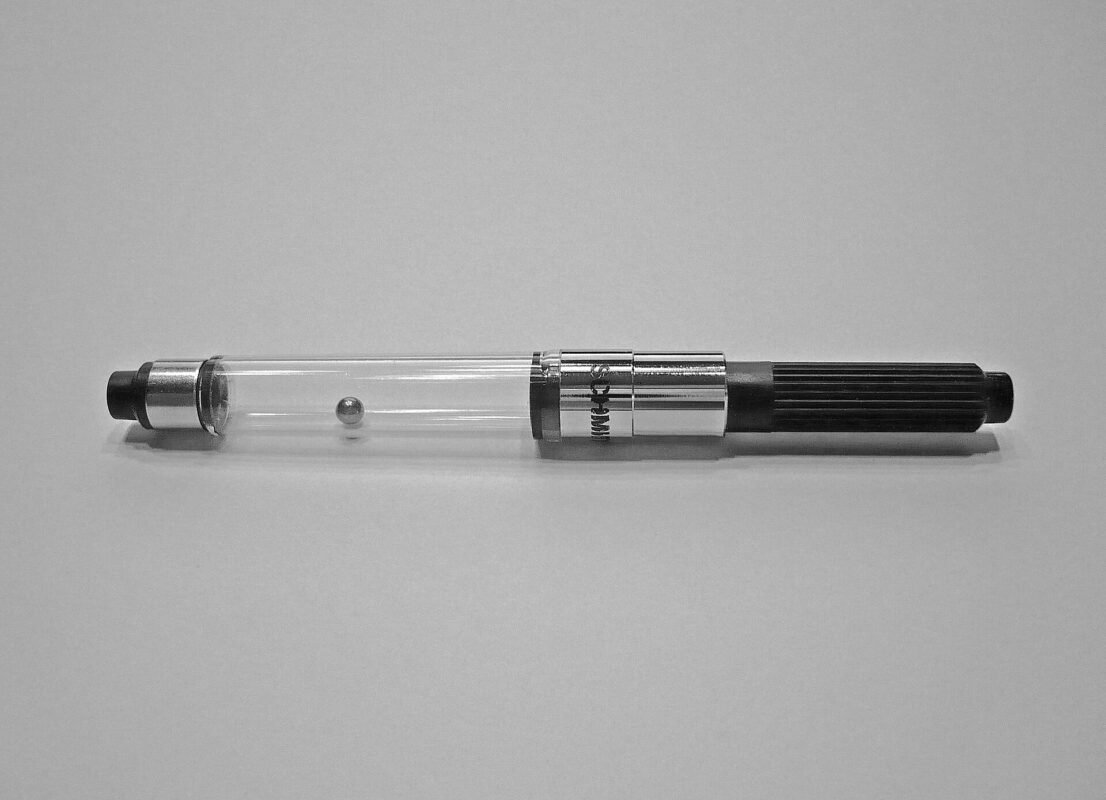
A converter fits where a cartridge would go and lets you fill the pen from a bottle. The most common type works like a small piston: you turn the end to draw ink up. Converters open up the full world of bottled inks and lower the cost per page. Many pens are sold as “cartridge/converter” pens and accept both.

Piston fillers
In a piston-filling pen, the piston mechanism is built into the barrel. Turning a knob at the end draws ink directly into the body. Piston fillers usually hold more ink than converters but can only be filled from a bottle.
Eyedropper fillers
In an eyedropper pen, the whole barrel is the reservoir and is filled directly with a dropper. They hold a lot of ink and are a tradition in India, where many classic pens were eyedropper fillers. They need a good seal, sometimes with a little silicone grease on the threads.
Other systems
Lever fillers, button fillers, vacuum fillers and sac fillers are found mostly in vintage and specialist pens. They are fascinating but not necessary for a first pen.
Which should a beginner choose?
A cartridge/converter pen is the best start. Use cartridges while you learn the pen, then try a converter and a bottle of ink when you feel ready. You get convenience now and flexibility later.
Fountain pen materials
Plastic and resin
Most modern fountain pens use injection-moulded plastics or acrylic resins. They are light, durable and come in every colour. Translucent “demonstrator” pens let you see the ink inside, which beginners often find helpful.
Metal
Brass, aluminium and stainless steel bodies give a solid, premium feel and a heavier weight. Lacquered and plated finishes add colour and shine. Metal pens are popular for gifts and signatures.
Ebonite
Ebonite, a hard vulcanised rubber, is a traditional material that is warm to the touch and easy to turn on a lathe. It has a long history in Indian pen making, especially for hand-turned eyedropper pens.
Celluloid
Celluloid was the classic material of vintage pens, known for its rich, deep patterns. It is less common today because it is harder to work.
Wood and other materials
Some pens use wood, bamboo or composite materials for a natural look. They need a little more care to avoid moisture and cracking.
For a full comparison of pen materials, see Pen Materials Explained. Meanwhile, see our metal pens and eco-friendly pens.
Basic nib care and adjustment
Check alignment
Look at the nib tip from the front and the side, ideally with a magnifier. The two tines should be level with each other and the slit should be even. Misaligned tines cause scratchiness and uneven flow.
Leave serious adjustment to experts
Small nib adjustments, such as realigning tines or smoothing tipping, are possible, but it is easy to make things worse. If your pen scratches or skips after you have checked the angle, ink and paper, ask the maker, seller or a nib specialist.
Protect the nib
Always cap the pen when not writing, never press hard, and store the pen where it cannot roll off a desk. Keep the cap’s inner seal clean by occasionally rinsing it with water.
Breaking in
Some people find that a new nib feels slightly smoother after a few weeks. Much of this is the writer learning the pen’s sweet spot; a well-made nib should write well from the start.
How to choose your first fountain pen
1. Decide what you will use it for
Daily notes at school or work, journalling, letters, signatures or a gift? Daily note-taking favours a fine nib and a durable, comfortable pen. Signatures and letters can suit a medium or broad nib. Gifts often call for a handsome pen in a presentation box.
2. Choose a nib size
Fine is the safest starting point for most people, especially on thinner paper and for smaller handwriting. Medium shows more of the ink’s colour and feels smoother. Go broader only if your handwriting is large or the pen is mainly for signatures.
3. Pick a filling system
Cartridge/converter for flexibility. Check which cartridges the pen takes so you can buy them easily.
4. Think about size and weight
Hold the pen posted (cap on the back) and unposted. Some people like a heavier metal pen; others prefer a light resin pen for long writing sessions. The grip section should be comfortable where your fingers naturally fall, with no sharp threads under your fingers.
5. Check the cap
A cap that seals well stops the pen drying out. Snap caps are quick; screw caps are secure. Both work if well made.
6. Set a sensible budget
You do not need an expensive pen to enjoy fountain pens. A well-made, affordable steel-nib pen is a perfect first pen. Once you know what you like, nib size, weight, filling system, you can choose a premium pen with confidence.
7. Buy from a reliable source
Buy from a manufacturer or retailer who can answer questions and help if the pen has a problem. Ask whether spare cartridges and converters are easily available.
8. Consider the recipient (for gifts)
For a gift, a medium nib is a safe choice for most writers. Include a pack of cartridges, and a converter and bottle of ink if possible. Engraving a name makes the pen personal; see laser engraving.

Setting up your first fountain pen
Inspect the pen
Remove the cap and look at the nib: the tines should be aligned and the slit even. If the pen came with a cartridge in the barrel, it is usually a spare, not yet inserted.
Optional: flush the new pen
Some users like to rinse a new pen’s nib and feed in clean, room-temperature water to remove any manufacturing residue, then dry it with a soft cloth. It is not usually essential, but it can help a new pen start cleanly.
Insert a cartridge
- Unscrew the barrel from the section.
- Hold the section nib-down and push the cartridge firmly onto the feed nipple until you feel or hear it seat. This pierces the seal.
- Screw the barrel back on.
- Hold the pen nib-down for a minute, or gently squeeze the cartridge, to help ink reach the nib.
- Write on scrap paper. It may take a few lines for ink to flow fully.
Fill with a converter
- Push the converter firmly onto the section.
- Turn the converter’s knob to move the piston all the way down.
- Dip the whole nib, past the breather hole, into the ink bottle.
- Slowly turn the knob to draw ink up.
- Release a few drops back into the bottle, then draw up again to fill any air space if needed.
- Lift the pen out, wipe the nib and section with a tissue, and screw the barrel on.
How to write with a fountain pen
Hold the nib the right way up
The top of the nib, the side with the breather hole and any engraving, should face up. The feed is underneath. Writing upside down works on some pens but usually gives a thin, scratchy line.
Find the sweet spot
Most nibs have a “sweet spot”: the angle and rotation at which they write most smoothly. Hold the pen at a comfortable angle, typically around 40 to 55 degrees to the paper, and avoid rolling it as you write. If the line skips, rotate the pen slightly until it flows.
Use a light touch
Let the nib glide. If you are used to ballpoints, this takes practice: relax your grip and let the pen’s weight do the work. Heavy pressure can spread the tines and misalign the nib.
Write from the arm and shoulder
Fountain pens reward a relaxed hand. Moving more from the forearm and less from the fingers reduces fatigue and helps letters flow.
Left-handed writers
Left-handed writers can absolutely use fountain pens. Fine nibs and fast-drying inks help reduce smudging, and smooth, hard-surfaced paper can be better than very coated paper, on which ink sits longer. Some lefties write “underwriting” with the hand below the line, which reduces smearing. Experiment to find what is comfortable.
Posting the cap
Posting means putting the cap on the back of the pen while writing. It makes some pens longer and better balanced, especially smaller ones. Others feel top-heavy posted. Try both.
Practice
Spend a few minutes each day writing slowly: alphabets, sentences, a journal entry. Fountain pens reward patience, and your handwriting will improve with use. See our tips in Best Pen for Good Handwriting.
Finding a pen that fits your hand
Length
A pen should rest comfortably in the web between your thumb and index finger. Shorter pens are often designed to be written with the cap posted; longer pens are usually comfortable unposted. If a pen feels short, try posting the cap.
Diameter
People with larger hands or joint discomfort often prefer a thicker grip, which needs less pinching. Slim pens suit smaller hands and those who like precise control. If you write for long periods, a mid-to-thick grip is usually more comfortable.
Weight and balance
Light pens are agile and reduce fatigue over long sessions. Heavier metal pens feel substantial and some people find their weight helps the nib glide. Balance matters as much as weight: a pen that is heavy at the back can feel awkward, especially when posted.
Grip shape
Round sections suit most grips. Some pens have triangular or faceted sections to guide finger placement, which help some beginners and children but do not suit everyone. If possible, try before you buy.
The step between section and barrel
Where the grip meets the barrel there may be a step or threads. If you hold a pen high, make sure these do not press into your fingers.
How to read a fountain pen description
Product descriptions use a lot of shorthand. Here is what the common terms tell you.
| Term | What it means for you |
|---|---|
| Nib: F / M / B | Fine, medium or broad line; remember sizes vary by maker |
| Steel / 14K / 18K nib | Nib material; steel is ideal for beginners |
| Cartridge/converter (C/C) | Takes cartridges and a converter for bottled ink |
| International cartridges | Takes the widely available standard short/long cartridges |
| Proprietary cartridges | Needs the brand’s own cartridges or converter |
| Piston filler | Built-in filling mechanism; bottled ink only |
| Snap cap / screw cap | How the cap closes |
| Postable | Cap fits securely on the back while writing |
| Length capped / uncapped / posted | Overall size in each configuration |
| Weight | Heavier pens feel solid; lighter ones reduce fatigue |
| Converter included | Whether you can use bottled ink straight away |
Getting started with calligraphy
Fountain pens with italic or stub nibs are a clean, convenient way to explore broad-edged calligraphy before moving to dip pens.
Choose a calligraphy nib
Calligraphy nibs are described by their width, for example 1.1 mm, 1.5 mm or 1.9 mm. A width of around 1.5 mm is a common starting point for practice at a comfortable letter size.
Hold a consistent pen angle
In broad-edged scripts, the nib’s edge is held at a consistent angle to the writing line, often around 30 to 45 degrees depending on the script. This consistent angle creates the characteristic thick and thin strokes.
Start with basic strokes
Practise vertical lines, horizontal lines, diagonals and circles before letters. Then learn a simple script such as italic or foundational hand, letter by letter.
Use guidelines
Calligraphy is measured in nib widths. Rule lines on your paper so letter heights stay consistent.
Paper and ink
Smooth, heavier paper and a well-behaved fountain pen ink give the crispest results. Broad calligraphy nibs lay down a lot of ink, so allow drying time.
Be patient
Calligraphy improves with steady, mindful practice. Ten minutes a day is enough to see progress within weeks.
Fountain pen ink for beginners
Only use fountain pen ink
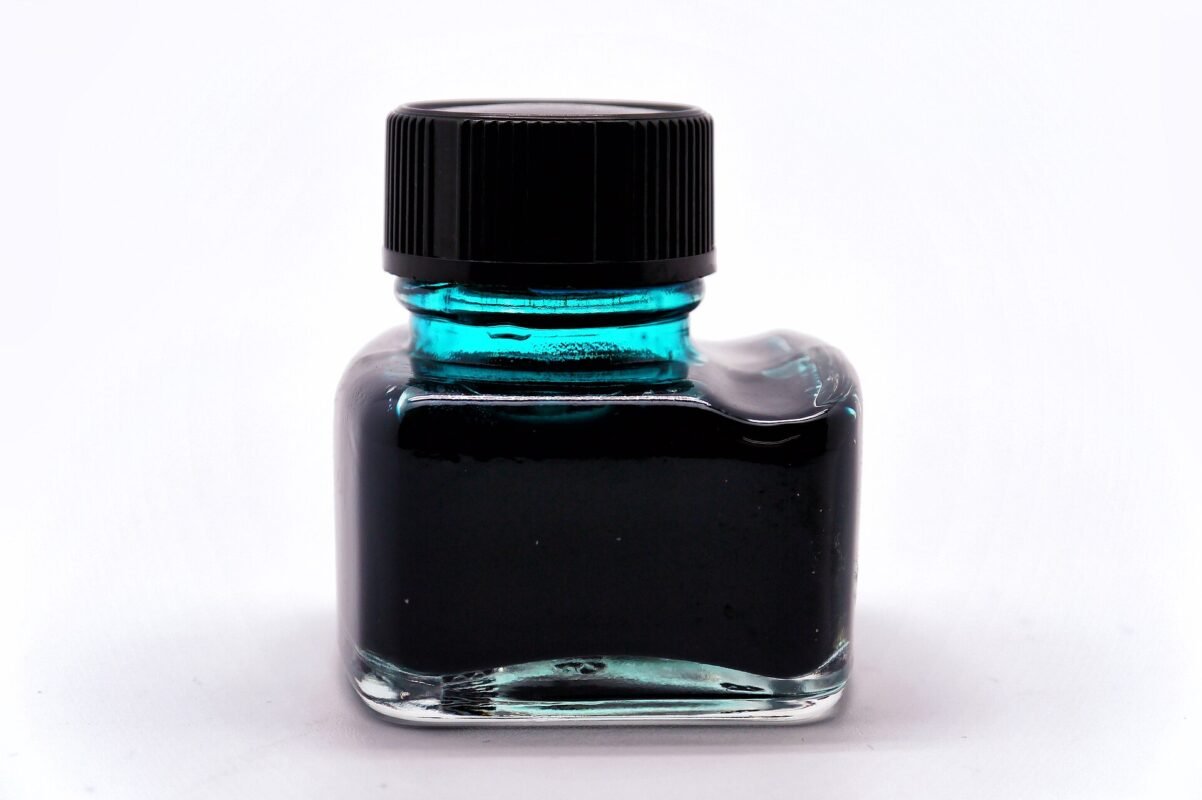
Fountain pens need ink made specifically for them: water-based, with dyes (or very fine, specially formulated pigments) that flow through the narrow channels of the feed without clogging. Never use India ink, drawing ink, acrylic ink, calligraphy dip-pen ink or any ink not labelled for fountain pens. These can dry inside the feed and permanently clog the pen.
Standard dye-based inks
Most fountain pen inks are dye-based. They come in a huge range of colours, flow well, and wash out easily with water. They are the best choice for beginners. Their main weakness is water resistance: many will smudge or wash out if the paper gets wet.
Water-resistant and permanent inks
Some inks are designed to resist water and fading, for example iron gall inks and certain pigmented fountain pen inks. They are excellent for documents but need more careful cleaning and should not be left to dry in a pen. Try them once you are comfortable with a standard ink.
Shading, sheen and shimmer
Shading inks vary in tone within each stroke. Sheening inks show a metallic tint where ink pools. Shimmer inks contain fine particles that sparkle. They are beautiful but some need more frequent cleaning; enjoy them after you have learned the basics.
Choosing a colour
Blue and blue-black are classic, readable and widely accepted. Black is formal and photocopies cleanly. For notes and journals, try a colour you enjoy. Check any rules for exams, banks or official documents before using unusual colours.
Cartridges vs bottled ink
| Cartridges | Bottled ink with converter | |
|---|---|---|
| Convenience | Very high; no mess | Takes a minute; some practice |
| Cost per page | Higher | Lower |
| Colour choice | Limited | Huge |
| Travel | Ideal | Less convenient |
| Waste | Plastic cartridges | Glass bottle, minimal waste |
Mixing inks
Do not mix different brands or types of ink in a pen or bottle unless the maker says they are compatible. Some combinations react and form sludge. When changing inks, flush the pen with water first.
Refilling cartridges
Empty cartridges can be refilled with a syringe and bottled ink. It is a common, economical trick, but be careful to use clean equipment and not to overfill.
For more about refills and cartridges, read our guide to pen refills.
Paper for fountain pens
Paper makes a bigger difference with fountain pens than with any other pen, because liquid ink interacts with paper fibres.
Feathering
Feathering happens when ink spreads along paper fibres, giving lines fuzzy edges. It is common on very absorbent, cheap or uncoated paper. A finer nib, a drier ink or better paper all help.
Bleed-through and show-through
Bleed-through is ink soaking through to the other side of the page. Show-through (ghosting) is when writing is visible from the back but has not soaked through. Thicker or better-sized paper reduces both.
What to look for
- Weight: around 80–100 gsm is a good starting point for notebooks; heavier is even better for broad nibs.
- Smoothness: smooth paper lets the nib glide and shows ink well.
- Sizing: paper treated to resist absorption reduces feathering.
- Test before buying in bulk: write a few lines with your pen and ink.
Good notebooks and diaries make fountain pens far more enjoyable. Browse our diaries, notebooks and planners.
Everyday paper
Standard office copy paper usually works with fine nibs and well-behaved inks. School notebooks vary widely; test yours. If you get feathering, try a finer nib or a different ink before giving up.
Understanding ink properties
Flow: wet and dry inks
Some inks flow generously, giving a darker, smoother line (“wet”); others flow more sparingly (“dry”). A wet ink can tame a scratchy fine nib; a dry ink can control a broad nib on absorbent paper. Matching pen and ink is part of the fun.
Saturation
Highly saturated inks give intense colour but may need more frequent cleaning. Less saturated inks often shade more, showing light and dark tones within a stroke.
Drying time
Drying time depends on the ink, the amount laid down and the paper. Coated papers keep ink on the surface, so it takes longer to dry. Left-handed writers and fast note-takers should look for quicker-drying inks.
Water resistance
Standard dye inks may smudge or wash away if wet. Water-resistant inks leave a readable line even if the page is splashed. For records and signatures, water resistance is worth considering.
Lightfastness
Some dyes fade over time in sunlight. For documents that will be displayed or kept for years, choose inks described as lightfast or archival.
Washability
“Washable” inks are designed to come out of fabric more easily, a sensible choice for children and students. They are usually less water-resistant on paper.
How to change ink colours, step by step
- Write until the pen runs dry, or empty the converter back into the bottle.
- Remove the cartridge or converter.
- Flush the section and feed with clean water until it runs clear.
- Flush the converter separately if you use one.
- Let the pen dry nib-down on a paper towel, or wick out remaining water with tissue.
- Fill with the new ink.
- Write a few lines on scrap paper; the first lines may be slightly diluted by residual water.
If you switch between very different inks often, consider keeping one pen per ink to reduce cleaning.
Tips for neat filling
- Use a stable bottle. Put tall bottles on a non-slip mat, or use a small cup for low ink levels.
- Submerge past the breather hole. This ensures ink is drawn up rather than air.
- Fill slowly. Turning the converter slowly draws more ink and fewer bubbles.
- Wipe thoroughly. Wipe the nib, the section and any threads after filling so ink does not transfer to your fingers.
- Keep tissues nearby. Accidents happen; tissues and a damp cloth keep them small.
- Close the bottle immediately. Ink can evaporate and thicken in an open bottle.
Lending and sharing your pen
Fountain pens can feel very personal. Over time, some nibs subtly suit their owner’s angle and pressure. If someone asks to try your pen, it is perfectly fine to let them, but explain that it needs a light touch and that the nib’s top should face up. For quick signatures by others, such as at a counter or meeting, many fountain pen users keep a ballpoint handy to lend instead.
Simple pen, ink and paper pairings
If you are unsure where to start, these combinations work well for most beginners.
- Everyday school or office notes: fine steel nib, standard blue or blue-black ink, ordinary ruled notebook of decent quality. Reliable, quick to dry and easy to read.
- Journalling: medium nib, a colour you love, a diary with smooth, heavier paper. Shows off shading and colour.
- Signatures and letters: medium or broad nib, black or blue-black ink with good water resistance, quality letter paper. Looks confident and lasts.
- Left-handed writing: extra fine or fine nib, a fast-drying ink, smooth uncoated paper. Minimises smudging.
- Cheap or thin paper: extra fine or fine nib, a drier ink. Reduces feathering and show-through.
- Sketching: fine nib, a waterproof fountain pen ink, sketchbook paper. Allows washes over the lines once dry.
Once you have tried one of these, change one variable at a time, nib, ink or paper, so you can see what each change does.
Cleaning and maintenance
A fountain pen needs a little regular care. It takes only a few minutes and keeps the pen writing like new for decades.
When to clean
- When changing to a different ink, especially a different colour or brand.
- Every few weeks with regular use, or when a fill runs out.
- Before storing the pen for more than a few weeks.
- If ink flow becomes weak, skips or seems sluggish.
- Sooner with shimmering, pigmented, iron gall or highly saturated inks.
How to flush a cartridge/converter pen
- Remove the barrel and the cartridge or converter.
- Hold the section under gently running cool or lukewarm tap water, or place it nib-down in a cup of water, letting water run through the feed.
- With a converter, draw clean water in and expel it repeatedly until it runs clear.
- A bulb syringe can push water through the section faster.
- Let the nib and section dry nib-down on a paper towel, ideally overnight, or wick out water by touching the nib to tissue.
Things to avoid
- Hot water: it can warp plastic parts and feeds.
- Alcohol and strong solvents: they can damage plastics, finishes and seals.
- Pulling out the nib and feed unless you know the pen is designed for it.
- Dishwashers and ultrasonic cleaners on pens with delicate finishes, unless the maker says it is safe.
Mild pen flush
For stubborn dried ink, a dedicated pen flush solution, or a very weak solution of water with a drop of plain dish soap, followed by thorough rinsing, can help. Always finish with clean water.
Long-term storage
If you will not use a pen for a while, flush it, dry it thoroughly and store it capped. Ink left in a pen for months can dry and clog the feed.
Exterior care
Wipe the barrel with a soft, dry cloth. Avoid harsh polishes on lacquer, plated or printed finishes. Keep pens away from direct sunlight, which can fade some materials.

Troubleshooting common problems
| Problem | Likely cause | Fix |
|---|---|---|
| Pen will not start | Ink has not reached the nib; dried ink | Hold nib-down; squeeze cartridge gently; dip nib in water briefly |
| Skipping | Wrong angle; oily paper; nib misaligned | Adjust angle and rotation; try other paper; check tines |
| Hard starts after rest | Ink drying in nib; cap not sealing | Cap the pen promptly; try a wetter ink; flush |
| Scratchy feel | Tines misaligned; nib upside down; very fine nib | Check nib orientation; ask the maker or a nib specialist to adjust |
| Too wet / feathering | Paper too absorbent; very wet ink; broad nib | Better paper; drier ink; finer nib |
| Too dry / faint line | Dry ink; clogged feed; pressure on tines | Flush; try a wetter ink; reduce pressure |
| Leaking or blobs | Overfilled; air pressure change; warm hands; cracked part | Leave a little air; keep upright when flying; check for cracks |
| Ink on fingers | Ink in the cap or on the section; overfilling | Wipe section after filling; clean cap inside |
| Railroading (double line) | Too much pressure; nib not suited to flex | Lighter touch; slower writing |
| Ink dries in cap quickly | Poor cap seal | Store capped; check cap inner seal |
If a new pen has a problem you cannot solve, contact the maker or seller. Most nib problems are simple for an experienced technician to fix.
Fountain pens and travel
Changes in air pressure on flights can push ink out of a partly filled pen. Simple precautions avoid problems:
- Travel with the pen either completely full or completely empty, as less air means less expansion.
- Keep the pen upright, nib up, in a pocket or pen case during the flight.
- Uncap carefully after landing, with a tissue nearby.
- Carry spare cartridges rather than bottled ink in hand luggage.
Heat matters too: never leave a fountain pen in a hot car or in direct summer sun, as warm air expands and can force ink out.
Beginner mistakes to avoid
1. Pressing too hard
Years of ballpoint habit make many beginners press firmly. With a fountain pen, pressure spreads the tines, makes the line uneven and can eventually bend the nib. Relax your grip and let the nib glide.
2. Using the wrong ink
India ink, drawing ink and calligraphy inks for dip pens can clog a fountain pen permanently. Use only ink labelled for fountain pens.
3. Leaving the pen uncapped
Ink at the nib dries within minutes in warm, dry air. Cap the pen whenever you stop writing for more than a short pause.
4. Never cleaning the pen
Ink left for months can dry inside the feed. Flush the pen regularly and before storage.
5. Using very cheap, absorbent paper
Poor paper causes feathering and bleed-through, which beginners often blame on the pen. Try better paper first.
6. Starting with a nib that is too broad
Broad nibs look impressive but lay down a lot of ink, which can feather on everyday paper and take longer to dry. Start with fine or medium.
7. Dropping the pen nib-first
A single fall onto a hard floor can bend a nib. Cap the pen when carrying it and keep it in a pocket or case.
8. Lending it to heavy-handed writers
Nibs gradually adapt to their owner’s angle and pressure. A friend who writes with heavy pressure can spring the tines. It is fine to let someone try it gently; just show them how.
9. Mixing incompatible inks
Flush between inks to avoid unexpected reactions.
10. Giving up too soon
The first day can feel unfamiliar. Give yourself a week of daily writing, adjust the angle, try a different paper or ink, and most beginners settle in comfortably.
Fountain pens for different people
Students
Fountain pens were once required in many Indian schools because they encourage good letter formation. Students who write long answers often find them comfortable for the same reason: no pressure means less fatigue. Use a fine nib, a quick-drying blue or blue-black ink and test it on your answer-sheet paper. Carry a spare cartridge and a backup pen in exams, and check your board’s rules. See The Best Pens for Exams.
Professionals
Many professionals keep a fountain pen for signing and meeting notes. Choose a dependable pen with a good cap seal so it starts instantly, and a permanent or water-resistant ink for documents if your organisation allows it.
Writers and journallers
Fountain pens and good journals are a natural pair. A medium nib shows ink colour and shading beautifully. Several pens inked with different colours make journalling more enjoyable.
Artists and sketchers
Fountain pens are popular for line sketching and ink wash. Use a waterproof fountain pen ink if you plan to add watercolour, and clean the pen more often.
Calligraphy beginners
Italic and stub nibs let you explore broad-edged calligraphy without dip pens. They are a gentle, clean introduction to the art.
Gift recipients
A fountain pen is a thoughtful gift for graduations, new jobs, promotions, weddings and retirements. A well-made pen in a gift box, with cartridges included, is ready to use straight away. See Choosing the Right Pen for Executive Gifting and gift sets.

Fountain pens vs other pens
| Fountain pen | Ballpoint | Gel | Rollerball | |
|---|---|---|---|---|
| Pressure needed | Almost none | Moderate | Light | Light |
| Line character | Varies with nib and ink | Even, thin | Bold, smooth | Rich, wet |
| Ink choice | Hundreds of colours | Limited | Many colours | Limited |
| Drying time | Slower | Fastest | Moderate | Moderate |
| Paper sensitivity | High | Low | Moderate | Moderate to high |
| Maintenance | Regular flushing | None | None | Cap when not in use |
| Long-term cost | Very low with bottled ink | Low | Moderate | Moderate |
| Lifespan | Decades | Refill-dependent | Refill-dependent | Refill-dependent |
If you want the fountain pen feel without the maintenance, a rollerball is a good compromise; many fountain pen ranges, including our Black Tie rollerball, offer a matching rollerball. For a full comparison of all pen types, see Types of Pens.
Ink first aid
Ink on fingers
Most fountain pen inks wash off skin with soap and warm water. For stubborn marks, repeat washing over a few hours; the stain fades naturally. To prevent inky fingers, wipe the section after filling and avoid overfilling.
Ink on clothes
Act quickly. Blot, do not rub, with a clean cloth. Rinse the back of the fabric with cold water to push ink out, then wash as usual with detergent. Washable inks come out most easily. Permanent and highly saturated inks may need a stain remover suited to the fabric; test it on a hidden area first.
Ink on desks and surfaces
Wipe immediately with a damp cloth. On porous surfaces like unsealed wood, use a mat when filling pens.
Ink in the cap
If ink collects inside the cap, rinse the cap under running water, shake it out and let it dry before replacing it, otherwise the ink will transfer back to the section and your fingers.
Storing ink
- Keep bottles tightly closed to prevent evaporation and thickening.
- Store away from heat and sunlight, which can alter colours and encourage mould.
- Use clean equipment; never pour ink from a pen back into a bottle if the pen was dirty.
- Check old ink for unusual smells, slime or particles; discard it if it looks spoiled.
- Keep cartridges sealed in their packet until use.
- Keep ink away from children’s reach and label bottles clearly.
What a fountain pen costs to own
The real cost of a fountain pen is mostly the pen itself, because running costs are low.
- The pen: a one-time purchase that can last many years.
- Cartridges: convenient but cost more per page than bottled ink.
- Converter: a small one-time purchase that unlocks bottled ink.
- Bottled ink: one bottle refills a pen many times over, making cost per page very low.
- Paper: good paper is the main ongoing expense for heavy writers.
- Maintenance: water and a few minutes of your time.
Compared with buying disposable pens week after week, a fountain pen and bottled ink are economical over time, and far less wasteful.
Fountain pens from DYNA
DYNA began as a fountain pen maker in Delhi in 1960, and fountain pens remain part of our range alongside rollerball and ballpoint pens. Our Black Tie fountain pen, finished in gloss black and gold, is designed as a gift-ready pen with matching rollerball and ballpoint versions, so recipients can choose the writing style they prefer. For organisations, we can engrave names or logos and supply pens in presentation boxes or gift sets.
A short history of the fountain pen
Before the fountain pen
For centuries, people wrote with reed pens, quills and later steel dip pens, which had to be dipped in ink every few words. Inventors tried for a long time to build a pen with its own ink reservoir, but early designs often flooded or stopped.
A reliable feed
The breakthrough was controlling the flow of ink and air. In 1884, Lewis Waterman in New York patented an improved feed that balanced ink flow with air returning to the reservoir, helping make the fountain pen dependable enough for everyday use. Through the late nineteenth and early twentieth centuries, many makers developed new filling systems, from eyedroppers to lever fillers and pistons.
The golden age
By the early twentieth century, fountain pens were the standard writing instrument for offices, schools and homes. Pens became objects of status and craftsmanship, with celluloid bodies, gold nibs and distinctive designs.
Cartridges and the ballpoint era
After the Second World War, cheap and convenient ballpoints spread rapidly, and the fountain pen gradually moved from everyday tool to a more personal choice. Disposable ink cartridges, which became widespread in the mid-twentieth century, made fountain pens cleaner and easier to use.
Fountain pens in India
India developed its own fountain pen industry in the early twentieth century, encouraged by the Swadeshi movement’s call to use Indian-made goods. Many small makers produced eyedropper pens with ebonite bodies, a tradition that continues in some workshops today. For decades, Indian schoolchildren learned to write with fountain pens and ink bottles were a fixture on office desks.
DYNA’s beginnings
DYNA’s own story begins here. In 1960, Mansukh Lal Mehta founded the company in Delhi to make fountain pens. As the market moved to ballpoints, DYNA moved too, building ballpoint and refill manufacturing in the late 1970s, but our roots are in the fountain pen. Read more in Leadership and Our Journey, and see The Evolution of Pen Manufacturing in India.
The modern revival
In recent years fountain pens have found a new audience. Affordable, well-made starter pens, online communities, journalling, and a desire for slower, more personal tools have brought many new users to fountain pens, including young people who never used one at school.
Fountain pen myths
“Fountain pens are messy.”
Modern cartridge pens are clean and simple. Mess usually comes from overfilling, poor storage or the wrong ink, all easy to avoid.
“They are only for calligraphy.”
Most fountain pens are made for everyday handwriting. Calligraphy nibs are a specialist option.
“They are expensive.”
Excellent starter fountain pens are affordable, and bottled ink makes running costs very low.
“Left-handers can’t use them.”
Many left-handed writers use fountain pens happily with a fine nib, quick-drying ink and a comfortable hand position.
“Gold nibs always write better.”
Gold nibs can feel softer, but a well-tuned steel nib writes just as smoothly. Tuning and tipping matter more than the metal.
“You can’t take them on planes.”
You can. Keep the pen full or empty, upright and capped.
“Nibs wear out quickly.”
The hard tipping on a nib lasts for many years of normal use; nibs commonly outlast their owners.
“Any ink will do.”
Only fountain pen ink should go into a fountain pen.
When and how to upgrade
After a few months with your first pen you will know what you like: finer or broader lines, light or heavy pens, posted or unposted, wet or dry inks. That is the time to consider a second pen. You might choose:
- A different nib size to complement your first pen, for example a medium for letters if your first was fine.
- A metal or premium pen for signatures and gifts.
- A piston filler for larger ink capacity.
- A stub or italic nib for decorative writing.
- A matching rollerball or ballpoint from the same range for days when you need quick-drying ink.
Browse our premium metal pens and gift sets.
Your first month: a simple learning plan
The quickest way to feel at home with a fountain pen is to use it a little every day. This four-week plan takes ten to fifteen minutes a day.
Week 1: Get comfortable
- Day 1: insert a cartridge, write your name and a few sentences on scrap paper. Notice how little pressure is needed.
- Day 2: experiment with the angle. Write the same sentence at a steep angle, a low angle and in between. Find where the nib feels smoothest.
- Day 3: try rotating the pen slightly left and right to find the sweet spot.
- Day 4: write a full page of notes from a book or lecture. Notice any fatigue and relax your grip.
- Day 5: try posting the cap and writing unposted. Which feels better balanced?
- Day 6: write on three different papers: copy paper, a school notebook and a good diary. Compare feathering and smoothness.
- Day 7: rest the pen capped for a day and see whether it starts instantly. A good cap seal should keep it ready.
Week 2: Shape your handwriting
- Practise lower-case letters in groups: rounded letters (a, c, d, g, o, q), tall letters (b, d, f, h, k, l, t) and descenders (g, j, p, q, y).
- Write slowly and evenly; consistent spacing and slant matter more than speed.
- Copy a favourite poem or passage you are free to use, focusing on rhythm.
- End each session by writing a short journal entry.
Week 3: Learn to fill and clean
- Flush the pen once the first cartridge runs low.
- Fit a converter and fill from a bottle of blue or black ink.
- Practise wiping the nib and section neatly after filling.
- Note how the bottled ink compares with the cartridge ink in colour and flow.
Week 4: Use it everywhere
- Use the pen for daily notes, to-do lists and signatures.
- Write a letter or card to someone by hand.
- Try a second ink colour after flushing.
- Decide what you like and what you would change: nib size, weight, ink. That knowledge will guide your next pen.
Improving handwriting with a fountain pen
Posture and grip
Sit upright with both feet on the floor and the paper angled slightly to suit your writing hand. Hold the pen lightly between thumb and index finger, supported by the middle finger, about two to three centimetres from the nib. Avoid gripping so tightly that your knuckles whiten.
Movement
Let the forearm guide the hand across the line, with the fingers forming the letters. This reduces cramping on long pages.
Consistency
Good handwriting is mostly about consistency: the same letter height, the same slant and even spacing. Lined paper or a guide sheet under plain paper helps.
Slow down
Write slowly at first. Speed comes naturally once the movements become familiar.
Drills
- Rows of ovals and slanted lines to train smooth movement.
- Connecting strokes between letters for cursive.
- Pangrams, sentences that use every letter, to practise the whole alphabet.
- Numbers and capital letters, which are often neglected.
Our article Best Pen for Good Handwriting has more tips for students and adults.
Fountain pens as gifts
Why fountain pens make memorable gifts
A fountain pen is personal, lasting and useful. It marks an occasion, a graduation, a first job, a promotion or a retirement, and it is used every day afterwards, reminding the recipient of the giver. It also carries a sense of tradition that few other gifts do.
Choosing a gift fountain pen
- Nib: medium is the safest choice for an unknown handwriting; fine for students or small handwriting.
- Filling system: cartridge/converter is easiest for the recipient.
- Weight and size: a balanced, mid-weight pen suits most people.
- Finish: classic black and gold, chrome or a refined colour suit formal gifts.
- Box: a presentation box adds to the occasion.
- Extras: include cartridges, and ideally a converter and a bottle of ink.
- Personalisation: engrave the recipient’s name or initials.
Corporate fountain pen gifts
For senior executives, board members, long-service awards and VIP clients, a fountain pen engraved with the company logo is a dignified gift. Order a matching rollerball or ballpoint for recipients who prefer quick-drying ink, and include a short card explaining how to insert a cartridge. Laser engraving gives a precise, permanent mark that suits premium finishes. See Pen Branding Methods, Corporate Gifting Pens and laser engraving.
Gift sets
Gift sets combining a pen with a diary, card holder or keychain make complete presents for festivals, conferences and onboarding. See our gift sets and the 3-in-1 gift set.
Fountain pens in Indian conditions
Heat
In hot weather, air inside a partly filled pen expands and can push ink into the cap or onto your fingers. Avoid leaving pens in cars, near windows or in bags in direct sun. Keep the pen in an inside pocket or a case, and let a warm pen rest nib-up for a minute before uncapping.
Dry air
In dry seasons and air-conditioned rooms, ink dries faster at the nib. Cap the pen between notes, and choose a pen with a well-sealing cap.
Humidity and monsoon
High humidity makes paper more absorbent, which can increase feathering. A finer nib or a slightly drier ink can help during the monsoon. Store notebooks and diaries in a dry place.
Water and documents
If papers may get wet, for example in fieldwork or travel during the rains, choose a water-resistant fountain pen ink for important notes.
Dust
Dust in the cap can reach the nib. Rinse the cap occasionally and store pens capped in a case or drawer.
Useful accessories
- Spare cartridges: keep a few in your bag or desk.
- Converter: for bottled ink.
- Bottled ink: start with one blue or black.
- Bulb syringe: speeds up flushing.
- Soft cloth and tissues: for wiping nibs and sections.
- Pen case or pouch: protects pens in bags and pockets.
- Good notebook: paper that suits fountain pens; see our diaries and notebooks.
- Blotting paper: handy for left-handed writers and quick notes.
- Magnifier or loupe: for checking nib alignment.
Buying checklist for your first fountain pen
- Cartridge/converter filling system.
- Fine or medium stainless steel nib.
- Comfortable grip with no sharp threads under your fingers.
- Balanced weight, posted and unposted.
- Cap that seals well.
- Easily available cartridges (ideally international standard) and a compatible converter.
- Sensible budget for a first pen.
- Reliable seller or maker who offers support.
- For gifts: presentation box and optional engraving.
- A bottle of fountain pen ink and good paper to go with it.
Fountain pens for schools and institutions
Some schools still encourage or require fountain pens in the early years because they promote good letter formation and a light, controlled grip. If your school or institution is buying fountain pens in quantity, consider:
- Durable, affordable pens with steel nibs and secure caps.
- Standard cartridges that parents can buy easily.
- Fine nibs suited to young handwriting and school notebooks.
- Washable blue ink for younger children, so stains come out of uniforms more easily.
- Simple instructions for students and parents on filling and cleaning.
- Branded pens with the school crest for prize days and events.
For quantities, branding and delivery, see our guide to buying pens in bulk.
Fountain pens and sustainability
Fountain pens are among the most sustainable writing tools. One well-made pen can last for decades, and filling from a glass bottle of ink avoids the plastic of disposable pens and refills. Even with cartridges, the pen body stays in use. If you want to reduce waste in your office or classroom, encouraging fountain pens for those who enjoy them, alongside refillable ballpoints for everyone else, is a simple step. Read Dyna Eco Series: Where Sustainability Meets Style.
Beyond the first pen: collecting and community
Many people who start with one fountain pen end up with a small, much-loved collection: a fine nib for notes, a broad nib for letters, a pen for each favourite ink colour, and perhaps a vintage pen with a story. Pen clubs, online forums and pen shows bring enthusiasts together to share inks, swap tips and try each other’s pens. There is no need to collect to enjoy fountain pens, but if the hobby grows on you, you will find a friendly community.
When storing a collection, keep pens clean and empty if unused for long periods, store them horizontally or nib-up in a case away from sunlight, and note which ink is in which pen.
Keeping a simple pen log helps too. For each pen, note the nib size, the ink currently in it and the date it was filled. When you notice a pen has sat unused for a few weeks, flush it rather than letting the ink dry. A small notebook page of writing samples, one line from each pen and ink combination, is a pleasant record and a quick way to choose which pen to use for a particular task. It also helps when you decide what to buy next, because you can see at a glance which nib widths and colours you actually reach for, and which ones sit unused in the drawer. Many experienced users find that a small rotation of three or four pens, used and cleaned regularly, gives more enjoyment than a large collection that rarely gets inked.
Teaching children to use a fountain pen
Many parents and teachers want children to learn with fountain pens, as previous generations did. Done well, it can make handwriting neater and more enjoyable.
When to start
Children usually move to pens once their pencil grip and letter formation are reasonably settled. Follow the school’s guidance; some schools introduce fountain pens in the middle primary years.
Choose a child-friendly pen
- A sturdy, light plastic body that survives drops.
- A fine steel nib.
- A secure cap that is easy for small hands.
- Cartridges, so filling is simple and clean.
- Washable blue ink.
- Optionally, a moulded grip that guides finger placement.
Teach the basics
- Show which way up the nib goes, using a mark or the engraving as a guide.
- Demonstrate a light grip and a gentle touch.
- Practise long, smooth strokes and loops before letters.
- Show how to cap the pen after each use.
- Teach how to change a cartridge over a tissue or sink.
Left-handed children
Give left-handed children a fine nib and quick-drying ink, angle the paper to suit them, and encourage a hand position below the writing line to avoid smudging. Patience and encouragement matter more than any equipment.
Keep it positive
Short daily practice works better than long sessions. Praise neat, consistent letters rather than speed. A pen the child chooses, in a favourite colour, can make a big difference to enthusiasm.
Expect a few ink spots
Ink on fingers is part of learning. Washable ink and a tissue in the pencil box keep it manageable.
Quick decision guide
| If you want… | Choose |
|---|---|
| Your first fountain pen for daily notes | Cartridge/converter pen, fine steel nib, blue or black cartridges |
| A pen mainly for signatures | Medium or broad nib, well-sealing cap, permanent ink if allowed |
| To explore ink colours | Converter plus a few bottled inks; consider a demonstrator |
| Something for exams | Fine nib, quick-drying ink, spare cartridges and a backup pen |
| A gift | Medium nib, presentation box, cartridges included, optional engraving |
| Calligraphy practice | Italic nib around 1.5 mm and smooth heavy paper |
| Low maintenance with a similar feel | A rollerball from the same range |
Fountain pen glossary
- Breather hole
- The small hole at the end of the nib slit; aids flexibility and ink flow.
- Cartridge
- A sealed, disposable plastic container of ink.
- Converter
- A refillable reservoir that replaces a cartridge, filled from a bottle.
- Demonstrator
- A transparent pen that shows its internal parts and ink.
- Dry writer
- A pen or ink combination that lays down relatively little ink.
- Ebonite
- Hard vulcanised rubber used for some pen bodies and feeds.
- Eyedropper filler
- A pen whose barrel is filled directly with ink using a dropper.
- Feathering
- Ink spreading along paper fibres, giving fuzzy lines.
- Feed
- The part under the nib that regulates ink and air flow.
- Feedback
- The tactile sensation of the nib on the paper.
- Flex nib
- A nib whose tines spread under pressure for line variation.
- Hard start
- When a pen does not write immediately at the start of a stroke.
- Iron gall ink
- A traditional permanent ink that darkens as it oxidises; needs careful cleaning.
- Italic / stub nib
- A flat-ground nib that makes broad downstrokes and thin cross-strokes.
- Nib
- The metal writing point of a fountain pen.
- Piston filler
- A pen with a built-in piston to draw ink from a bottle.
- Posting
- Placing the cap on the back end of the pen while writing.
- Railroading
- A double line caused by the tines spreading too far.
- Section
- The grip area that holds the nib and feed.
- Shading
- Variation in ink tone within a single stroke.
- Sheen
- A metallic tint that appears where some inks pool.
- Skipping
- Gaps in the line during writing.
- Sweet spot
- The angle and rotation at which a nib writes most smoothly.
- Tines
- The two halves of the nib on either side of the slit.
- Tipping
- The hard metal bead at the end of the nib that touches the paper.
- Wet writer
- A pen or ink combination that lays down a generous amount of ink.
Frequently asked questions
Is a fountain pen good for beginners?
Yes. A reliable, affordable cartridge/converter pen with a fine or medium steel nib is easy to learn and comfortable to write with. Most people feel at home within a week of daily use.
Which nib size should a beginner choose?
Fine or medium. Fine suits small handwriting and thinner paper; medium is smoother and shows more ink colour. Remember that nib sizes vary between makers.
Do I need a gold nib?
No. A well-made stainless steel nib writes beautifully and is more than enough for most people.
How do I put ink in a fountain pen?
Either push a cartridge firmly onto the section until the seal is pierced, or fit a converter, dip the nib into a bottle of fountain pen ink and turn the converter to draw ink up.
Can I use any ink?
No. Use only ink made for fountain pens. India ink, drawing ink and dip-pen calligraphy ink can clog the pen permanently.
How often should I clean a fountain pen?
Flush it with water when changing ink, every few weeks of regular use, before storage, and whenever ink flow becomes sluggish.
Why is my fountain pen not writing?
The ink may not have reached the nib yet, the nib may have dried, or the pen may be held at the wrong angle or upside down. Hold it nib-down for a minute, check the cartridge is fully seated and try writing at a lower angle with the nib’s top facing up.
Why does my fountain pen feather or bleed?
Usually because of absorbent paper, a very wet ink or a broad nib. Try better paper, a finer nib or a drier ink.
Are fountain pens good for exams?
Many students find them comfortable for long papers. Test your pen and ink on the exam paper type, use a fine nib and quick-drying ink, carry spare cartridges and a backup pen, and follow your board’s rules.
Can left-handed people use fountain pens?
Yes. A fine nib, fast-drying ink, smooth paper and a comfortable hand position help prevent smudging.
Can I take a fountain pen on a plane?
Yes. Travel with it full or empty, keep it upright and capped, and open it carefully after landing.
How long does a fountain pen last?
With regular cleaning and careful handling, a good fountain pen can last for decades.
What is the difference between a fountain pen and a rollerball?
Both use liquid ink, but a fountain pen uses a split metal nib and a feed, while a rollerball uses a refill with a ball tip. Rollerballs need no cleaning but offer less ink choice and line character.
Is a fountain pen a good corporate gift?
Yes, especially for senior leaders, long-service awards and VIP clients. Engrave it, include cartridges and consider a matching rollerball for those who prefer quick-drying ink.
Does DYNA make fountain pens?
Yes. DYNA began making fountain pens in Delhi in 1960, and our range includes fountain pens such as the Black Tie fountain pen. Contact us on WhatsApp for options, gift boxes and engraving.
The DYNA Complete Pen Guide series — ten in-depth guides to choosing, branding, buying and caring for pens:
Related guides and pages
Conclusion
A fountain pen is one of the simplest pleasures in writing. Start with an affordable, dependable cartridge/converter pen with a fine or medium steel nib, use proper fountain pen ink on decent paper, write with a light touch at a comfortable angle, and flush the pen every few weeks. Within days, it will feel natural; within months, it may become the pen you reach for first. If something does not feel right, change one thing at a time, the angle, the paper, the ink or the nib size, and you will quickly find the combination that suits your hand and your handwriting.
Fountain pens are where DYNA began in 1960, and we still love helping people discover them. Whether you want a first pen for yourself, a gift for someone special or engraved fountain pens for your organisation, our team is happy to help on WhatsApp.