

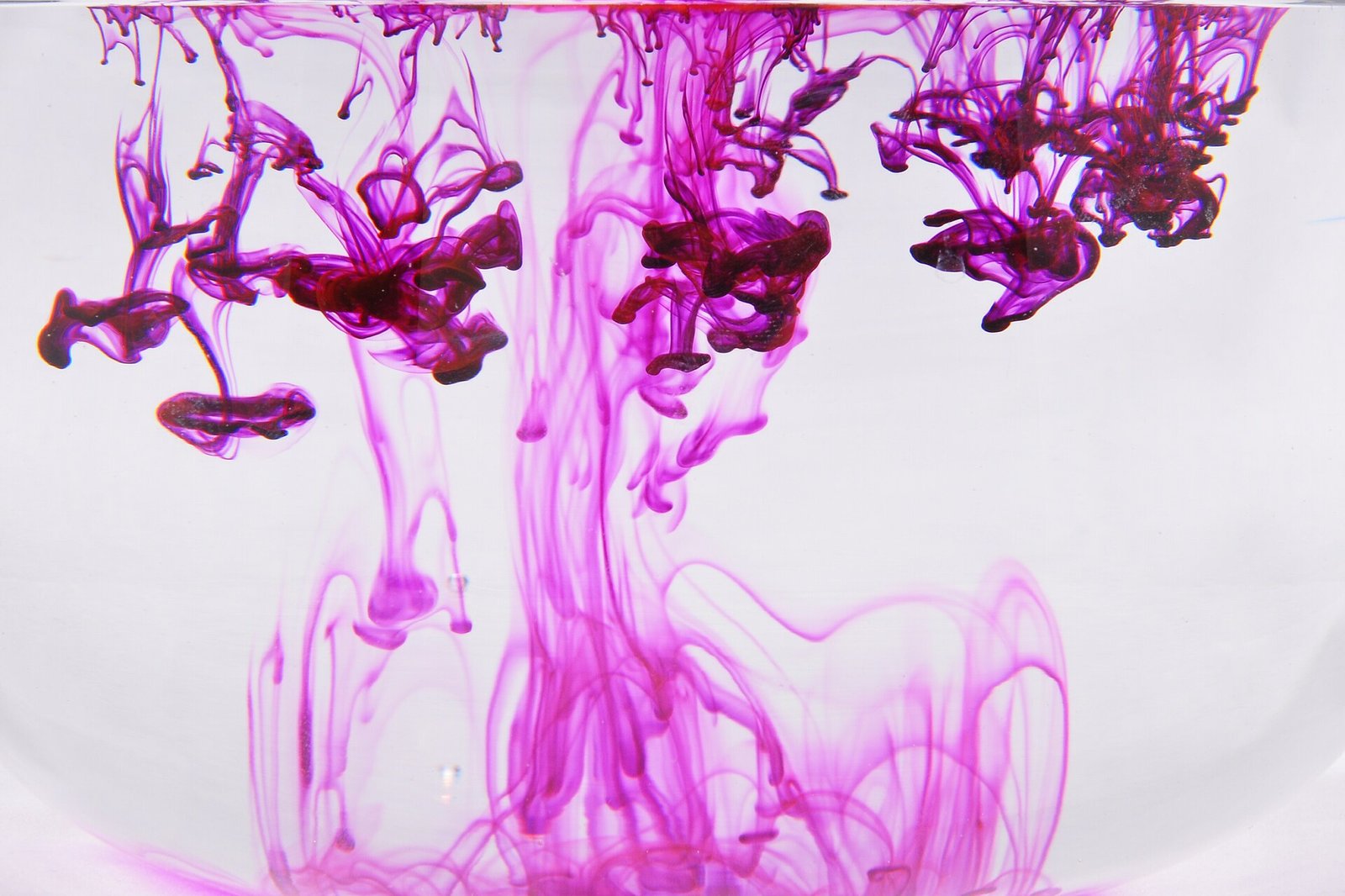
Ask most people what makes one pen better than another and they will talk about the tip or the body. But the single biggest factor in how a pen feels and performs is the ink. Ink decides whether a line glides or drags, dries in a second or smudges under your hand, survives a spilled cup of tea or fades in sunlight, shows through thin paper or stays crisp. It decides whether a signature can be trusted, whether exam answers stay neat and whether a logo on a promotional pen is matched by a line that impresses.
Yet pen inks are rarely explained. Packaging says “smooth”, “quick-dry” or “permanent” without saying what those words mean. This guide explains pen ink types in plain language: what ink is made of, how ballpoint, hybrid, gel, rollerball, fountain pen, marker, highlighter, erasable and speciality inks differ, how to compare properties such as drying time and water resistance, how to test inks yourself, and how to choose the right ink for each job.
It is written by Dyna Writing Instruments, a Delhi pen maker since 1960. We started with fountain pens, moved into ballpoint pens and refills in the late 1970s and today make plastic, metal, liquid-ink and eco pens. Ink performance is something we test every day.
The short answer. Pen inks differ mainly in their colorant (dyes dissolve and give bright colour; pigments are particles that resist water and fading) and their vehicle (oil-based, water-based or alcohol-based). Oil-based ballpoint ink is thick, quick-drying and long-lasting; low-viscosity (hybrid) ink is smoother; gel ink is water-based, bold and vivid; liquid rollerball and fountain pen inks are thin and flowing; alcohol-based marker inks are permanent on many surfaces; fluorescent inks highlight; thermochromic inks erase. For documents, choose permanent, documentary-grade ink; for speed and no smudging, ballpoint or hybrid; for bold, expressive writing, gel or liquid ink.
Pen ink types at a glance
| Ink type | Base | Feel and look | Strengths | Watch out for |
|---|---|---|---|---|
| Classic ballpoint | Oil/solvent paste | Firm, thin, even line | Fast drying, long life, works on most paper and copies | Needs some pressure; paler line |
| Low-viscosity (hybrid) | Thinner oil-based | Smooth, darker line | Smoothness with quick drying | Uses ink slightly faster |
| Gel | Water-based gel | Bold, vivid, smooth | Colour range, opaque and metallic options | Slower drying; shorter life |
| Liquid rollerball | Water-based liquid | Rich, wet line | Smoothest ball-tip writing | Bleed on thin paper; dries if uncapped |
| Fountain pen (dye) | Water-based dye | Varied, expressive | Hundreds of colours, easy cleaning | Often low water resistance |
| Fountain pen (pigment / iron gall) | Water-based with pigment or iron salts | Permanent line | Water and fade resistance | Needs more careful pen cleaning |
| Water-based marker / felt-tip | Water | Bright, broad | Low odour, washable options | Not permanent on most surfaces |
| Alcohol-based marker | Alcohol solvent | Fast-drying, permanent | Writes on plastic, glass, metal | Odour; bleeds through paper |
| Highlighter | Usually water-based, fluorescent | Translucent, bright | Marks text without hiding it | Can fade over time |
| Erasable (thermochromic) | Gel with heat-sensitive pigment | Smooth, erasable | Corrections without mess | Not for permanent documents |
| Pressurised | Thick oil-based under pressure | Firm line, any angle | Cold, wet, upside-down writing | Fewer colours |
For how these inks fit into different pen designs, see our hub guide Types of Pens: The Complete Guide and Pen Refills Explained.
What is ink made of?
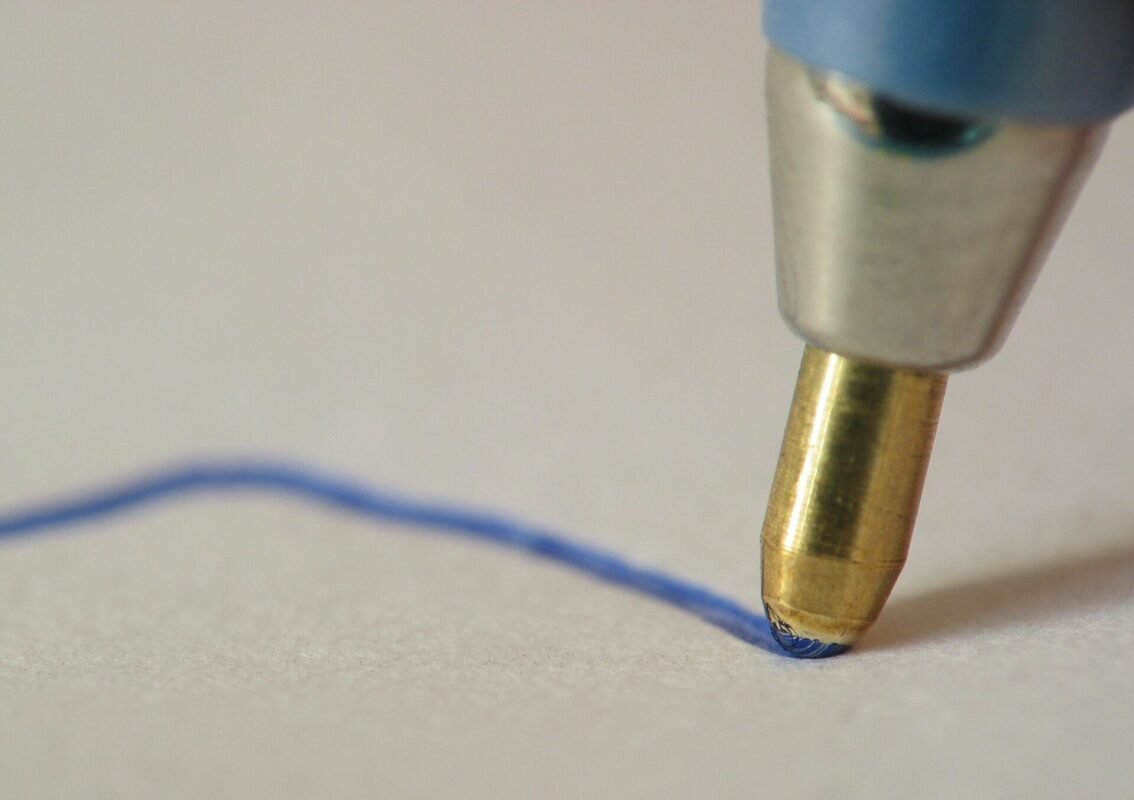
Every pen ink, from a cheap ballpoint to a premium fountain pen ink, is a mixture of a few kinds of ingredients. Their balance decides how the ink behaves.
1. Colorant
The colorant gives the ink its colour. It is either a dye, which dissolves completely in the ink, or a pigment, made of tiny solid particles suspended in it. Some inks use both. The colorant decides most of the ink’s brightness, opacity, water resistance and resistance to fading.
2. Vehicle (solvent or carrier)
The vehicle is the liquid that carries the colorant from the pen to the paper. It may be water, oils and glycols, or alcohols. The vehicle decides how quickly the ink dries, how it interacts with paper and which surfaces it can mark.
3. Resins and binders
Resins help the colorant stick to the paper and form a film as the ink dries. They also influence the ink’s thickness and its resistance to smudging and rubbing.
4. Thickeners and rheology modifiers
These control viscosity, the ink’s resistance to flow. Gel inks, for example, rely on special thickeners that make the ink thick at rest but thin when the ball turns.
5. Additives
Small amounts of other ingredients do specific jobs: lubricants for smoothness, surfactants to help ink wet the paper and the ball, humectants to slow drying at the tip, corrosion inhibitors to protect metal parts, biocides to prevent mould, and anti-settling agents to keep pigments evenly dispersed.
Changing any of these ingredients changes the way the ink writes. That is why ink formulation is one of the most carefully guarded and tested parts of pen making, and why two pens that look identical on a shop shelf can write so differently.
Who this guide is for
- Everyday writers who want to know why some pens feel better than others.
- Students and parents choosing pens for notes and exams.
- Office and procurement teams specifying pens for staff, counters and forms.
- Legal, banking and healthcare professionals who need permanent, reliable ink.
- Marketing and gifting teams choosing branded pens that leave a good impression.
- Artists, journallers and fountain pen users exploring inks.
- Retailers who want to explain inks to customers.
Ten facts worth knowing
- Ink is mainly a colorant plus a vehicle, with resins and additives.
- Dyes dissolve and give bright colour; pigments are particles that resist water and fading.
- Oil-based ballpoint ink dries by soaking in, which is why it seems instant.
- Gel ink is thick at rest and thin when the ball turns.
- Thin liquid inks need capped pens to avoid drying.
- Only fountain pen ink belongs in a fountain pen.
- Paper changes how every ink looks and behaves.
- Heat is the biggest enemy of stored pens and inks.
- Erasable inks disappear with heat and are not for documents.
- Documentary-use ISO standards exist for ballpoint, rollerball and gel pens.
Dyes vs pigments
The difference between dyes and pigments is the most useful single idea for understanding inks.
Dyes
Dyes are colorants that dissolve fully in the ink’s vehicle, like sugar in water. Because they are in solution, dye-based inks flow smoothly through narrow channels, produce bright, saturated colours and are generally easy to clean from pens. On paper, the dye soaks into the fibres. The downside is that many dyes can be redissolved by water and can fade in strong light over time.
Pigments
Pigments are fine solid particles that do not dissolve; they are suspended in the vehicle. On paper, pigment particles lodge among the fibres and are bound in place, which usually makes pigment inks more water-resistant and more lightfast. Pigments can also be opaque, so they show on dark paper and can produce white and metallic inks. The challenge is keeping particles evenly suspended and preventing them from clogging tips and feeds.
| Dye-based ink | Pigment-based ink | |
|---|---|---|
| Colorant | Dissolved | Suspended particles |
| Colour | Bright, transparent | Strong, can be opaque |
| Water resistance | Often low to moderate | Usually high |
| Fade resistance | Varies; often lower | Usually higher |
| Flow and cleaning | Easy | Needs careful formulation and cleaning |
| Special colours | Wide range | White, metallic, opaque colours possible |
| Typical uses | Many fountain inks, some gels and markers | Many gel inks, archival inks, some fountain inks |
Many modern inks blend both to balance colour, flow and permanence. When a label says “pigment ink”, it is usually signalling water resistance and lightfastness; when it says “vivid” or “bright”, it may well be dye-based. Neither is better in every case: choose by what the writing has to survive.
Viscosity: thick, thin and in between
Viscosity, how thick or runny an ink is, decides how it flows to the paper and how it feels.
- High viscosity (thick): classic ballpoint paste. Moves only when the ball turns, resists leaking and lasts a long time.
- Medium viscosity: low-viscosity ballpoint and hybrid inks. Smoother, darker lines with quick drying.
- Shear-thinning (gel): thick at rest, thin while writing. Bold lines with little pressure and low leakage.
- Low viscosity (thin): rollerball and fountain pen inks. Flow freely for a smooth, wet line, but need caps and absorb into paper.
Each pen system is designed for its ink’s viscosity. That is why you cannot simply pour fountain pen ink into a ballpoint refill, or put thick ink into a fountain pen.
Oil, water and alcohol: the three main vehicles
Oil- and solvent-based inks
Ballpoint inks use oils and glycol-type solvents with dissolved dyes and resins. They dry mostly by soaking into the paper rather than evaporating, which is why they seem to dry instantly. They resist water better than many water-based inks and write on a wide range of papers, including carbonless forms.
Water-based inks
Gel, rollerball, fountain pen and many marker and highlighter inks are water-based. They give bright colours and smooth flow, are low in odour and are easy to clean, but they dry by absorption and evaporation, which takes longer, and they can feather or bleed on absorbent paper.
Alcohol-based inks
Most permanent markers use alcohol-based vehicles that evaporate quickly. They write on non-porous surfaces such as plastic, glass and metal and dry fast, but they have a noticeable odour and soak through ordinary paper.
How ink dries
“Quick-dry” is one of the most common claims on pen packaging. Ink actually “dries” in three different ways, and most inks use a combination.
Absorption
The ink’s liquid soaks into the paper fibres, pulling the colorant with it. This is the main way ballpoint ink dries, and why it seems instant: only a tiny amount is laid down and it is quickly absorbed into the surface. On coated, non-absorbent paper, absorption is slow, so inks take longer to dry.
Evaporation
The vehicle evaporates into the air, leaving the colorant and resins behind. Alcohol-based markers dry mainly by evaporation, which is why they dry fast even on glass and plastic. Water evaporates more slowly, so water-based inks take longer, especially in humid weather.
Oxidation and chemical change
Some inks change chemically after writing. Iron gall ink darkens as its iron compounds oxidise in air. Certain resins harden as they cure. These processes continue for hours or even days after writing.
What affects drying time
- Amount of ink: broad tips and wet inks lay down more and dry slower.
- Paper: absorbent paper speeds drying; coated paper slows it.
- Temperature and humidity: warm, dry air speeds evaporation; humid air slows it.
- Ink formulation: some gel and hybrid inks include ingredients designed to penetrate paper faster.
Practical tips
- Choose fine tips and quick-drying inks for fast note-taking.
- Keep a sheet of scrap paper under your hand on glossy pages.
- Let gel and liquid ink dry before highlighting or closing a notebook.
- Blotting paper absorbs surplus fountain pen ink instantly.
Ballpoint ink in detail
What it is
Classic ballpoint ink is a viscous paste made from dyes (and sometimes pigments) dissolved in oil- and glycol-type solvents, with resins and additives. When László Bíró patented the modern ballpoint in 1938, the key was pairing a rotating ball with an ink thick enough not to leak yet fluid enough to coat the ball, a quick-drying ink similar in spirit to newspaper printing ink.
How it behaves
The ball picks up a thin film of ink and transfers it to the paper, where it soaks into the surface fibres. Because so little ink is laid down and it is oil-based, it dries almost instantly and resists smudging.
Strengths
- Very quick drying; ideal for left-handers and fast note-takers.
- Long writing life per refill.
- Works on almost any paper, including thin, recycled and carbonless forms.
- Good resistance to water and rubbing compared with many water-based inks.
- Low risk of leaks; suitable for travel and flights.
- Long shelf life when stored well.
Limitations
- Needs more pressure than gel or liquid ink.
- Line is thinner and less saturated.
- Can leave small blobs at the start of lines with lower-quality formulations.
- Can skip on greasy or glossy paper.
Best for
Forms, carbon copies, registers, banking, healthcare, field work, everyday office writing, promotional pens and anywhere reliability matters more than boldness. Our plastic pens and many metal pens use dependable ballpoint ink.
Low-viscosity and hybrid inks
What they are
Low-viscosity inks are thinner oil-based ballpoint inks, formulated so that less force is needed to turn the ball. Some manufacturers call them hybrid inks because they combine the smoothness associated with gel with the quick drying and durability of ballpoint ink.
How they feel
The difference is immediately noticeable: the pen glides, the line is darker and more even, and there is less pressure on the hand. Many people who think they “don’t like ballpoints” change their minds after trying a good low-viscosity ink.
Strengths and trade-offs
- Smooth and dark, but still quick-drying and smudge-resistant.
- Great all-rounder for offices and students.
- Uses slightly more ink than classic ballpoint, so refills run out a little sooner.
- Formulations vary widely; test before buying in bulk.
Best for
Everyday writing for people who want comfort without slow drying, including left-handed writers, executives who sign often, and promotional pens where a smooth first impression matters. See Smooth-Writing Pens and Ink Flow.
Gel ink in detail
What it is
Gel ink is water-based, thickened with special agents so that it behaves like a gel. It is shear-thinning: thick in the refill, but when the ball rotates the ink thins and flows freely, then thickens again on the paper. Gel inks often use pigments, which give strong, opaque colour. Gel pens were introduced in Japan in the 1980s and spread worldwide.

How it behaves
Gel ink lays down more ink than ballpoint, giving a bold, vivid line with very little pressure. It sits more on the surface of the paper, which is why colours look strong, and also why it takes a little longer to dry.
Strengths
- Smooth, effortless writing.
- Vivid, saturated colours, including pastels, neons, metallics and white.
- Many gel inks are water-resistant once dry because of their pigments.
- Crisp lines, popular for neat notes and drawings.
Limitations
- Slower drying; can smudge for left-handers or on coated paper.
- Shorter writing life than ballpoint.
- Can show through thin paper.
- More sensitive to heat; store carefully.
- Can skip if air enters the refill.
Best for
Students, journalling, planners, colour-coded notes, design sketches, greeting cards and anyone who values bold, smooth writing. Fine tips (around 0.5 mm) are especially popular. See The Best Pens for Exams.
How pen ink is made and tested
Ink formulation is part chemistry, part engineering and part craft. While each manufacturer has its own methods, the general process is similar.
1. Designing the formula
Formulators start with the pen system: ballpoint, gel, rollerball or fountain pen. The tip, ball size and refill dictate the viscosity range and how the ink must behave. They then choose colorants, vehicles, resins and additives to achieve the target colour, flow, drying time and permanence.
2. Mixing and milling
Dyes are dissolved; pigments are dispersed and often milled to very fine, uniform particle sizes so they flow through the tip without clogging. Mixing must be precise so every batch writes the same.
3. Filtering
Inks are filtered to remove particles that could block the tip.
4. Quality checks on the ink
Batches are typically checked for viscosity, colour, density and stability before filling.
5. Filling and assembly
Ink is filled into refills or cartridges, followers are added where needed, and refills are processed so ink sits firmly against the tip.
6. Writing tests
Finished refills are tested on writing machines and by hand for start-up, line consistency, skipping, blobbing and writing length. Standards such as ISO 12757 describe test conditions for ballpoint pens and refills, so results can be compared.
7. Environmental and stability tests
Samples may be stored at high and low temperatures, in humidity, and tip-up or tip-down to check for leaks, drying and separation over time. For an Indian market with very hot summers, heat stability is particularly important.
8. Durability tests
Written samples can be tested for water resistance, light resistance and resistance to erasers, solvents and other treatments, especially for documentary-grade inks.
Why consistency matters
For an individual, a single good pen is enough. For an organisation ordering thousands of pens, every pen must write like the first. Consistent ink and tip quality across batches is one of the main differences between dependable manufacturers and the rest. Read How Long Does a Dyna Pen Last?

How ink and tip work together
Ink never works alone. Its behaviour depends on the tip that delivers it, and good pens are designed as a matched system.
Ball size
A larger ball lays down more ink per stroke, giving a bolder, smoother line and faster ink use. A smaller ball gives a finer line, more precision and longer refill life, but can feel scratchier. Ink formulators adjust viscosity for each ball size so the line stays even.
Ball material and surface
Tungsten carbide balls are slightly textured at a microscopic level, which helps them pick up ink consistently. The ink must wet the ball surface well, which is one job of surfactant additives.
Tip clearance
The tiny gap between ball and socket controls how much ink escapes. Thin inks need tight clearances to avoid leaking; thick inks need enough room to flow. That is why you cannot put gel ink in a ballpoint tip and expect good results.
Tip material
Water-based gel and liquid inks can corrode some metals, so their tips are often stainless steel. Oil-based ballpoint inks are compatible with brass and nickel silver tips.
Followers and seals
Low-viscosity and gel inks often need a follower plug behind the ink to prevent backflow and leaks. Liquid inks rely on capped pens to stop the tip drying.
Fountain pen feeds and nibs
Fountain pen ink is matched to a feed that balances ink out and air in. A “wet” pen paired with a “wet” ink may flood; a “dry” pen with a “dry” ink may starve. Enthusiasts enjoy finding the right combinations.
What this means for buyers
When comparing pens, compare the whole writing system rather than ink claims alone. A well-matched ink and tip writes smoothly, starts instantly and lasts. Testing samples is the surest guide. See Pen Refills Explained for more on tips and refill anatomy.
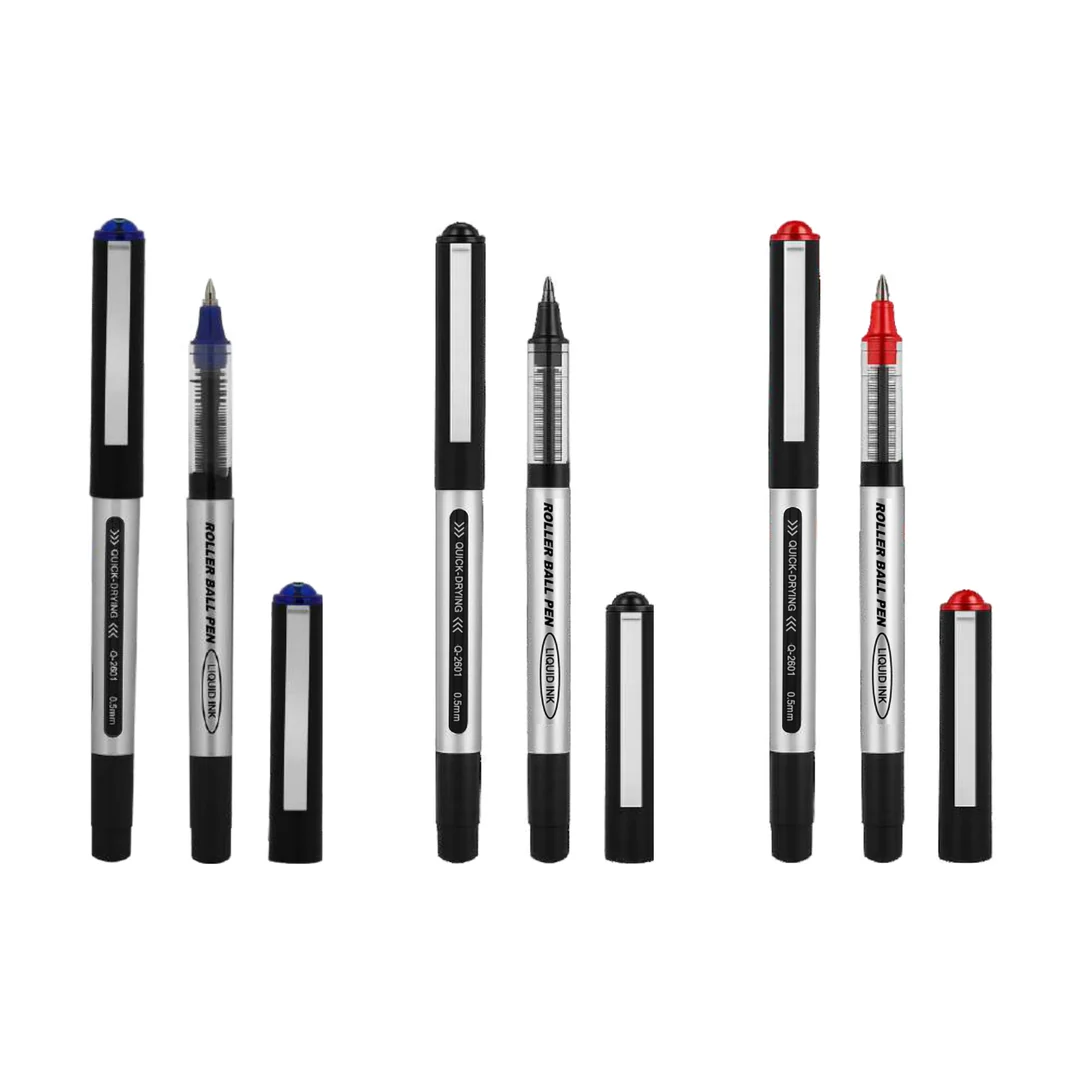
Liquid rollerball ink
What it is
Rollerball pens use thin, water-based liquid ink, similar to fountain pen ink, delivered through a ball tip. Rollerball pens appeared in Japan in the 1960s and offered a fountain-pen-like line with the convenience of a ball tip.
How it behaves
The ink flows freely and soaks into the paper, giving a rich, saturated line with almost no pressure. Because it is so fluid, the tip dries out if the pen is left uncapped, which is why most rollerballs are capped pens.
Strengths and limitations
- The smoothest writing of any ball-tip pen.
- Rich colour, elegant signatures.
- Uses ink quickly; shorter refill life.
- Can feather or bleed on thin, absorbent paper.
- May smear if touched before drying.
Best for
Signatures, letters, executive gifts and writers who want fluid lines without fountain pen maintenance. See our Aero Flow liquid-ink pens and Black Tie rollerball.
Fountain pen inks
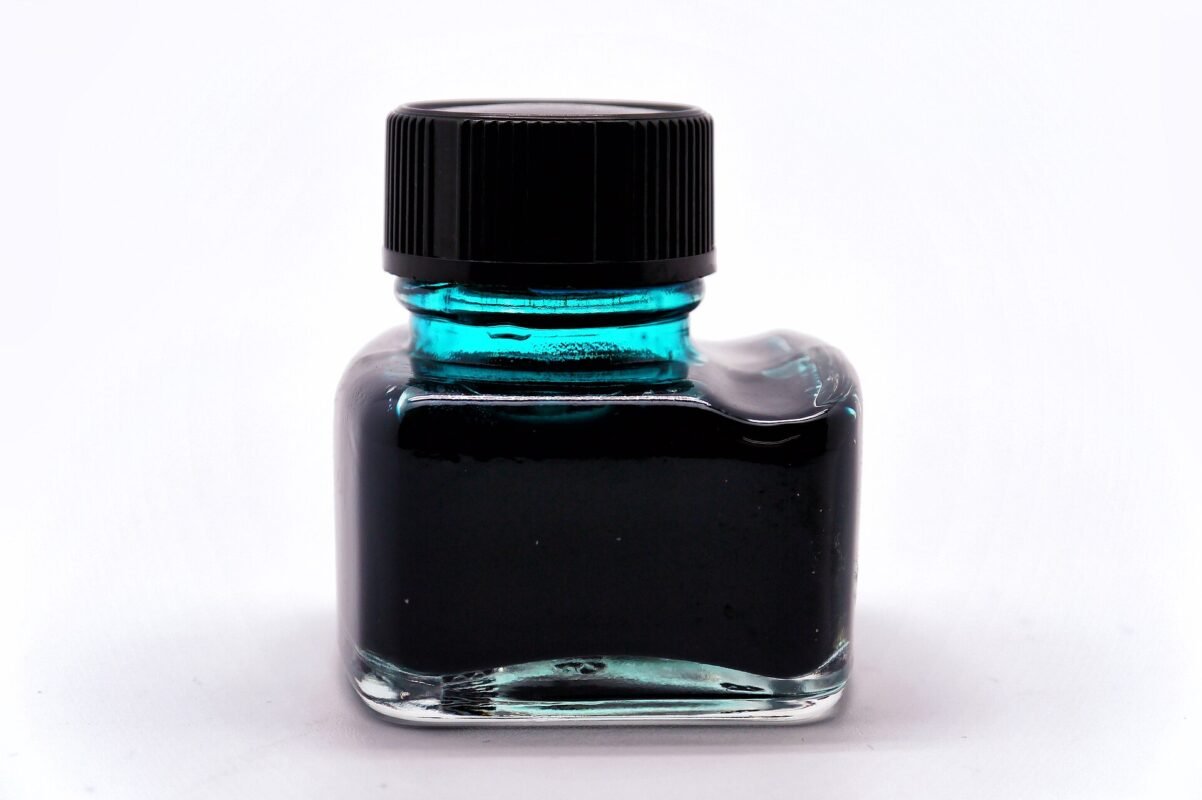
Fountain pens use thin, water-based inks designed to flow by capillary action through a feed and a split nib. Within that, there is enormous variety.
Standard dye-based fountain inks
The majority of fountain pen inks are dye-based. They flow well, come in hundreds of colours and are easy to flush from a pen. Many are not water-resistant: a splash of water can blur or lift the writing.
Pigmented fountain inks
Some fountain inks use very fine, specially stabilised pigments to give water resistance and permanence. They are useful for documents and sketching but need regular cleaning so particles do not dry in the feed.
Iron gall inks
Iron gall ink is one of the oldest inks in use, made traditionally from tannins (originally from oak galls) and iron salts. It goes on pale and darkens on the paper as it oxidises, becoming highly permanent. It was the standard writing ink in Europe for centuries. Traditional, strongly acidic iron gall inks could, over long periods, corrode paper and parchment; modern fountain pen iron gall inks are formulated to be gentler, but they still call for regular pen cleaning and should not be left to dry in a pen.

Shading, sheening and shimmer inks
These “special effect” inks are designed for appearance: shading inks vary in tone within a stroke, sheening inks show a metallic lustre where ink pools, and shimmer inks contain fine reflective particles. They are popular with enthusiasts and need more frequent cleaning.
Never use these in a fountain pen
India ink, drawing ink, acrylic ink, shellac-based inks and dip-pen calligraphy inks contain binders that dry hard and can permanently clog a fountain pen. Only use inks labelled for fountain pens. For more, see Fountain Pens for Beginners.
India ink and drawing inks
India ink is a traditional black ink made from fine carbon black (soot) with a binder such as shellac or gum. It is very dark, permanent and waterproof when dry, which makes it a favourite for technical drawing, illustration, comics and calligraphy with dip pens and brushes. Because its binders dry hard, it must never be used in fountain pens. Technical drawing pens and some art markers use inks designed to deliver similar permanence safely.
Marker and felt-tip inks
Water-based markers
Water-based markers and felt-tip pens use water as the main vehicle with dyes or pigments. They have little odour, are popular for children, schools and offices, and many children’s markers are washable from skin and most fabrics. They do not stick well to non-porous surfaces.
Alcohol-based permanent markers
Permanent markers use alcohol-based solvents with dyes and resins. They dry quickly and adhere to plastic, glass, metal and many other surfaces, which is why they are used for labelling, packaging and industry. They have a noticeable odour and soak through paper.

Whiteboard (dry-erase) markers
Dry-erase markers contain a release agent that keeps the dried ink from bonding to the whiteboard’s non-porous surface, so it wipes away. Using a permanent marker on a whiteboard by mistake is a common accident; writing over it with a dry-erase marker and wiping can often lift it.
Paint markers
Paint markers deliver opaque, often oil- or water-based paint through a valve tip. They mark dark, glossy and rough surfaces and are used for signage, crafts and industrial marking.
Fabric and specialist markers
Fabric markers are formulated to bond with textile fibres, often after heat-setting. Other specialist markers write on tyres, wet surfaces or high-temperature parts.
Highlighter ink
Highlighters use translucent, usually water-based inks with fluorescent colorants. Fluorescent dyes absorb invisible ultraviolet light and re-emit it as visible light, which is why highlighter colours look so bright. The ink is transparent enough to let printed text show through.
- Bleeding: water-based highlighters can bleed through thin paper; gel or “dry” highlighters avoid this.
- Smearing: highlighting over fresh gel or fountain ink can smear it; let writing dry first.
- Fading: fluorescent colours can fade over time in light. For permanent records, do not rely on highlighting alone.
- Pastel highlighters: softer colours that are easier on the eyes and photocopy more discreetly.

Erasable ink
Modern erasable pens use thermochromic ink: a gel ink containing microcapsules that change from coloured to colourless when warmed above a certain temperature. Rubbing with the special eraser creates enough frictional heat to make the ink invisible. The ink is not removed, only made colourless, and some colour can return if the paper becomes very cold.
- Great for: planners, puzzles, drafts, study notes and drawings.
- Never use for: cheques, contracts, exams, forms, legal documents or anything that must not be altered. Heat from an iron, a hot car or a laminator can also make the writing disappear.
Older erasable ballpoint designs used a rubbery ink that could be rubbed off the surface of the paper before it fully soaked in.
Pressurised inks
Pressurised refills contain a thick, often thixotropic ink sealed in a cartridge with gas pressure behind a follower. The pressure pushes ink to the ball regardless of the pen’s angle. Pressurised pens such as the Fisher Space Pen, introduced in the 1960s, write upside down, on wet or greasy paper and across a wide temperature range. They suit outdoor workers, engineers, travellers and anyone who writes in difficult conditions.
Speciality inks
Security and anti-fraud inks
Some inks are designed to make document alteration harder. They may bond pigment into paper fibres so writing cannot be washed or bleached away without obvious damage. They are marketed for cheques and legal documents and often reference documentary-use parts of ISO standards.
Invisible UV inks
Invisible inks that glow under ultraviolet light are used for security marking of property, event wristbands and fun “secret message” pens.
Metallic and glitter inks
Metallic gel inks contain reflective pigments that look gold, silver or bronze, particularly on dark paper. Glitter inks contain fine sparkling particles. Both are popular for cards, invitations and crafts.
Scented inks
Scented inks contain fragrance additives and are mainly sold as novelty products for children.
Indelible election ink
In India, voters’ fingers are marked with indelible ink during elections to prevent repeat voting. This ink contains silver nitrate, which reacts with skin and light to leave a mark that lasts for days and cannot be washed off quickly. It is supplied in India by Mysore Paints and Varnish Limited, a Karnataka government undertaking. It is a striking example of an ink designed for one very specific job.
Food-safe and edible inks
Edible ink pens use food colourings for decorating cakes and biscuits. They are a reminder that “ink” can be formulated for almost any surface, as long as the ingredients suit it.
Inks for drawing, art and lettering
Pigment fineliners
Fineliners with pigment ink give crisp, consistent lines that are typically waterproof once dry and resistant to fading. They are popular for technical drawing, sketching, comics and outlining before adding watercolour or marker colour.
Brush pens
Brush pens deliver water-based or pigment ink through a flexible fibre or bristle tip, making thick and thin strokes with pressure. They are widely used for hand lettering and modern calligraphy.
Alcohol markers
Alcohol-based art markers blend smoothly while wet and dry quickly, which makes them a favourite for illustration and design rendering. They bleed through most ordinary paper, so artists use dedicated marker paper.
Water-based art markers
Water-based markers can be layered and sometimes blended with water. They are lower in odour and suit classrooms and beginners.
Dip-pen and calligraphy inks
Calligraphers use inks designed for dip pens, including carbon-based black inks and gum-arabic-bound coloured inks. They are thicker than fountain pen inks and must not be used in fountain pens.
White and opaque inks
White gel pens, paint markers and opaque inks are used for highlights on illustrations and for writing on dark paper.
Choosing art inks
- For work that will be painted over, choose waterproof pigment inks.
- For display, choose lightfast inks.
- Match paper to ink: marker paper for alcohol markers, smooth heavy paper for brush pens.
- Test ink and paper combinations on a scrap before starting a finished piece.
Ink properties compared
Rather than relying on marketing terms, compare inks on the properties that matter for your use.
| Property | Ballpoint | Hybrid | Gel | Rollerball | Fountain (dye) |
|---|---|---|---|---|---|
| Smoothness | Moderate | High | Very high | Very high | Very high |
| Drying speed | Very fast | Fast | Moderate | Moderate | Moderate to slow |
| Smudge resistance | High | High | Moderate | Moderate | Low to moderate |
| Water resistance | Good | Good | Often good (pigment) | Varies | Often low |
| Show-through | Low | Low | Moderate | High | Moderate to high |
| Colour intensity | Moderate | Good | Very high | High | High |
| Writing life | Longest | Long | Moderate | Shorter | Depends on fill |
| Carbon copies | Excellent | Good | Poor | Poor | Poor |
These are general tendencies; individual formulations vary. Always test the specific ink you plan to buy.
Drying time
How long the ink takes to stop smearing when touched. It depends on the ink, the amount laid down and the paper. Fast drying matters for left-handers, fast note-taking and forms that are handled immediately.
Smudge resistance
Resistance to smearing when rubbed after drying, for example by a hand or another page. Ballpoint and hybrid inks are strongest here.
Water resistance
Whether writing stays readable after contact with water. Pigment inks and oil-based ballpoint inks generally perform best; many dye-based water inks blur or wash away.
Lightfastness
Resistance to fading in light. Important for documents that are displayed or archived. Pigments generally outperform dyes; fluorescent colours tend to fade fastest.
Permanence and tamper resistance
Whether writing resists deliberate removal with chemicals, solvents or abrasion. Documentary-use standards test this; ordinary inks vary widely.
Feathering, bleed-through and show-through
How ink spreads in and through paper. Thin, wet inks are most affected; ballpoint least.
Start-up and skipping
How reliably the ink begins writing and maintains a continuous line. This depends on both ink and tip quality.
Writing length
How long a line one refill can write. Classic ballpoint inks lead; gel and liquid inks use more ink per word.
Odour and safety
Water-based inks are generally low-odour; alcohol-based markers are stronger. Children’s products should meet relevant toy and art-material safety standards.
How to test inks yourself
You can learn a lot about an ink with paper, water and a few minutes.
1. The drying test
Write a line, then run a finger across it every few seconds. Note when it stops smearing. Repeat on the paper you actually use.
2. The water test
Write a few words, let them dry for a few minutes, then drip water across them or hold the page under a gently running tap. Let it dry and compare. This shows how the ink would survive a spilled drink or rain.
3. The highlighter test
After the ink dries, run a highlighter across it. Some inks smear; others stay crisp.
4. The show-through test
Write on one side of your usual paper, then turn it over. Can you see the writing? Has ink soaked through?
5. The light test
Write a sample, cover half with card, and leave it on a sunny windowsill for several weeks. Compare the exposed and covered halves to see fading.
6. The carbon copy test
Write on a duplicate form and check how clearly the copy comes through.
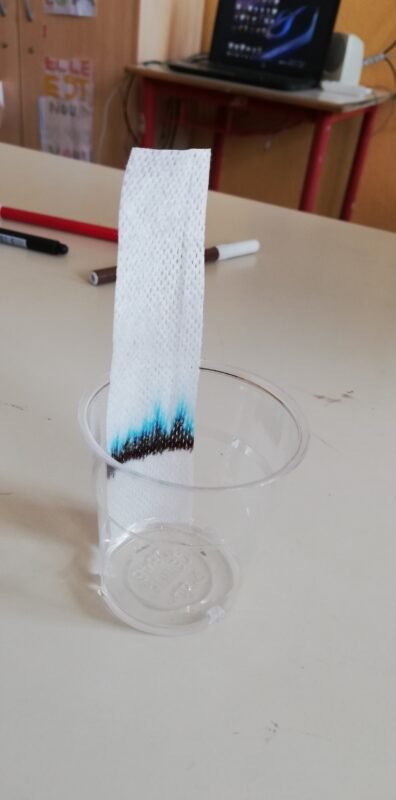
7. The chromatography experiment
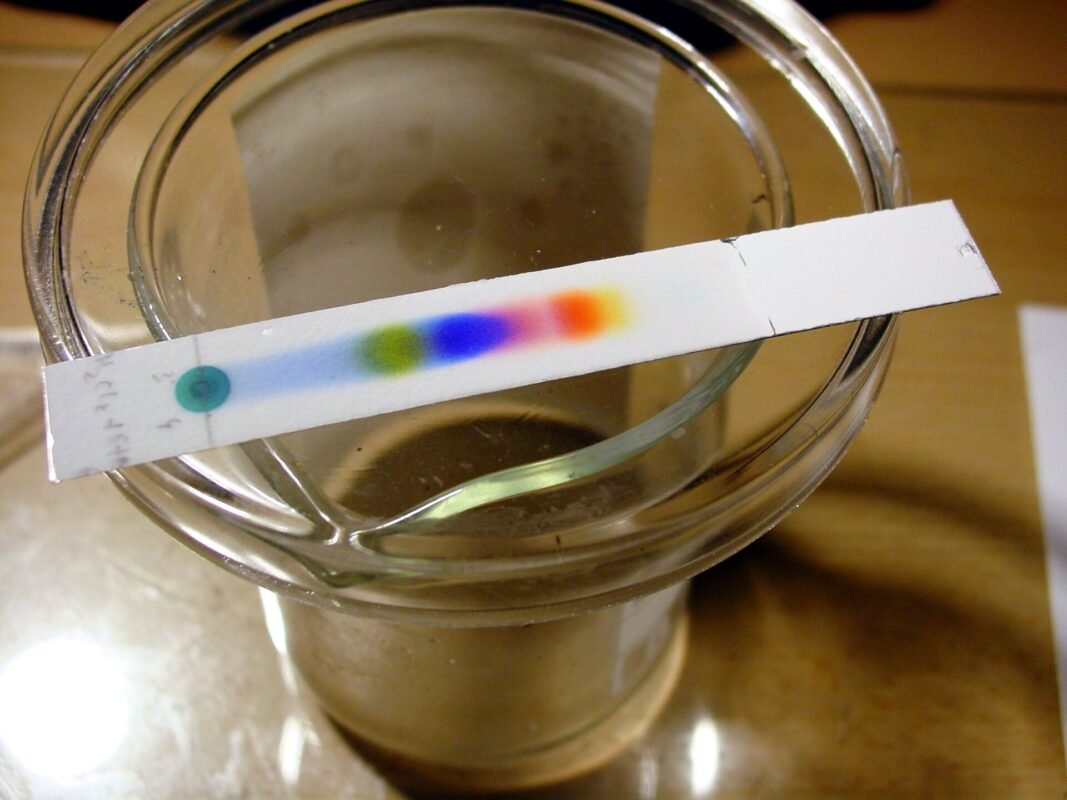
Put a dot of water-soluble ink near the bottom of a strip of filter paper or kitchen paper, stand it in a little water, and watch the ink separate into its component dyes as water rises. Black inks often reveal blues, purples and yellows. It is a classic school science experiment and a vivid way to see that many inks are blends.
Record your results in a simple table. When choosing pens for a team, testing two or three options this way avoids expensive surprises. See Buying Pens in Bulk for how to run a sample trial.
How ink and paper interact
The same ink can look completely different on two papers. Understanding why helps you get the best from any pen.
Absorbent paper
Uncoated, loosely formed papers, such as cheap notebooks and newsprint, soak up liquid ink quickly. Water-based inks feather and may bleed through; ballpoint ink performs well.
Sized and smooth paper
Paper treated with sizing resists absorption, so ink stays near the surface. Lines are crisper and colours stronger. Good notebooks, diaries and letter paper are usually well sized.
Coated and glossy paper
Coated papers, such as magazine pages and photo paper, are very smooth and non-absorbent. Ballpoints may skip because the ball slides, and water-based inks may sit on the surface and take a long time to dry. Permanent markers and some gel inks work better.
Recycled paper
Recycled paper varies. Some is as good as virgin paper; some is more absorbent and textured. Medium tips and ballpoint or hybrid inks usually behave best.
Thin paper
Thin exam sheets, bible paper and airmail paper show writing from the other side. Choose ballpoint or a fine gel, and avoid broad liquid inks.
Carbonless and carbon forms
These need pressure to transfer the image to the copies beneath. Classic ballpoint ink with a firm tip is the right choice.
Non-paper surfaces
Plastic, glass, metal, fabric and wood need specialist inks: permanent, paint or fabric markers.
Explore paper designed for good writing in our diaries, notebooks and planners.
Ink and climate
Heat
Heat thins ink and expands air in refills, which can lead to leaks and blobs, especially with gel and liquid inks. Pens left in parked cars in an Indian summer are particularly at risk. Store pens and refills indoors and out of sunlight.
Cold
Cold thickens ink. Ballpoint pens can become reluctant to start in very cold weather; warming the pen in your hand helps. Pressurised refills keep writing in the cold.
Humidity
Humid air makes paper more absorbent and slows the drying of water-based inks, which can increase feathering and smudging during the monsoon.
Altitude and flights
Reduced cabin pressure can push ink out of liquid-ink pens and partly filled fountain pens. Ballpoint pens travel best. Keep other pens upright and capped.
Quick tips for tricky surfaces
- Glossy brochures and photos: use a fine permanent marker or a quick-dry gel, and let it dry before stacking.
- Envelopes and parcels: ballpoint or permanent marker; water-based ink can run if parcels get wet in the monsoon.
- Receipts and thermal paper: ballpoint works best; avoid alcohol markers, which can darken thermal paper.
- Labels and stickers: permanent markers or ballpoint, depending on the label’s coating.
- Greeting cards: test on the inside flap first; textured card can drag fine tips and absorb liquid ink.
- Whiteboards and glass: dry-erase markers only, unless you want a permanent mark.
- Fabric: fabric markers, heat-set as instructed, for name tags and uniforms.
When in doubt, try a small mark in an inconspicuous place first. A few seconds of testing saves a ruined card, label or document.
How to read ink claims on packaging
| Claim | What it usually means | What to check |
|---|---|---|
| Smooth / glide | Low-viscosity, gel or liquid ink | Write a full page to judge comfort |
| Quick-dry | Formulated to absorb or evaporate faster | Drying test on your own paper |
| Waterproof / water-resistant | Pigmented or resin-bound ink | Water test after drying |
| Permanent | Resists removal on intended surfaces | Which surfaces; any standards cited |
| Archival | Designed to resist fading and degradation | Lightfastness information |
| Documentary / ISO 12757-2 | Meets documentary-use requirements for ballpoints | Which standard and part |
| Acid-free | Less likely to damage paper over time | Relevant for archival work |
| Washable | Easier to remove from fabric and skin | Usually less water-resistant on paper |
| Non-toxic / conforms to safety standards | Tested to toy or art material standards | Which standard is cited |
| Odourless / low odour | Usually water-based | Suitable for classrooms |
| Writing length | Total line length under test conditions | Test method and tip size |
Why ink colours look different
Transparency and opacity
Dye inks are transparent: the paper’s colour shows through them, so they look different on white and cream paper. Pigment inks can be opaque, covering the paper’s colour, which is how white and metallic inks show on black paper.
Line width
A broad line shows more of an ink’s colour and any shading; a fine line looks darker and less varied.
Paper colour and texture
Cream paper warms blues and greens; bright white paper makes colours crisp. Absorbent paper can make colours look duller.
Lighting
Ink colours shift under warm indoor bulbs, cool office lights and daylight. Fluorescent highlighter colours look most vivid under daylight and lights with some ultraviolet content.
Ageing
Some inks change as they age on the page: iron gall darkens, some dyes fade, some blues shift slightly towards purple or grey.
Batch differences
Small variations between production batches can shift shades slightly. For brand-critical applications, such as matching a corporate colour, ask for samples from the batch that will be supplied.
Choosing the right ink for the job
| Task | Best ink | Why |
|---|---|---|
| Forms, registers, carbon copies | Classic ballpoint | Quick-drying, pressure transfers to copies |
| Daily office notes | Hybrid / low-viscosity | Smooth, dark, no smudging |
| Student notes and revision | Gel or hybrid, fine tip | Neat, readable, comfortable |
| Long exams | Tested gel or hybrid; ballpoint on thin sheets | Comfort and reliability |
| Signatures on contracts | Documentary-grade permanent ink | Resists alteration and fading |
| Cheques | Permanent ballpoint or security gel | Hard to wash or alter |
| Letters and cards | Rollerball or fountain ink | Rich, personal line |
| Journals and planners | Gel colours, fountain inks | Expressive and enjoyable |
| Labelling boxes, plastic, glass | Alcohol-based permanent marker | Bonds to non-porous surfaces |
| Whiteboards | Dry-erase marker | Wipes clean |
| Studying printed text | Highlighter (gel for thin paper) | Marks without hiding |
| Field work, cold or wet | Pressurised ink | Writes in difficult conditions |
| Drawing and illustration | Pigment fineliners, India ink (dip pens) | Waterproof, lightfast lines |
| Children | Washable water-based markers and pens | Easier stain removal, low odour |
Ink for legal and important documents
When a document may need to stand as evidence, ink matters.
Use permanent ink
Choose ink that resists water, light and chemical tampering. Classic ballpoint inks and pigmented gel inks are commonly used. Look for products that claim compliance with documentary-use standards: ISO 12757-2 for ballpoint pens, and the documentary parts of ISO 14145 for rollerballs and ISO 27668 for gel pens.
Avoid erasable and washable inks
Erasable thermochromic inks can disappear with heat; washable inks can be lifted with water. Neither belongs on contracts, cheques, wills or official forms.
Follow colour rules
Many banks, courts and government offices specify blue or black ink. Blue is often preferred for signatures because it is easy to tell an original from a black-and-white photocopy.
Keep records properly
Even the best ink benefits from good storage: store documents flat, dry, away from light and heat.
Ink colours and their meanings
Blue
The most common writing colour in India for schools, exams and everyday office work. It is easy to read and distinguishes handwriting from printed text.
Black
Formal, high-contrast, and the best colour for photocopying and scanning. Common for official forms and business documents.
Red
Traditionally used for corrections, marking and highlighting errors. Teachers and editors rely on it. Avoid red for routine correspondence, where it can feel harsh.
Green
In some Indian government offices, green ink is traditionally associated with senior officers’ signatures and notes. Elsewhere it is used in accounting and auditing. Check local conventions before using it.
Blue-black
A classic fountain pen colour combining the warmth of blue with the formality of black.
Other colours
Purple, brown, turquoise and other colours are personal choices for journals, cards and creative work.
Ink for exams
- Follow your board’s rules on colour, usually blue or black.
- Test on similar paper: exam answer sheets are often thin, so check show-through.
- Choose comfort and reliability: a gel or hybrid ink you know well.
- Left-handed students: choose quick-drying ballpoint or hybrid ink.
- Carry spares: at least two identical pens with fresh ink.
- Avoid erasable pens unless the exam specifically allows them.
More tips in The Best Pens for Exams.
Ink for left-handed writers
Left-handed writers usually move their hand across freshly written words, so drying speed is the most important ink property. Classic ballpoint and quick-drying hybrid inks are the safest. Some gel inks are formulated to dry faster; test them before committing. Fine tips lay down less ink and dry sooner. Smooth, absorbent-but-not-feathering paper helps, and a sheet of paper under the hand protects work.
Ink and branded pens
For corporate and promotional pens, the ink is what recipients remember. A pen that writes smoothly from the first stroke reflects well on the brand; one that skips reflects badly. When ordering branded pens:
- Choose a smooth, reliable ink suited to how recipients will use the pen.
- Match ink colour to the setting: blue for schools and general use, black for formal events.
- Test samples on ordinary office paper.
- Consider refillable designs so the brand stays in use.
See Pen Branding Methods and Corporate Gifting Pens.
A short history of ink
Ancient carbon inks
The earliest writing inks were made from carbon, soot or charcoal, mixed with water and a binder such as gum. Ancient Egyptian scribes used carbon black and red ochre inks on papyrus, and Chinese ink sticks made from soot and animal glue were ground with water on an inkstone. Carbon inks are extremely stable, which is why many ancient texts are still readable.
Indian inks
India has a long tradition of ink making for manuscripts, using lampblack and natural binders, as well as plant- and mineral-based colours for illustrated works. The term “India ink” reflects the historical trade in carbon inks and pigments through India, although similar inks were made in many places.
Iron gall ink
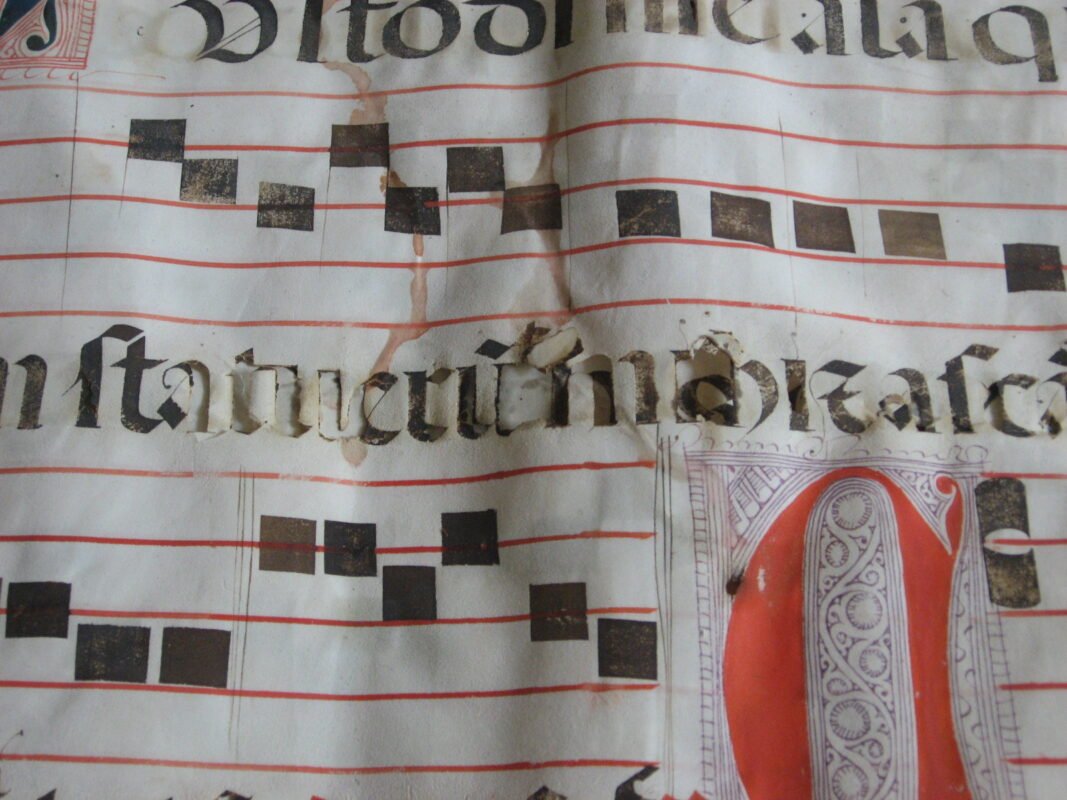
From the medieval period onward, iron gall ink became the standard writing ink across much of Europe. It was made by combining tannins from oak galls with iron sulphate and gum arabic. It wrote pale and darkened to a deep black as it oxidised, and it bit into parchment and paper, making it very permanent. Many historic manuscripts and documents were written with it, and its long-term corrosive effect is a known challenge for conservators.
Dyes and the nineteenth century
Synthetic dyes, developed from the mid-nineteenth century, made bright, consistent coloured inks possible, alongside the steel dip pens and then fountain pens of the industrial age.
The ballpoint revolution
The modern ballpoint, patented by László Bíró in 1938, depended on a new kind of ink: a thick, quick-drying, oil-based paste. Ballpoint ink transformed everyday writing after the Second World War, making pens cheap, reliable and leak-resistant.
Liquid, gel and beyond
Water-based liquid ink rollerballs arrived in the 1960s, followed by gel ink pens in the 1980s. Low-viscosity ballpoint inks, erasable thermochromic gel inks (popularised in the 2000s), pigmented archival inks, and specialist inks for security and industry have kept ink technology evolving.
DYNA’s part in the story
DYNA was founded in Delhi in 1960 as a fountain pen maker and built ballpoint pen and refill manufacturing in the late 1970s. Over the decades we have watched inks evolve from fountain pen ink in school inkwells to the smooth low-viscosity and liquid inks used in modern pens. Read The Evolution of Pen Manufacturing in India and Our Journey.
Ink safety
General safety
Writing inks in everyday pens are designed for normal use, but they are not food and should not be swallowed. Keep pens away from very young children, who may chew caps and tips; many pen caps have ventilation holes as a safety measure.
Children’s products
For children’s pens and markers, look for products tested to relevant safety standards. In Europe, toy safety standards such as EN 71 apply to many children’s markers; in the United States, art materials are labelled under ASTM D-4236. Washable, water-based markers are a sensible choice for young children.
Ventilation
Use alcohol-based permanent and paint markers in ventilated spaces, and avoid prolonged inhalation.
Skin contact
Most writing inks wash off skin with soap and water. Avoid using pens to draw on skin; inks are not formulated for it.
Eyes
If ink gets into the eyes, rinse with plenty of clean water and seek medical advice if irritation persists.
Removing ink stains
Ink accidents happen. The right method depends on the ink type and the surface. Always test any cleaner on a hidden area first, and follow fabric care labels.
| Ink type | On fabric | On skin | On hard surfaces |
|---|---|---|---|
| Ballpoint (oil-based) | Dab with rubbing alcohol on a cloth, blot, then wash | Soap and water; a little alcohol-based sanitiser helps | Wipe with alcohol on a cloth |
| Gel and rollerball | Rinse from the back with cold water, then wash with detergent; stain remover if needed | Soap and water | Damp cloth |
| Fountain pen (dye) | Rinse in cold water promptly; wash with detergent | Soap and water; fades over hours | Damp cloth |
| Washable markers | Rinse and wash normally | Soap and water | Damp cloth |
| Permanent marker | Rubbing alcohol, blot repeatedly, then wash; may not fully remove | Soap and water; alcohol-based sanitiser | Rubbing alcohol; on whiteboards, write over with dry-erase marker and wipe |
Golden rules
- Act fast. Fresh ink is far easier to remove.
- Blot, don’t rub. Rubbing spreads ink deeper.
- Work from the back of the fabric to push ink out.
- Use cold water first; heat can set some stains.
- Don’t tumble-dry until the stain is gone.
- Be careful with solvents on delicate fabrics, leather and painted surfaces.
Ink in shirt pockets
Pens leaking in shirt pockets are a classic office problem, usually caused by heat or a pen clipped without its cap. Choose retractable pens for pockets, keep capped pens capped, and avoid leaving shirts with pens in hot cars.
Ink and the environment
Refill rather than replace
The environmental impact of ink itself is small compared with the pen bodies thrown away when pens run dry. Refillable pens and bottled fountain pen ink reduce plastic waste far more than any change in ink chemistry. See Pen Refills Explained.
Water-based inks
Water-based inks generally have lower solvent emissions than alcohol- or solvent-based marker inks, which is one reason they are preferred for schools and offices.
Use pens fully
Store pens properly so they do not dry out unused, and keep a supply rotation so older stock is used first.
Eco pens
Eco pens with recycled or sustainable bodies combine responsible materials with reliable ink. See our eco-friendly pens and How Our Eco Pens Help Reduce Your Brand’s Carbon Footprint.
Storing pens and inks
- Cool, dry and dark: heat and light age inks fastest.
- Caps on: capped pens and markers last much longer.
- Gel and liquid pens tip-down or flat, as recommended, to keep ink at the tip.
- Markers horizontal: double-ended markers especially are often best stored flat.
- Bottles closed tightly to stop evaporation and contamination.
- First in, first out for office and shop stock.
Buying pens and inks for home
For a household, a small, well-chosen set covers almost every need: a few smooth blue and black ballpoint or hybrid pens for forms and everyday notes; a couple of fine gel pens in colours for planners and children’s homework; one permanent marker for labelling; a set of washable markers for younger children; two or three highlighters; and, if anyone enjoys it, a fountain pen with a bottle of ink. Keep them together in a drawer or pen pot away from sunlight, cap everything after use, and replace or refill pens as they run out rather than letting a drawer fill with half-dried ones. This simple kit means the right ink is always at hand, whether you are signing a school form, labelling storage boxes, writing a birthday card or helping with a science project.
Ink for different professions
Doctors and healthcare
Prescriptions, case sheets and forms need ink that dries instantly and does not smudge when handled. Classic ballpoint or hybrid inks in blue or black are standard. Pens are often clipped to coats and used standing, so reliable start-up is essential.
Lawyers and notaries
Permanent, documentary-grade inks for signatures and annotations, usually in blue or black. A smooth rollerball or gel adds a confident signature, provided it meets permanence requirements.
Banks and finance
Counters need long-life ballpoints that write on deposit slips and duplicate forms. Cheques call for permanent ink that resists washing. Accountants often use red and green for marking.
Teachers
Red and green pens for marking, highlighters for preparation, whiteboard markers for class and a smooth everyday pen for registers and notes.
Engineers and architects
Fine pigment liners for drawings, pressurised pens for site visits and permanent markers for labelling.
Designers and artists
Pigment fineliners, brush pens, alcohol markers for colour work and fountain pens with waterproof ink for sketching.
Warehouse and logistics
Permanent markers for cartons, ballpoints for delivery notes and pressurised pens for cold storage.
Journalists and writers
Fast, dependable ballpoint or hybrid ink for interviews; fountain pens or gel pens for longer drafting.
Students
Gel or hybrid inks for notes, a set of highlighters, and two identical tested pens for exams.
Event and hospitality teams
Smooth ballpoint pens for guest registration, often branded, plus markers for signage. See branded pens for events.
Ink myths
“Black ink is always more permanent than blue.”
Permanence depends on the formulation, not the colour. A pigmented blue can outlast a dye-based black.
“Gel ink is waterproof.”
Many pigmented gel inks are water-resistant once dry, but not all. Test before relying on it.
“Ballpoint ink never fades.”
Ballpoint inks are durable, but some dyes can fade with prolonged light exposure. For archival use, choose documentary-grade inks.
“Quick-dry means instant on every paper.”
Drying time depends heavily on paper and climate. Glossy paper and humid weather slow any ink.
“More expensive ink always writes better.”
Price often reflects branding or packaging. Test inks yourself; well-formulated, affordable inks can perform excellently.
“Permanent marker is permanent on everything.”
Permanent markers bond well to many surfaces but can be removed from some non-porous ones with alcohol, and they fade in strong sunlight.
Specifying ink for organisations
When an organisation buys pens in quantity, the ink deserves a line of its own in the specification. A few clear requirements prevent most problems.
A simple ink specification
- Ink type: classic ballpoint, low-viscosity, gel or liquid.
- Colour: blue, black, red or green, and whether shades must match existing stock.
- Tip size: for example 0.7 mm for general use, 0.5 mm for fine writing.
- Drying: required performance on the organisation’s own paper.
- Permanence: documentary-grade where documents may need to stand as evidence.
- Standards: reference ISO 12757-1 or -2, ISO 14145 or ISO 27668 as relevant.
- Carbon copies: if forms are duplicate or triplicate, require ballpoint.
- Climate: heat stability for storage and use in hot conditions.
- Samples: pre-production samples for testing and approval.
- Acceptance: how delivered stock will be checked.
Run a short trial
Give two or three candidate pens to a small group of real users for a week. Ask them to rate smoothness, drying, smudging and how long the pen lasted. Combine their feedback with your own drying and water tests.
Standardise
Choose one or two ink types for most staff, plus specialist pens where needed (permanent markers for stores, pressurised pens for field teams). Standardisation simplifies reordering and keeps documents consistent.
For the full procurement process, see Buying Pens in Bulk.
Ink preferences in India
Blue dominates
Blue ink is the default in most Indian classrooms, exam halls and many offices, so it accounts for the largest share of everyday pen demand.
Smoothness sells
Indian buyers increasingly expect smooth writing. Low-viscosity and liquid inks have grown in popularity alongside classic ballpoints, and “smooth” is one of the most requested qualities in promotional and corporate pens.
Long exams shape choices
Board and university exams involve hours of handwriting on thin answer sheets. Students balance smooth gel and hybrid inks for comfort against ballpoint for clean pages.
Heat matters
Hot summers in much of the country make heat-stable inks and careful storage particularly important for shops, warehouses and distributors.
Refilling culture
Buying refills rather than new pens remains common, which makes refill and ink quality a long-term concern for users and makers alike.
Choosing ink: a quick decision path
- Is it a legal or financial document? Use permanent, documentary-grade ink in blue or black.
- Are there carbon copies? Use classic ballpoint.
- Are you left-handed or writing very fast? Use ballpoint or quick-drying hybrid.
- Do you want bold, colourful notes? Use gel.
- Is it a letter, card or signature for impact? Use rollerball or fountain ink.
- Writing on plastic, glass or metal? Use an alcohol-based permanent marker.
- Need to correct often? Use erasable ink, but never for documents.
- Working outdoors or in the cold? Use pressurised ink.
- Marking printed text? Use a highlighter; choose gel types for thin paper.
- Still unsure? A smooth low-viscosity ballpoint in blue or black is the best all-rounder.
Inks in DYNA pens
Across our range, we match ink to purpose. Everyday plastic pens such as Elite and Aurora use reliable ballpoint ink for daily work; Aero Flow pens use smooth liquid ink; and gift pens such as Black Tie come in fountain, rollerball and ballpoint versions. For corporate and bulk orders, we can recommend the ink and pen that suit your users and supply samples for testing.
Ink and legibility
Readable handwriting depends partly on ink. A few simple choices make writing easier to read for others and for scanners.
- Contrast: dark blue and black on white paper give the highest contrast. Pale colours, such as light blue, pink or yellow, are hard to read and scan poorly.
- Line weight: a medium line is easiest to read at normal distances; very fine lines can look faint, and very broad lines can fill in small letters.
- Consistency: an ink that skips or blobs makes letters look broken. Reliable start-up matters more than you might think.
- Scanning and photocopying: black copies best; blue can drop out on some copiers set to black-and-white; red and green may copy as grey.
- Forms with OCR: some forms read by machines specify black ink in block capitals; follow the instructions.
- Accessibility: for notices and signs, use broad, dark marker ink with strong contrast so they can be read easily by people with low vision.
Ink care checklist for pen owners
- Keep pens capped or retracted when not writing.
- Store pens away from heat, sunlight and car dashboards.
- Store gel and liquid-ink pens as the maker recommends, usually tip-down or flat.
- Use only fountain pen ink in fountain pens, and flush them every few weeks.
- Let gel and liquid ink dry before highlighting or closing notebooks.
- Test new inks on scrap paper and on the paper you use most.
- Choose permanent, documentary-grade ink for important documents.
- Keep erasable pens away from legal and financial paperwork.
- Keep a spare refill or pen for exams, meetings and travel.
- Use older stock first, so no pen dries out unused in a drawer.
Following these simple habits keeps inks writing well from the first word to the last, and makes every pen you own last longer.
Ink glossary
- Alcohol-based ink
- Ink using alcohol solvents; dries fast and marks non-porous surfaces.
- Archival ink
- Ink designed to resist fading and degradation over long periods.
- Binder / resin
- Ingredient that helps colorant adhere to paper and form a film.
- Bleed-through
- Ink soaking through to the reverse of the page.
- Chromatography
- A method of separating an ink into its component colorants.
- Colorant
- The dye or pigment that gives ink its colour.
- Documentary ink
- Ink meeting standards for permanence on important documents.
- Dye
- A colorant that dissolves fully in the ink.
- Feathering
- Ink spreading along paper fibres, giving fuzzy edges.
- Fluorescent ink
- Ink that converts UV light to visible light for very bright colour.
- Gel ink
- Water-based, shear-thinning ink thick at rest and fluid when writing.
- Humectant
- Additive that slows ink drying at the tip.
- Hybrid ink
- Low-viscosity oil-based ink combining smoothness and quick drying.
- India ink
- Carbon-black ink with a binder, permanent and waterproof; not for fountain pens.
- Iron gall ink
- Traditional ink of tannins and iron salts that darkens as it oxidises.
- Lightfastness
- Resistance to fading in light.
- Pigment
- A colorant made of insoluble particles suspended in ink.
- Pressurised ink
- Ink pushed to the tip by gas pressure, allowing writing at any angle.
- Sheen
- Metallic lustre visible where some inks pool.
- Shading
- Tonal variation within a stroke.
- Shear-thinning
- Becoming less viscous when stirred or moved, as gel ink does at the ball.
- Show-through
- Writing visible from the back of the page without soaking through.
- Sizing
- Treatment that makes paper less absorbent.
- Thermochromic ink
- Ink that changes colour (or becomes colourless) with temperature, used in erasable pens.
- Vehicle
- The liquid that carries colorant to the paper.
- Viscosity
- How thick or runny an ink is.
- Water resistance
- How well writing survives contact with water.
Frequently asked questions
What are the main types of pen ink?
Oil-based ballpoint, low-viscosity (hybrid), gel, liquid rollerball, fountain pen inks (dye, pigment and iron gall), water- and alcohol-based marker inks, fluorescent highlighter ink, erasable thermochromic ink and pressurised ink.
What is the difference between gel and ballpoint ink?
Ballpoint ink is thick and oil-based; it dries quickly, lasts long and needs a little pressure. Gel ink is water-based and shear-thinning; it writes boldly with little pressure but dries more slowly and runs out sooner.
What is hybrid ink?
A low-viscosity oil-based ink that writes almost as smoothly as gel but dries quickly like ballpoint.
Which ink dries fastest?
Among everyday pens, classic ballpoint ink dries fastest, followed by hybrid inks. Alcohol-based markers also dry very quickly.
Which ink is waterproof?
Pigment-based inks, many gel inks, oil-based ballpoint inks, iron gall inks and alcohol-based permanent markers resist water well. Many dye-based fountain and rollerball inks do not. Test with the water test described above.
Which ink is best for signing documents?
A permanent, documentary-grade ink in blue or black, usually ballpoint or pigmented gel. Avoid erasable and washable inks.
Why does my gel pen smudge?
Gel ink sits on the paper’s surface and takes longer to dry, especially on coated paper or in humid weather. Try a finer tip, a quick-dry gel, a hybrid ink or a more absorbent paper.
Why does ink bleed through my notebook?
Thin or absorbent paper combined with wet ink. Use ballpoint or fine gel, or switch to better-sized paper.
Is erasable ink permanent?
No. It becomes invisible with heat. Do not use it for anything that must not be changed.
Can I use any ink in a fountain pen?
No. Only inks made for fountain pens. India ink and drawing inks can permanently clog the pen.
What is iron gall ink?
A traditional ink made from tannins and iron salts. It darkens as it oxidises and is very permanent. Modern versions for fountain pens need regular cleaning.
Why do highlighters fade?
Fluorescent colorants are less resistant to light than many other colorants, so highlighting can fade over time.
Which ink is best for left-handers?
Quick-drying ballpoint or hybrid inks, ideally in a fine tip.
What ink is used for election marking in India?
Indelible ink containing silver nitrate, supplied by Mysore Paints and Varnish Limited, which leaves a mark on the finger that lasts for days.
What ink do DYNA pens use?
DYNA pens use reliable ballpoint inks for everyday plastic and metal pens, smooth liquid inks in pens such as Aero Flow, and fountain, rollerball and ballpoint options in gift pens such as Black Tie. Contact us on WhatsApp to choose the right ink for your order.
The DYNA Complete Pen Guide series — ten in-depth guides to choosing, branding, buying and caring for pens:
Related guides and pages
Conclusion
Ink is the part of a pen you see on every page. Once you understand the basics, dyes or pigments, oil, water or alcohol, thick or thin, the labels on pen packs start to make sense. Classic ballpoint ink is the dependable workhorse; hybrid ink adds smoothness; gel ink brings bold colour; liquid and fountain inks give the richest, most personal line; markers, highlighters, erasable and pressurised inks each solve a specific problem. Match the ink to the task, test it on the paper you use, and store it well, and every pen will perform at its best. Most problems people blame on a pen, such as smudging, skipping, bleed-through or fading, turn out to be a mismatch between ink, paper and use, and are easily solved once you know what to look for.
If you are choosing pens for a team, an event or a gift, the right ink makes all the difference to how they are received. DYNA has been making pens in Delhi since 1960; tell us how the pens will be used and we will recommend the right ink and pen on WhatsApp.